
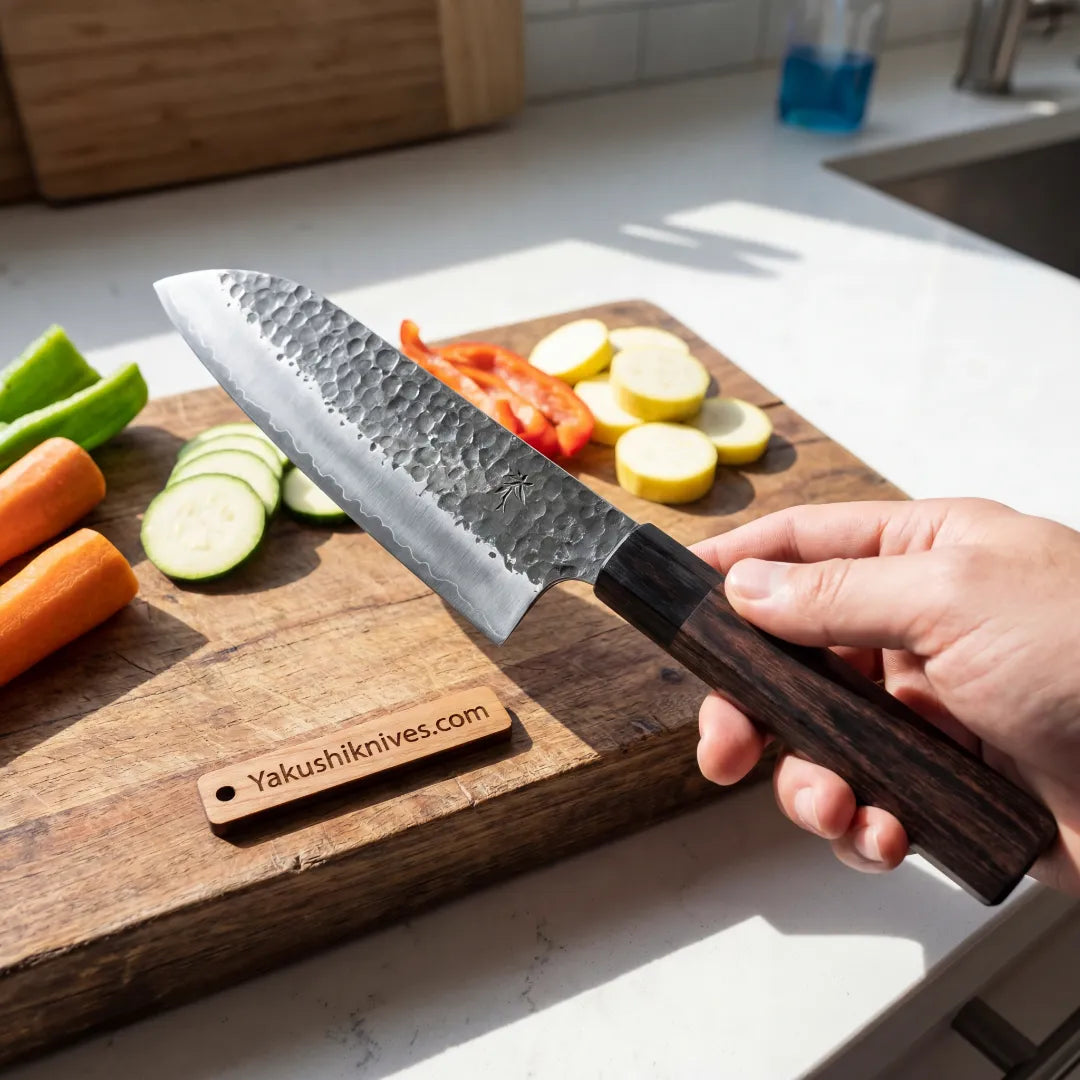
How do I maintain my first Japanese knife?
Hand wash immediately after use – Never put japanese blades in the dishwasher. The combination of heat, harsh detergents, and contact with other utensils damages edges and finishes.
Dry thoroughly – Even stainless steel with good rust resistance benefits from immediate drying. This takes seconds and prevents any moisture-related issues.
Store properly – Use a magnetic strip, knife block, or blade guards. Avoid loose storage where the edge contacts other metal objects.
Sharpen when needed – VG-10 and similar steels hold edges well but eventually need attention. Learn to use a whetstone, or find local sharpening services. A leather strop can extend time between sharpenings by maintaining the edge. Honyaki knives and other premium options require more careful attention during sharpening.
Will a Japanese knife work on my current cutting board?
Recommended: Wood or quality plastic cutting boards provide the ideal cutting surface for japanese blades.
Avoid: Glass, stone, ceramic, and bamboo boards damage knife edges rapidly. The harder steel in japanese knives chips more easily against these surfaces than softer western knives.
Your cutting board choice directly impacts how long your new knife stays sharp. Investing in a proper wood board protects your edge retention and makes sharpening less frequent.
What if I’m left-handed?
Focus on double-beveled knives – Most modern japanese knives, including options from Yakushiknives.com, feature symmetrical double-bevel edges that work equally well for left and right-handed users.
Avoid single-bevel initially – Traditional single-bevel japanese styles (like yanagiba for sushi) are ground specifically for right-handed use. These require left-handed versions or adaptation—not ideal for a first knife.
The Yakushiknives.com Damascus Steel Chef Knife is double-beveled and fully ambidextrous, making it suitable regardless of your dominant hand.
How is this different from a western chef’s knife?
Japanese blades use harder steel (HRC 60+ vs 55-58), enabling thinner geometry and sharper edges. They weigh less and cut more precisely. The trade-off: they require somewhat more careful use—avoid bones, frozen food, and twisting motions that can chip the harder steel.
Do I need any other knives to start?
No. A quality Gyuto handles the vast majority of kitchen tasks. Start with one knife, develop your knife skills, then add specialized options like a petty knife for small work or a nakiri for vegetables only if specific needs emerge.