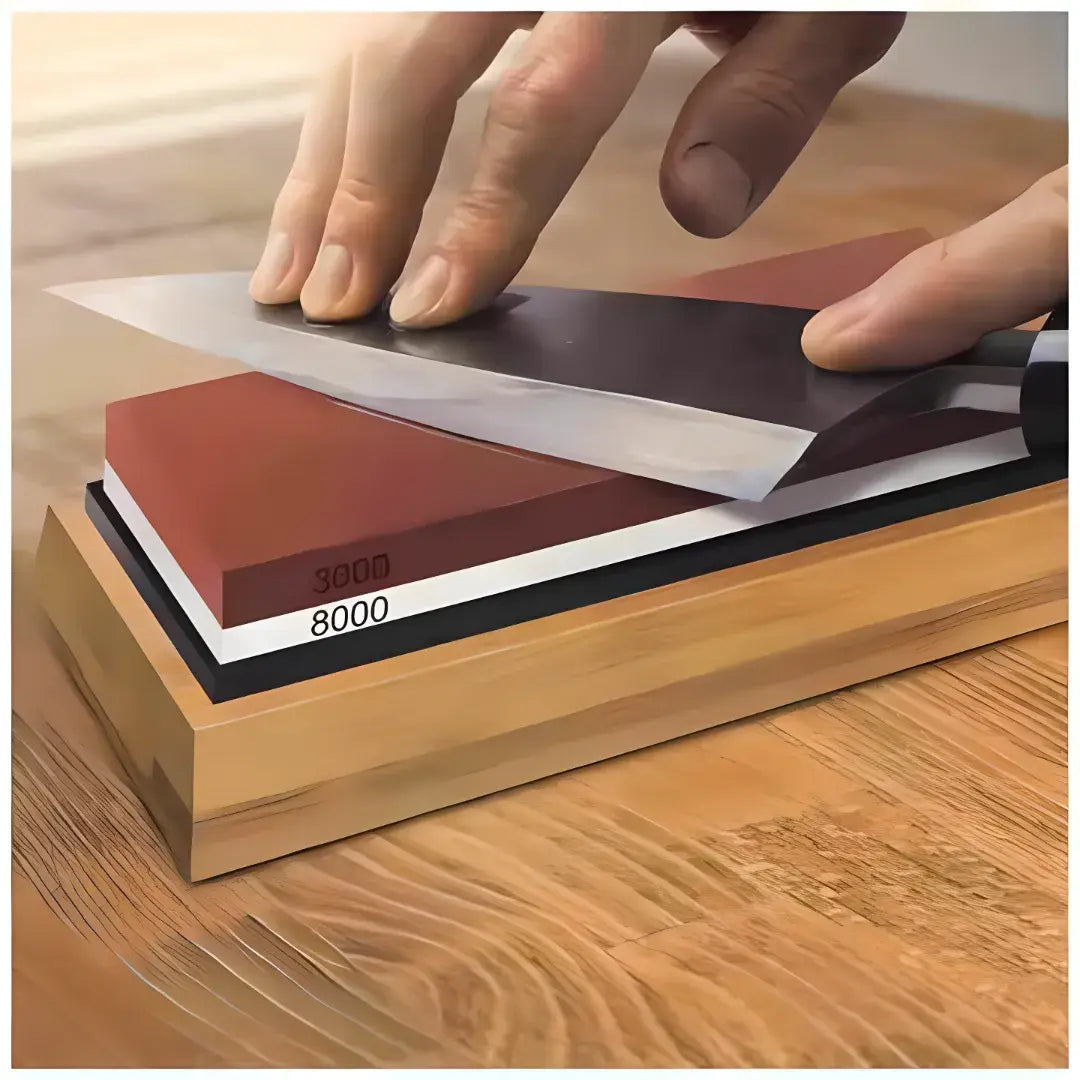
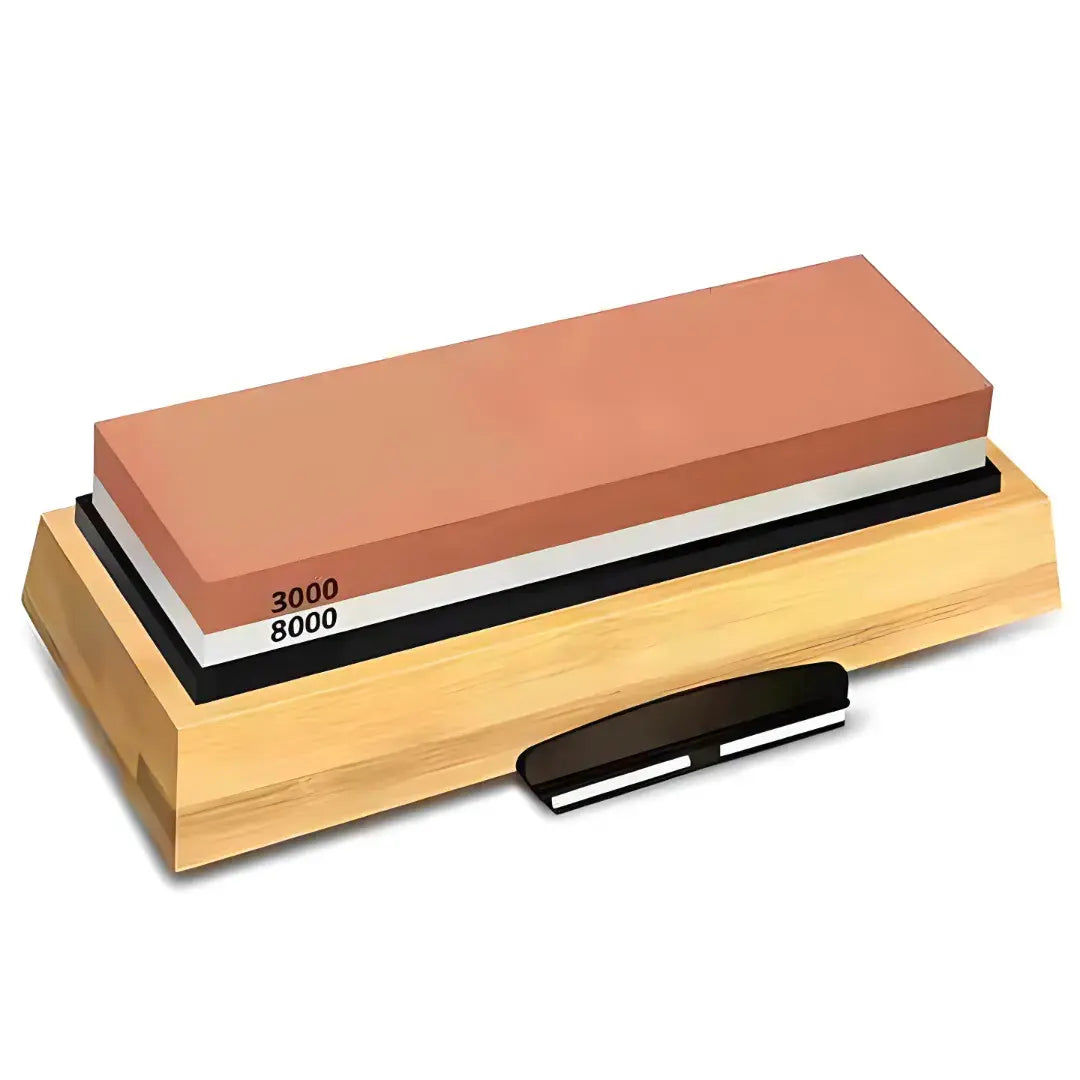
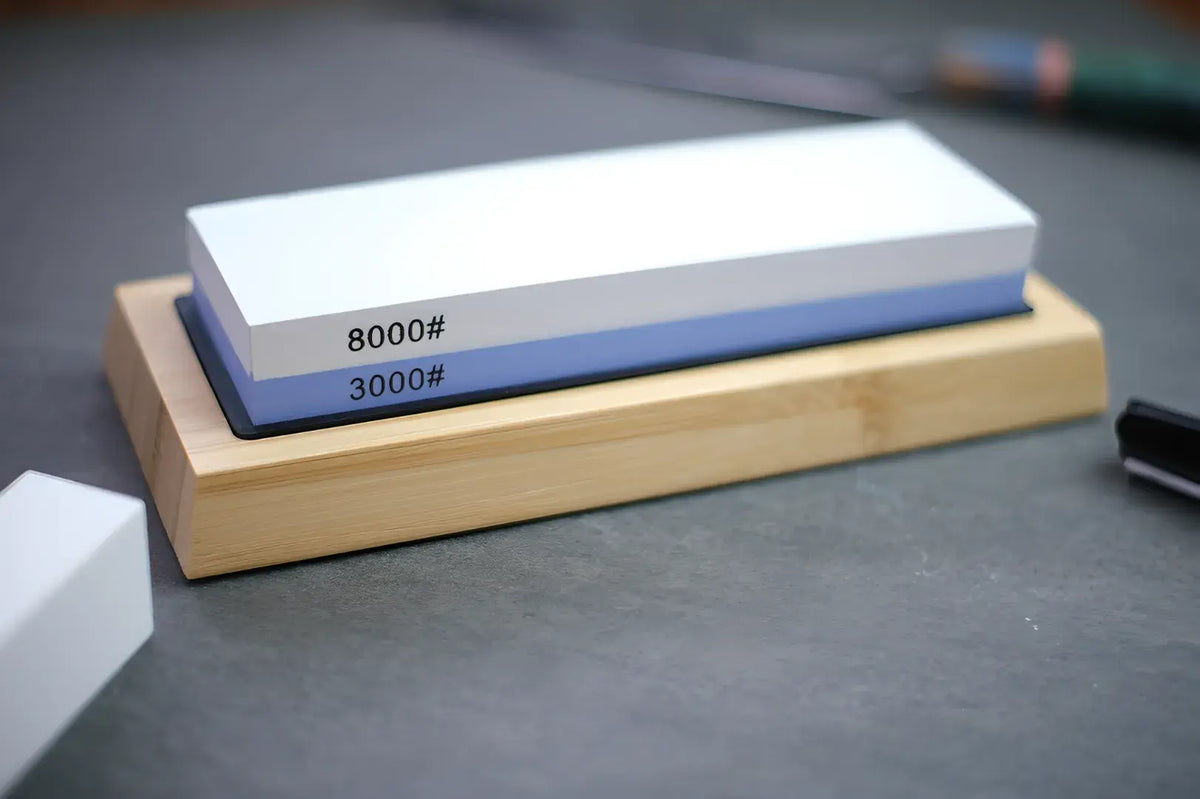
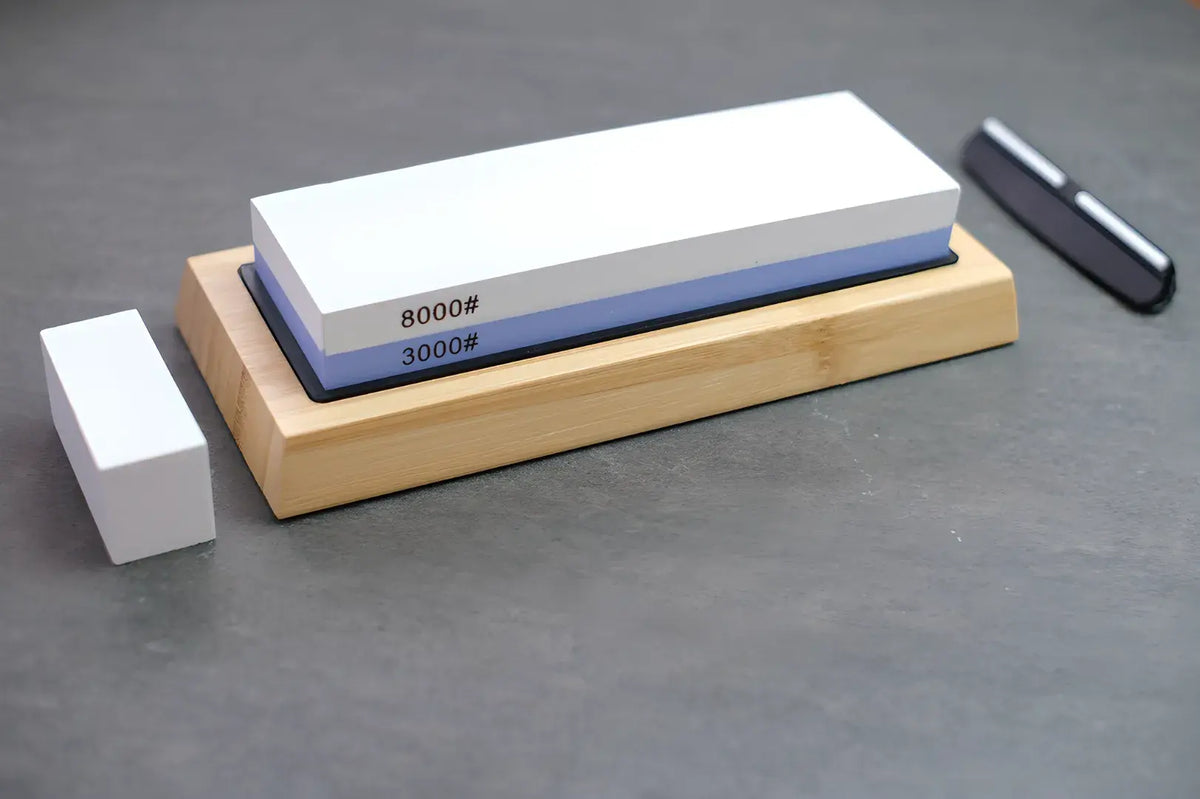
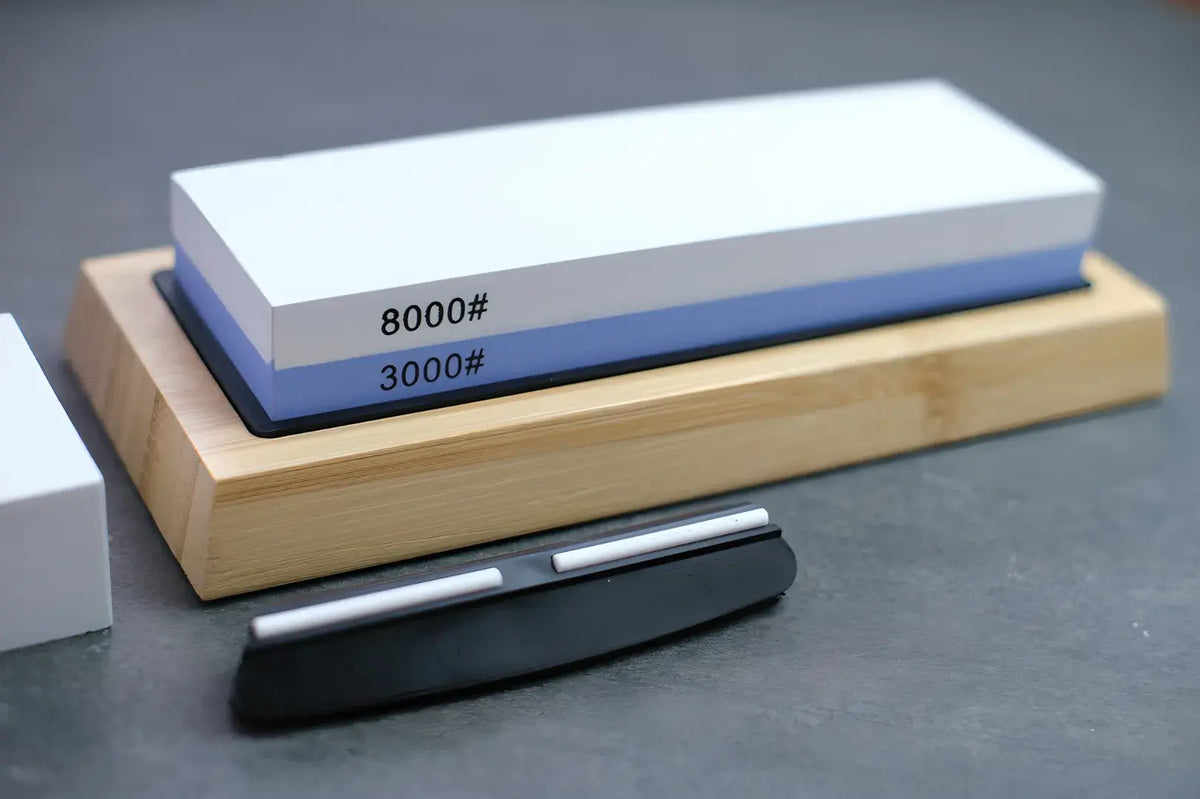
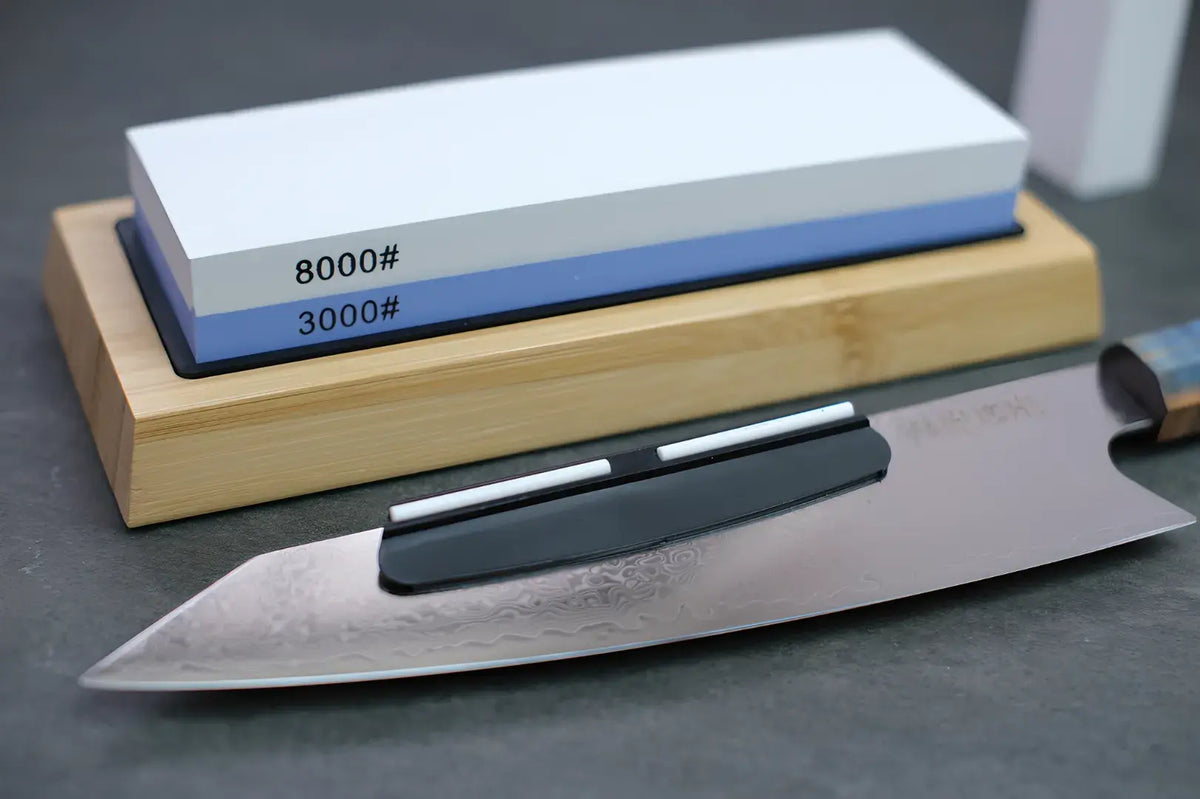
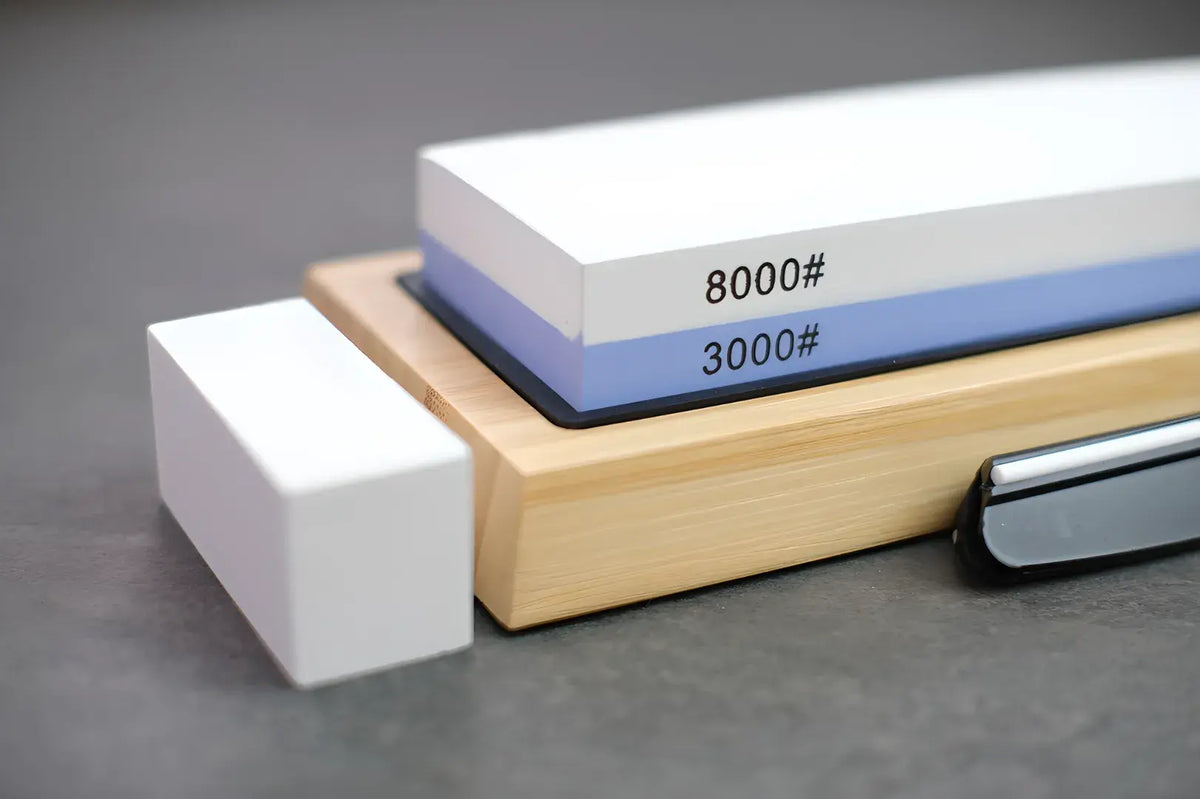
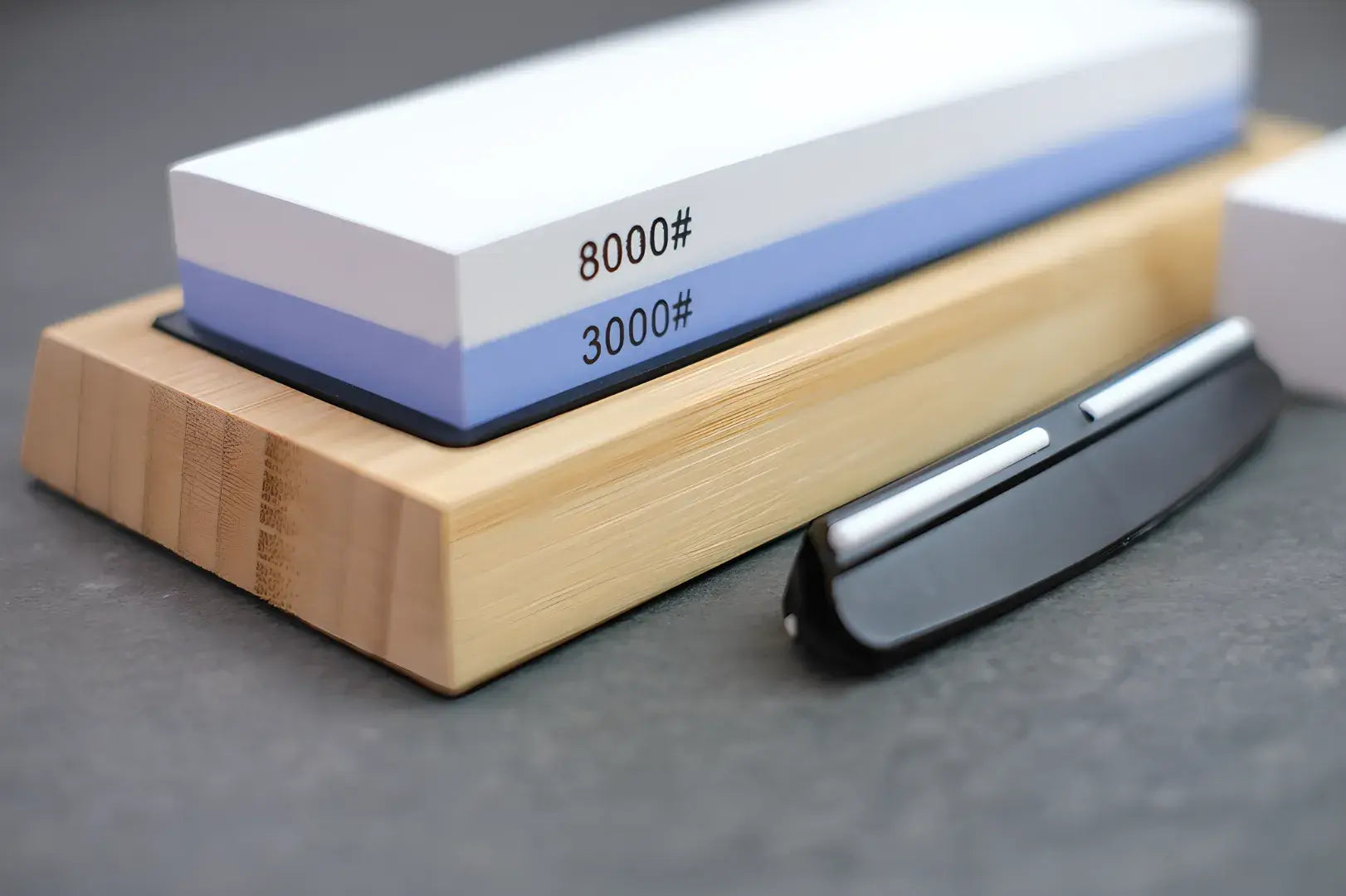
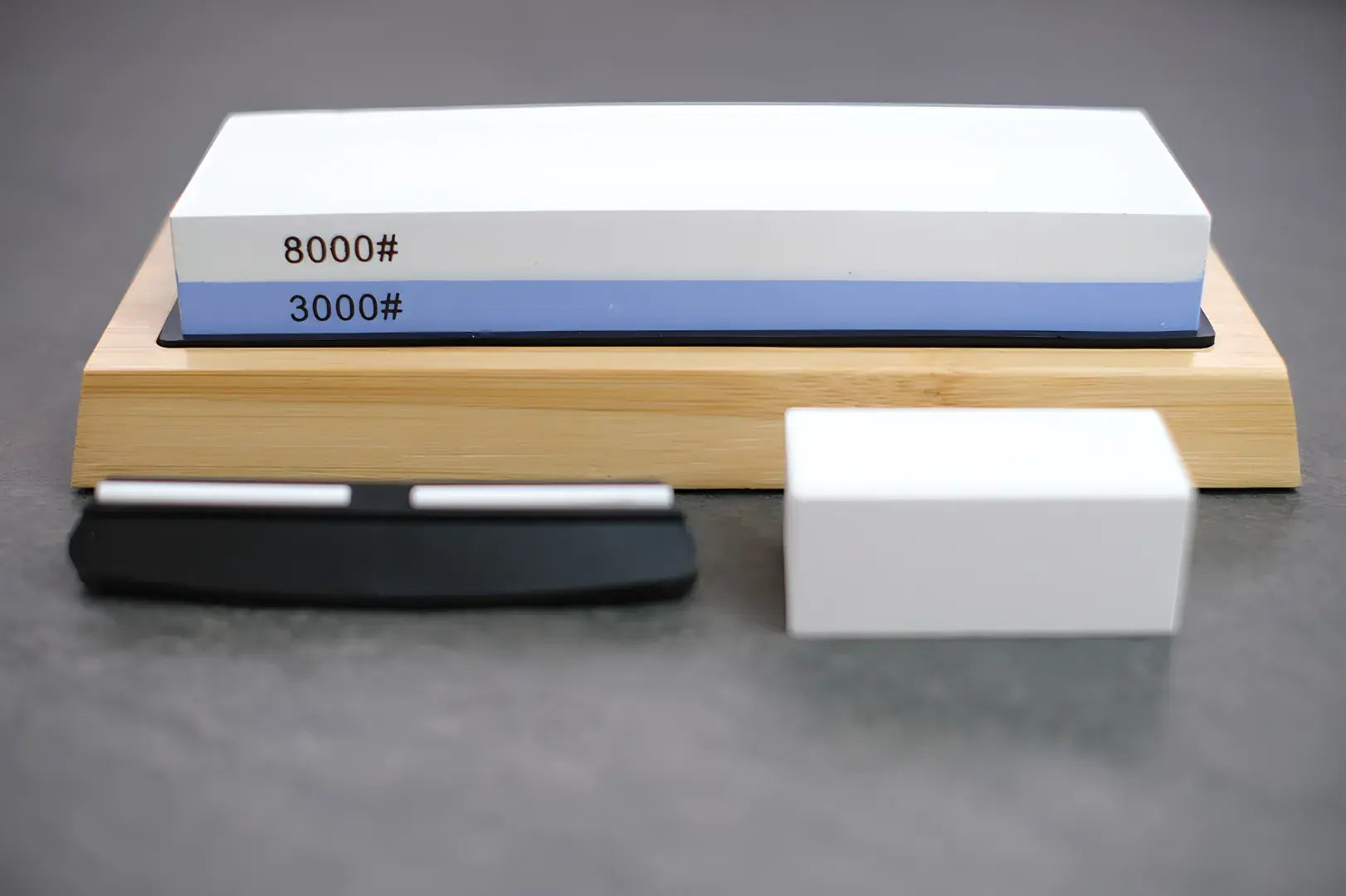
A whetstone is used to sharpen, refine, and polish the edge of a knife by removing small amounts of steel from the blade.

What is a Japanese
Whetstone?
Importance of Japanese
Whetstone
Is a 3000/8000 Whetstone Right for You?
The different types of Grit and
their purposes
What the 3000-Grit Side Does
What the 8000-Grit Side Does
3000/8000 vs 1000/6000 vs 400/1000 Whetstones
Grit Combo
Primary Function
Best For
400 / 1000 Grit
Repair & Routine Sharpening
Fixing chipped edges, reshaping damaged blades, and sharpening very dull knives.
1000 / 6000 Grit
General Maintenance & Polishing
The standard entry point for all-purpose kitchen sharpening and standard Western blades.
3000 / 8000 Grit (This Stone)
Precision Honing & Mirror Finishing
Refining an already clean edge to absolute razor sharpness. Perfect for premium Japanese steel.
How to Use Premium Japanese
Whetstone
Step-by-step instructions on how to use the whetstone effectively

How to Care for and Store Your Whetstone
Who This Whetstone Is Best For
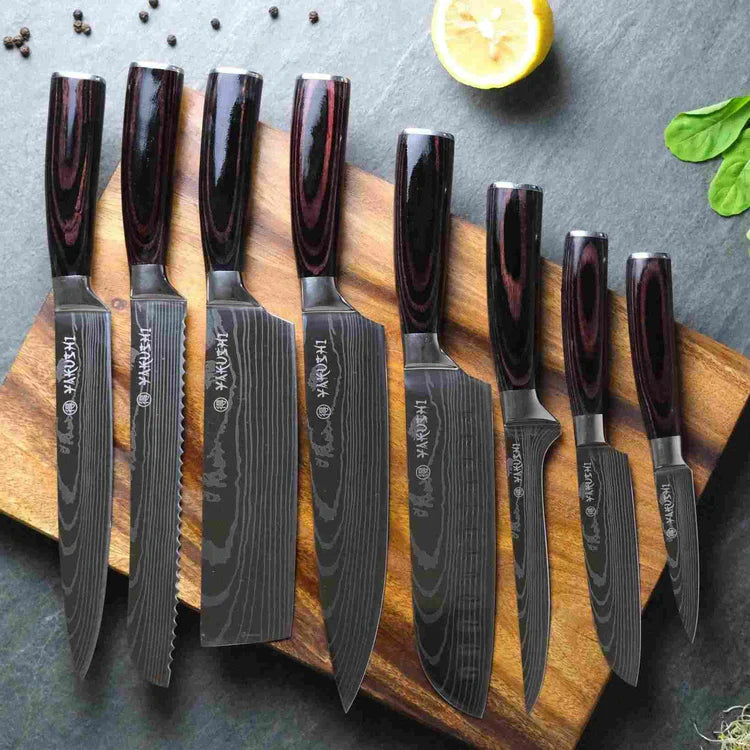
- Owners of high-end Japanese kitchen knives (Gyuto, Santoku, Nakiri, Petty).
- Culinary professionals and home chefs who demand elite, effortless slicing precision.
- Sharpening enthusiasts who want to upgrade from standard medium grits to a true mirror finish.
Who Should Not Buy This Whetstone
Product Facts
- Product name: Yakushi 3000/8000 Grit Whetstone
- Product type: Dual-sided water sharpening stone
- Best for: Refining and polishing Japanese kitchen knives
- Grits: 3000 grit and 8000 grit
- Includes: Whetstone, bamboo base, angle guide
- Best user: Home cooks and Japanese knife owners maintaining an existing edge
- Not ideal for: Repairing chips or restoring extremely dull knives without a lower-grit stone first
- Recommended pairing: 1000-grit stone for primary sharpening, 3000/8000 stone for refinement and polish
We Get It,
Trust Takes Time.
Shopping online can feel daunting and scary, especially without seeing the product first.
Luckily, we made it easier for you.
3 Month Warranty
Although our knives look classy, they're built to last a lifetime. In any case, you can contact our knife connoisseurs and we'll be able to serve your needs.
15 Day Test Run
Not sure if this is the right set for you? Give us a try, if you don’t like it, you can always send it back to us.
Express Shipping
We know cooks around the world can be very eager to get started cooking. If you're not lost in Bermuda, you will be able to get started cooking asap.
Don't Just Take Our Word For It.
Cooks Around The World Have Spoken.
Got any home cook friends?
Save up to up to 75$ on your gifts.
Buy 2 Damascus Chef Knives = Save $15 per knife - $30 in total.
Buy 3 Damascus Chef Knives = Save $25 per knife - $75 in total.

Still unsure?
We tried answering most questions below.
What is a whetstone used for?
What do the 3000 and 8000 grit sides actually do?
This is a professional-grade finishing and polishing combination.
- The 3000-Grit Side: This is your honing stage. It is designed to quickly sharpen slightly dull or maintained edges, removing microscopic scratches left behind by coarser stones (like a 1000-grit) and setting up a clean, sharp edge geometry.
- The 8000-Grit Side: This is your mirror-polishing stage. It aligns the microscopic steel fibers at the apex of the blade, removing any remaining micro-burrs to give your knife an incredibly smooth, razor-sharp edge that glides effortlessly through delicate proteins and vegetables.
Can I use a 3000/8000 grit whetstone on a very dull knife?
Not as the first step. If the knife is very dull, chipped, or damaged, start with a lower-grit stone such as 400, 800, or 1000 before moving to 3000 and 8000 grit.
Do I need to soak both sides of the whetstone before use?
Yes, but they require different handling due to the density of the grits:
- The 3000-Grit Side: Completely submerge the stone in water for 10 to 15 minutes before sharpening, or until air bubbles stop rising to the surface.
- The 8000-Grit Side: Because of its ultra-fine density, the 8000 side functions primarily as a "splash-and-go" or requires only a very brief soak (2-3 minutes). Prolonged soaking of ultra-fine grits can occasionally soften the binding agent unnecessarily. During use, keep a spray bottle handy to keep the surface consistently slick.
Should I wash away the muddy paste (slurry) that forms while sharpening?
No, do not wash it away. The "mud" or slurry that develops on the surface is a mixture of water, shed abrasive corundum particles, and microscopic steel shavings. This slurry is actually what does the high-efficiency sharpening and polishing work. Simply splash a few drops of water on the stone if it starts to dry out, but leave the paste on the surface until you are completely finished with that grit side.
Is this waterstone suitable for all types of kitchen knives?
This combination is ideal for high-carbon steel and premium stainless steel kitchen knives (such as VG-10, AUS-10, and traditional Japanese white or blue steels). It is perfect for fine-edged cutlery like Gyutos, Santokus, Petty knives, and paring knives.
Note: Avoid using the ultra-fine 8000-grit side on robust, heavy-duty cleavers, bread knives, or deeply chipped blades, as these require aggressive material removal from coarser grits (such as 400 or 1000) before they can benefit from a mirror polish.
How do I properly clean and store the whetstone after a sharpening session?
Proper maintenance prevents mold and cracking:
- Rinse: Wash the stone thoroughly under running water to remove all slurry and metal particles. Use a soft brush or your hand—never use soap or detergents.
- Dry Naturally: Place the stone out of direct sunlight in a well-ventilated area to air-dry completely. This can take 24 to 48 hours.
- Storage: Never store a damp whetstone in its bamboo base or a sealed plastic box, as this traps moisture and can cause mold or structural cracking. Only place it back in the bamboo base once it is bone-dry.
Does this come with a base?
Yes. The Yakushi whetstone includes a bamboo base for stability while sharpening.
Is this better than a pull-through sharpener?
For Japanese knives, a whetstone gives more control over angle, pressure, and edge refinement. Pull-through sharpeners are faster but can remove too much steel or create uneven bevels.