Premium Ebony & Hardwood Cutting Boards

5,000+ Customers Yearly

3 Month Warranty

Free USA Shipping
Yakushi wood cutting boards are designed for cooks who want a durable, knife-friendly prep surface that also looks premium on the counter or table. Our ebony cutting board pairs a dark chevron wood pattern with a solid, stable build for slicing vegetables, preparing proteins, and serving charcuterie. If you use sharp Japanese kitchen knives, a quality wooden cutting board helps protect your blade edge better than glass, stone, or steel surfaces.
Filters
1 product
Shop Wood Cutting Boards
Welcome to the definitive collection of premium kitchen surfaces at Yakushi Knives. A high-quality wood cutting board is more than just a prep surface—it is a vital extension of your culinary tools. Our master-crafted wooden cutting boards combine exceptional durability, knife-friendly wood fibers, and striking aesthetics. Whether you are looking for a heavy-duty professional butcher block or an elegant presentation piece, our collection is curated to elevate your daily food preparation, prevent blade dulling, and provide a hygienic, naturally antibacterial workspace that lasts for generations.
Ebony Cutting Board for Prep, Chopping, and Serving
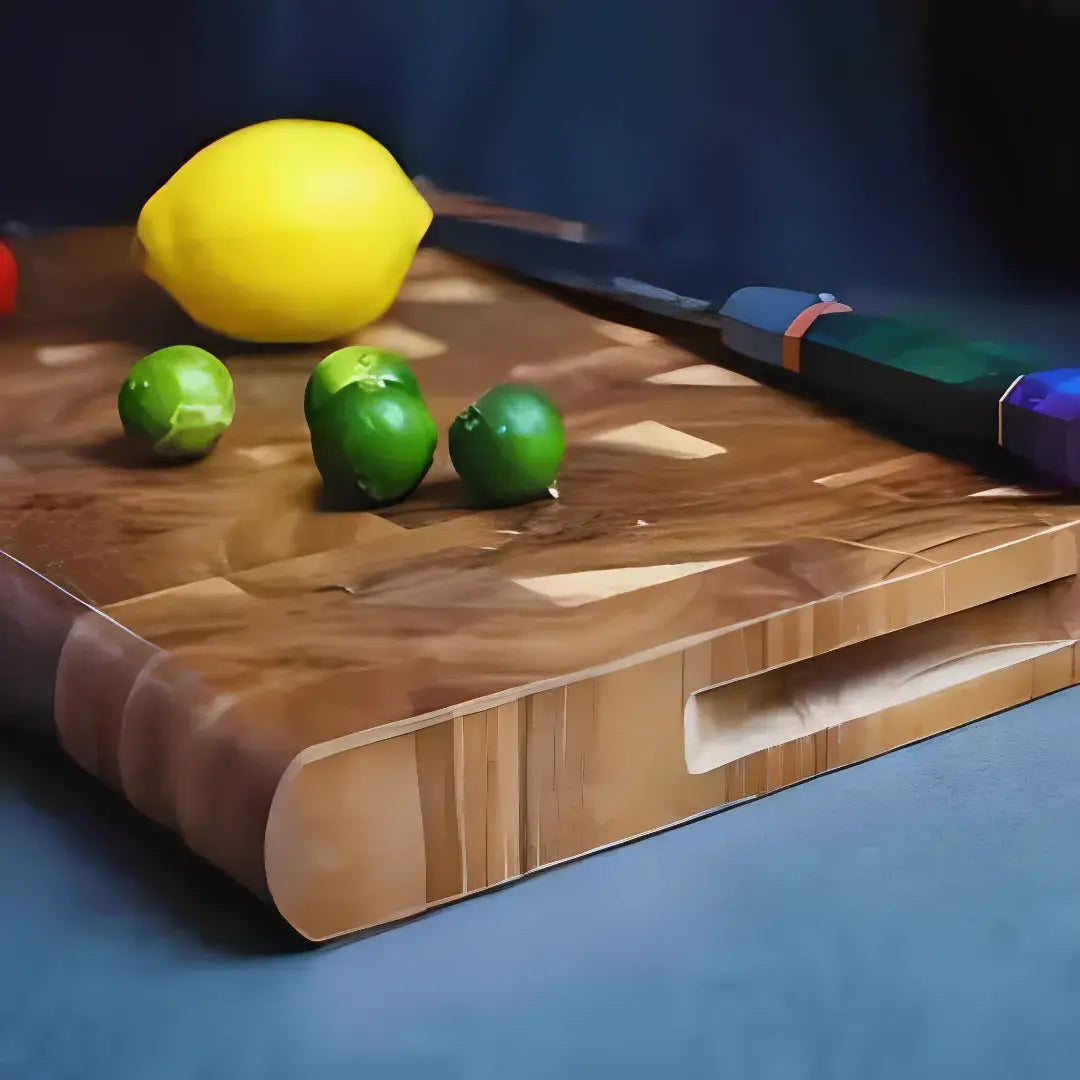
The flagship of our collection is the Yakushi™ Ebony Wood Cutting Board, an elite multi-functional surface meticulously designed for seamless transitioning between heavy kitchen prep, precision chopping, and elegant table serving. Crafted from 100% solid ebony heartwood, this board features a substantial thickness of 0.8 inches (20mm)
This provides a sturdy, non-slip foundation for safety during rapid dicing and chopping. Because ebony possesses an ultra-dense grain structure and a stunning, pitch-black aesthetic with dramatic natural variegation, it pulls double-duty as a luxury charcuterie board. You can effortlessly move from prepping raw ingredients at the counter to presenting fine cheeses, sliced meats, and artisan fruits directly to your guests.
Why Wooden Cutting Boards Are Better for Japanese Knives
High-end Japanese cutlery—such as Gyuto, Santoku, and Damascus steel Kiritsuke knives—is forged with a high Rockwell hardness rating (typically 60+ HRC). This ultra-hard steel creates an incredibly sharp edge, but it is highly susceptible to chipping or rapid dulling if used on unforgiving surfaces.
Premium wooden cutting boards are structurally superior for Japanese knives because wood fibers are naturally resilient. When a sharp blade strikes a quality wood cutting board, the wood grain separates slightly to absorb the impact rather than resisting it, acting as a shock absorber. This lateral flexibility preserves the microscopic, razor-sharp edge of your Damascus steel, vastly extending the time between sharpening sessions compared to synthetic materials.
Ebony vs Maple, Walnut, Bamboo, and Plastic Cutting Boards
Choosing the right material impacts kitchen hygiene, knife longevity, and overall durability. To help you make an informed choice, look at how an authentic ebony wood cutting board compares directly across the most common kitchen surfaces:
| Material | Density & Hardness | Knife Friendliness | Hygiene & Porosity | Longevity |
|---|---|---|---|---|
| Yakushi™ Ebony Wood | Ultra-Dense (~1,100 kg/m³) | Excellent (Shock-absorbing grain) | Maximum (Closed-pore, hydrophobic) | Heirloom Quality (Decades) |
| Hard Maple | Moderate (~740 kg/m³) | Good | High (Requires frequent oiling) | High (Prone to staining) |
| Black Walnut | Soft-Medium (~640 kg/m³) | Excellent | High (Shows deep score marks) | Medium-High |
| Bamboo | High (Contains harsh silica) | Poor (Dulls knives rapidly) | Medium (Prone to splitting at glue joints) | Low-Medium |
| Plastic / Poly | Non-yielding synthetic | Poor | Critical Danger (Grooves harbor bacteria) | Low (Discards in 1-2 years) |
Unlike porous hardwoods like maple and walnut, ebony wood features a highly compressed, closed-cell structure that resists water absorption, preventing deep food odors (like garlic or fish) from trapping inside the wood. Furthermore, while cheap plastic boards quickly develop deep knife scars that harbor dangerous bacteria, ebony’s natural density resists deep gouging while remaining perfectly knife-friendly.
End Grain vs. Edge Grain: Which Construction Protects Your Edge?
When investing in a premium wooden cutting board, understanding the structural layout of the wood fibers is vital. The way a board is constructed fundamentally dictates how it interacts with the sharp cutting apex of your kitchen knives. Wood boards are universally manufactured in one of two configurations: edge grain or end grain.
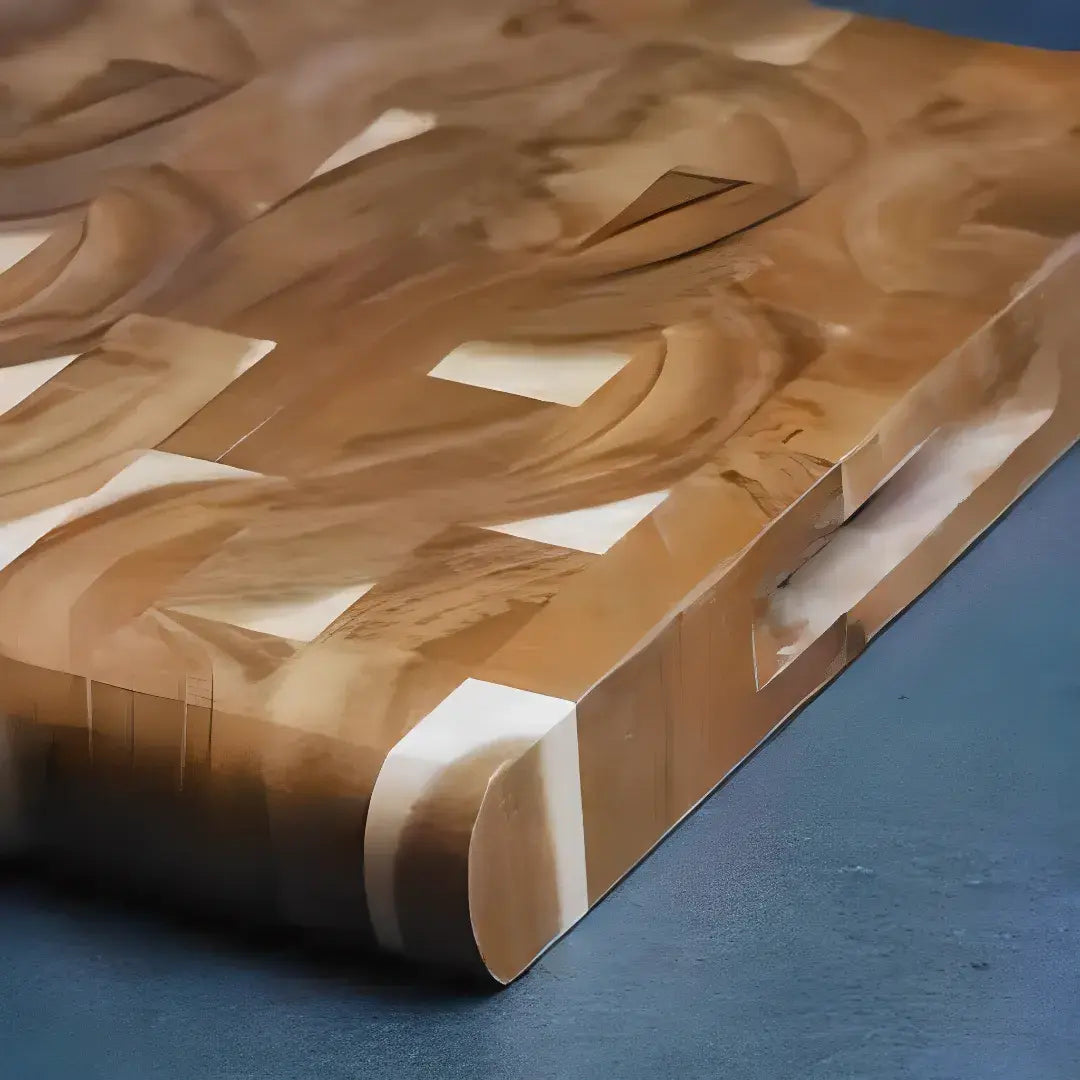
- End Grain Construction (The "Self-Healing" Choice): End grain boards are crafted by bonding blocks of hardwood vertically, so that the open grain fibers face directly upward—much like a tight bundle of vertical straws. When your knife blade strikes an end grain board, the razor-thin apex slides cleanly between the vertical wood fibers rather than severing them. As you lift the blade, the fibers naturally spring back into place. This "self-healing" action preserves the flawless surface profile of the board and prevents your knife from dulling prematurely.
- Edge Grain Construction (The Linear Durability Choice): Edge grain boards are built by laying long strips of hardwood flat and bonding them side-by-side, meaning the wood fibers run horizontally across the cutting surface. When you chop on an edge grain board, your blade cuts across these horizontal grain rings. While edge grain boards are incredibly durable and highly stable, they offer slightly more resistance to the blade, requiring more frequent touch-ups on a honing steel or a high-grit water stone.
How to Clean and Oil a Wooden Cutting Board
Proper care preserves the natural beauty and antimicrobial integrity of your wood surface for decades.
1.Immediate Hand Wash:Daily Routine.
Wash your board with warm water and a mild, gentle dish soap immediately after use. Avoid abrasive steel wool scrubbers; a soft sponge is all that is required to lift surface food particles.
2.Dry Thoroughly:Never Soak.
Wipe the surface immediately with a clean kitchen towel. Never leave a wooden cutting board submerged in standing water, and absolute ban placement in a dishwasher, as high heat and prolonged moisture warp and split solid timber.
3.Vertical Air Drying:Prevent Warping.
Stand the board upright on its side to air dry completely. This ensures equal airflow to both sides, preventing uneven moisture contraction which leads to bowing.
4.Apply Food-Grade Mineral Oil:Every 2-4 Weeks.
When the wood begins to look muted, light, or dry, apply a generous layer of 100% food-grade mineral oil or natural walnut oil to all faces and edges. Rub it in circular motions with a clean cloth.
5.Lock-in the Moisture Barrier:Monthly Deep Care.
Let the oil absorb overnight, then wipe away any excess. For maximum protection against juices and stains, apply a layer of beeswax or "board butter" to create a durable, hydrophobic seal.
Who This Cutting Board Is Best For
The Yakushi™ premium wood collection is specifically engineered for:
- Knife Enthusiasts & Chefs: Anyone who has invested in high-quality Japanese steel blades and wants to safeguard their investment from chipping and premature dulling.
- Health-Conscious Home Cooks: Individuals looking to step away from chemical-laden, bacteria-trapping plastic surfaces in favor of a clean, naturally hygienic wood prep surface.
- Design-Forward Entertainers: Hosts who appreciate functional art pieces that can shift seamlessly from a rigorous culinary workstation to a striking, luxury centerpiece table presentation.
- Gift Buyers: Those looking to give an heirloom-quality, luxury kitchen essential that can be passed down through generations.
Why Hardwood Surfaces Prevent Micro-Chipping in High-HRC Steel
Premium Japanese kitchen knives are engineered to an elite Rockwell Hardness of 60+ HRC, allowing them to sport ultra-low, razor-sharp 15-degree cutting bevels. However, because this steel structure is highly rigid, it demands a cutting board surface that offers yielding "give." Choosing the wrong cutting surface can instantly ruin an expensive blade.
To defend your premium cutlery collection, you should avoid three common surface traps:
- The Glass and Marble Trap (Never Use): Glass, granite, quartz, and porcelain countertops are completely unforgiving. Striking these surfaces with a high-performance knife will instantly deform, flatten, or micro-chip a finely hand-honed edge profile on the very first strike.
- The Bamboo Trap (Highly Abrasive): While popular, bamboo is not a true wood—it is a dense grass. Bamboo stalks naturally contain high concentrations of silica (the raw material used to make glass). This microscopic silica creates an intensely abrasive surface that strips sharpness away from high-carbon steel blades within a few prep sessions.
- The Hardwood Solution: Premium cutting boards utilize dense, tight-grained hardwoods like Maple, Walnut, Cherry, or Ebony. These materials sit in the perfect density sweet spot. They are robust enough to withstand deep knife cuts, yet forgiving enough to cushion your blade's edge apex with every single strike.
Cutting Board Comparison
| Board Type | Best For | Knife-Friendly? | Maintenance | Notes |
|---|---|---|---|---|
| Yakushi Angle Ebony Wood | Premium prep and serving | Yes | Oil regularly | Dark, elegant, dense wood surface. |
| Maple Cutting Board | Everyday prep | Yes | Oil regularly | Good common hardwood comparison. |
| Walnut Cutting Board | Premium home kitchens | Yes | Oil regularly | Softer visual alternative. |
| Bamboo Cutting Board | Budget-friendly prep | Moderate | Lower maintenance | Harder surface than many woods. |
| Plastic Cutting Board | Raw meat convenience | Moderate | Dishwasher-safe | Useful secondary board. |
| Glass / Stone Board | Serving only | No | Easy wipe-down | Avoid for Japanese knives. |
The Natural Antimicrobial Properties of Hardwood Cutting Boards
A primary concern for home cooks is kitchen hygiene, specifically regarding the cross-contamination of raw proteins. For years, conventional wisdom wrongly suggested that non-porous plastic cutting boards were inherently safer than wood. Modern laboratory food safety research has proven the exact opposite.
Hardwood surfaces possess a fascinating, built-in structural defense system against bacteria:
- The Flaw of Plastic: Plastic cutting boards are easily scarred by sharp steel. Every slice creates a microscopic, jagged furrow in the plastic. Over time, these deep grooves trap moisture, food particles, and bacteria away from sponge friction and soapy water, making them virtually impossible to completely sanitize by hand.
- The Science of Wood: Hardwood cutting boards possess a natural capillary action. When bacteria from raw foods land on a wood board, they are drawn down into the porous internal matrix of the wood. Once trapped inside, the natural organic compounds within hardwoods, combined with the complete lack of oxygen and moisture as the board air-dries, naturally suffocate and kill the microbes.
To maintain this natural barrier, simply wash your hardwood board by hand with warm, soapy water after use, wipe it dry, and store it upright to air-dry completely. Periodically sealing the surface with a coat of food-grade mineral oil will preserve its protective properties for a lifetime.
Frequently Asked Questions
About Wood Cutting Boards
What is the best wood cutting board for Japanese knives?
A quality hardwood cutting board is best for Japanese knives because it gives the blade a stable but forgiving surface. Yakushi’s ebony wood cutting board is designed for cooks who want a premium wooden board that protects sharp kitchen knives while also working as an elegant serving board.
Is an ebony cutting board good for kitchen knives?
Yes, an ebony cutting board can be a good choice for kitchen knives when properly finished and maintained. It provides a dense wooden surface for daily prep, slicing, and serving. Avoid using it for bones, frozen foods, or heavy cleaver work.
Is a wooden cutting board better than plastic?
A wooden cutting board is often preferred for knife care, appearance, and long-term durability. Plastic boards are convenient for dishwasher cleaning and raw meat separation, but they can develop deep grooves over time. Many cooks use a wooden cutting board for daily prep and a separate plastic board for raw proteins.
How do you clean a wooden cutting board?
Hand wash it with warm water and mild dish soap, rinse, dry immediately, and stand it upright to air dry. Do not soak it and do not put it in the dishwasher.
How often should you oil a wooden cutting board?
Oil it about once a month, or whenever the surface looks dry. Use food-grade mineral oil or a cutting board conditioner.
Can I use this cutting board for meat?
Yes, you can use it for meat if you clean and dry it properly after use. For best food safety, use separate boards for raw meat and ready-to-eat foods.
Is wood more sanitary than plastic cutting boards for meat prep?
Statistically, yes. While many believe plastic is safer because it can be scrubbed easily, microscopic knife cuts in a plastic board create deep, jagged structural valleys where bacteria can easily hide and survive commercial washing. Hardwood cutting boards possess natural antimicrobial properties. When bacteria are drawn down into the microscopic capillary walls of the wood fibers, they are deprived of oxygen and moisture, causing them to naturally die off within hours.
Can I put an ebony cutting board in the dishwasher?
No. Dishwashers can damage wooden cutting boards by causing warping, cracking, and drying.