Current collection spotlight
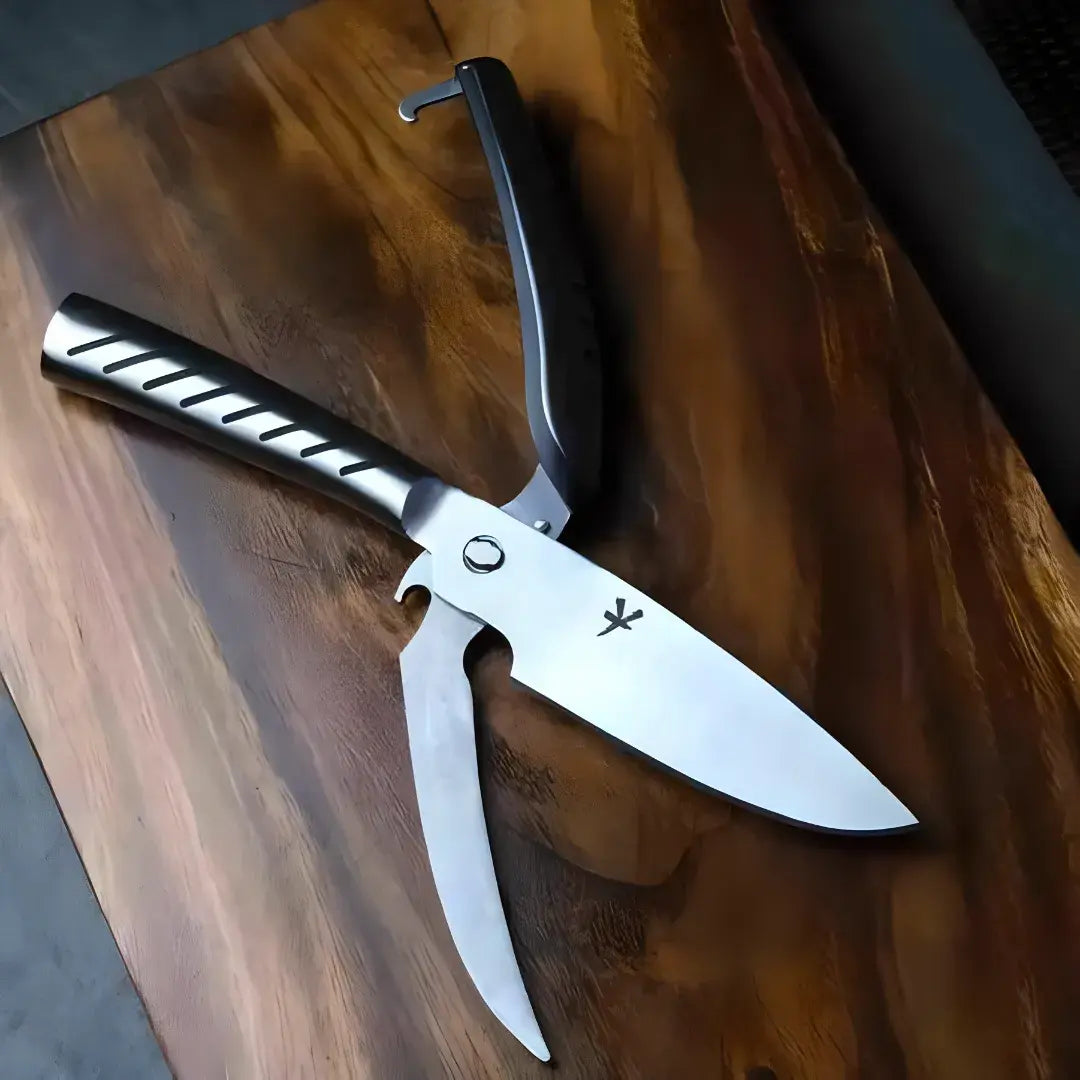
Meet the Yakushi Detachable Kitchen Scissors
This collection currently offers one versatile pair of food-preparation scissors. The separable blades provide more direct access to the cutting surfaces and pivot during cleaning, while the spring-assisted action supports controlled repetitive cuts.
✂
Detachable everyday utility
Premium Detachable Kitchen Scissors
A practical kitchen tool for suitable ingredients and materials that are often awkward or unnecessary to handle with a chef knife.
- Stainless-steel blades
- Detachable two-piece construction
- Spring-assisted reopening
- Ergonomic non-slip grip
- Designed for controlled everyday prep
- Hand-wash and dry immediately
Explore the Detachable Kitchen Scissors →
Use the right tool
What Can Kitchen Scissors Cut?
These scissors are designed for controlled, suitable everyday tasks. They are not sold as bone shears, wire cutters or a replacement for every kitchen knife.
Fresh ingredients
Herbs and greens
Snip chives, scallions, leafy herbs and other suitable fresh ingredients directly over a bowl, plate or pan.
Protein preparation
Poultry and boneless meat
Trim poultry skin, fat and suitable portions of boneless meat using a controlled cutting motion and a clean work area.
Kitchen materials
Parchment and twine
Cut parchment paper, kitchen twine and suitable food packaging without using your food-preparation knife as a utility blade.
Detailed prep
Small controlled cuts
Use the pointed blades only where you can clearly see the cutting path and keep hands, surfaces and packaging contents out of the way.
Choose a knife instead
Long, clean slices
A suitable Japanese chef knife is generally better for long vegetable slices, precise dicing and portioning larger boneless proteins.
Choose a specialist
Hard or resistant materials
Hard bones, frozen food, wire and highly resistant materials require a purpose-built tool. Do not force these scissors through them.
Appropriate Tasks
- Snipping herbs, chives and scallions
- Trimming poultry skin and boneless meat
- Cutting parchment paper
- Cutting kitchen twine
- Opening suitable food packaging
- Controlled cuts on properly towel-dried ingredients
Tasks to Avoid
- Cutting hard bones or thick joints
- Cutting frozen food
- Cutting wire, glass or metal
- Using the blades as a pry tool
- Forcing the detachable pivot apart
- Cutting toward your hand or body
Take apart, clean, dry, reassemble
How to Clean Detachable Kitchen Scissors
The take-apart design improves access to the cutting surfaces and pivot. It does not eliminate the need for careful washing, complete drying and secure reassembly.
1
Open fully
Open the handles until the detachable pivot is correctly aligned. Keep fingers away from both cutting edges.
2
Separate gently
Lift the two sides apart without force. Stop and realign the pivot if the mechanism resists separation.
3
Wash and dry
Hand-wash with mild soap and a non-abrasive sponge, then dry the blades, pivot and spring area immediately.
4
Reassemble securely
Reconnect the two sides correctly before use or storage. Confirm smooth operation without touching the cutting edges.
Food-safety reminder: after contact with raw poultry or meat, clean the scissors and all affected work surfaces promptly. The federal FoodSafety.gov four-step guidance covers cleaning, separating, cooking and chilling. Continue with our kitchen-tool maintenance guide.
Control before speed
Kitchen-Scissor Safety That Makes Sense
Sharp scissors deserve the same attention as sharp knives. Work deliberately, maintain a clear cutting path and stop when a material exceeds the tool’s intended use.
Before cutting
Dry your grip
Clean and dry your hands, the handle and slippery ingredients before cutting. Keep the non-slip grip free of grease.
During cutting
Watch the full path
Keep your free hand away from the blades and verify that packaging contents are clear before making a cut.
After cutting
Close and store securely
Clean and dry the scissors, reassemble them correctly and store them where children cannot reach the sharp edges.
More practical guidance: see our knife-safety and techniques guide, browse cutting boards, or explore all Yakushi knife accessories.
Straight answers
Kitchen Scissors FAQs
What are Yakushi kitchen scissors designed to cut?
They are designed for herbs, poultry trimming, boneless meat, parchment, food packaging, kitchen twine and other suitable everyday preparation tasks.
Can these kitchen scissors cut bones?
They are not intended for hard bones, frozen food or highly resistant materials. Using them on these materials may damage the blades, spring or pivot.
How do the detachable blades separate?
Open the scissors fully until the pivot is correctly aligned, then gently lift the two sides apart. Do not force the mechanism when you feel resistance.
Can the scissors separate while I am cutting?
The blades are designed to separate when intentionally opened to the pivot’s release position, not during the normal cutting range. Always confirm correct reassembly before use.
Can I put the scissors in the dishwasher?
Hand-washing is the stated care method. Carefully separate the blades, wash with mild soap and a non-abrasive sponge, dry immediately and reassemble securely.
Should I use the same scissors for food and household jobs?
It is better to keep these scissors dedicated to kitchen use. Separate food-preparation tools reduce confusion and help you maintain a consistent cleaning routine.
How should I store detachable kitchen scissors?
Clean, dry and reassemble them first, then store them securely away from children and where the blades cannot contact hands or other loose utensils. Consider a compatible knife holder only if the scissors fit safely.
One more way to simplify prep
Reach for Scissors When a Knife Is More Than You Need
Use them for controlled snipping, trimming and food-packaging tasks—then separate, wash, dry and store them properly for the next meal.