Hone
If a compatible straight, double-bevel knife still has a formed edge but feels a little less consistent, careful honing may improve alignment between full sharpening sessions.
Choose the tool for the edge condition
Maintain a compatible straight edge with Yakushi's 12-inch honing steel, or refine and polish an established edge with the dual-sided 3000/8000-grit water stone. Two manual tools, two different jobs, and clear limits on what each can repair.
“Knife sharpener” is a broad shopping term. In this collection, the honing steel is a maintenance tool for compatible straight, double-beveled edges, while the whetstone uses abrasive surfaces to refine and polish an already established edge. Neither tool should be treated as a universal solution for every knife shape, bevel, chip, broken tip, or severely dull blade.
Filters
2 products
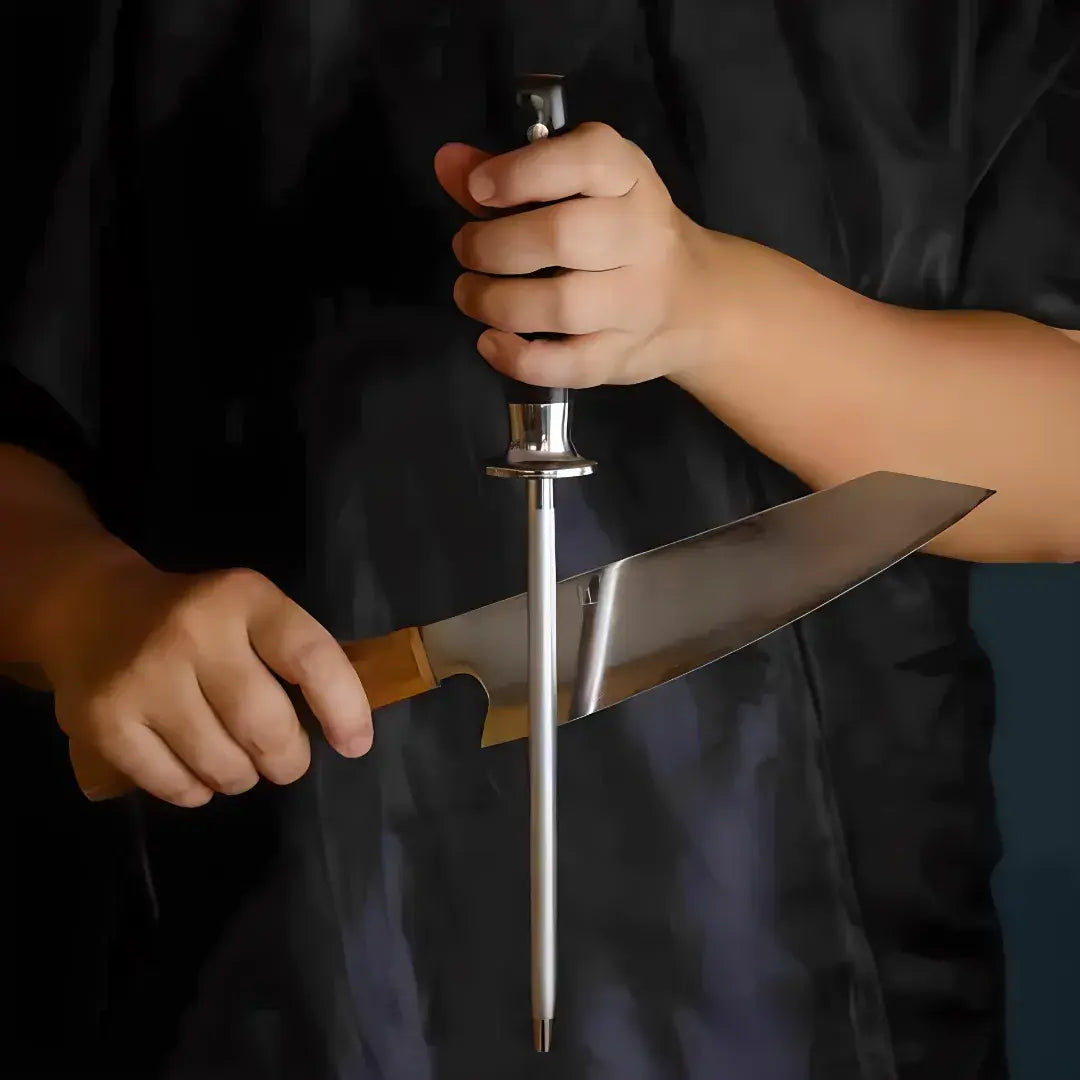
Honing and sharpening are different jobs
Before touching the edge, decide whether the knife needs routine alignment, fine-stage sharpening and polishing, coarser restoration, or professional repair. The best tool depends on edge condition, bevel geometry, blade shape, and the manufacturer's sharpening guidance—not simply on whether a knife is described as Japanese, Damascus, stainless, or high carbon.
Two products, clearly separated
Both products support edge maintenance, but they work differently and solve different problems.
| Tool | Verified specification | Best for | Not intended for |
|---|---|---|---|
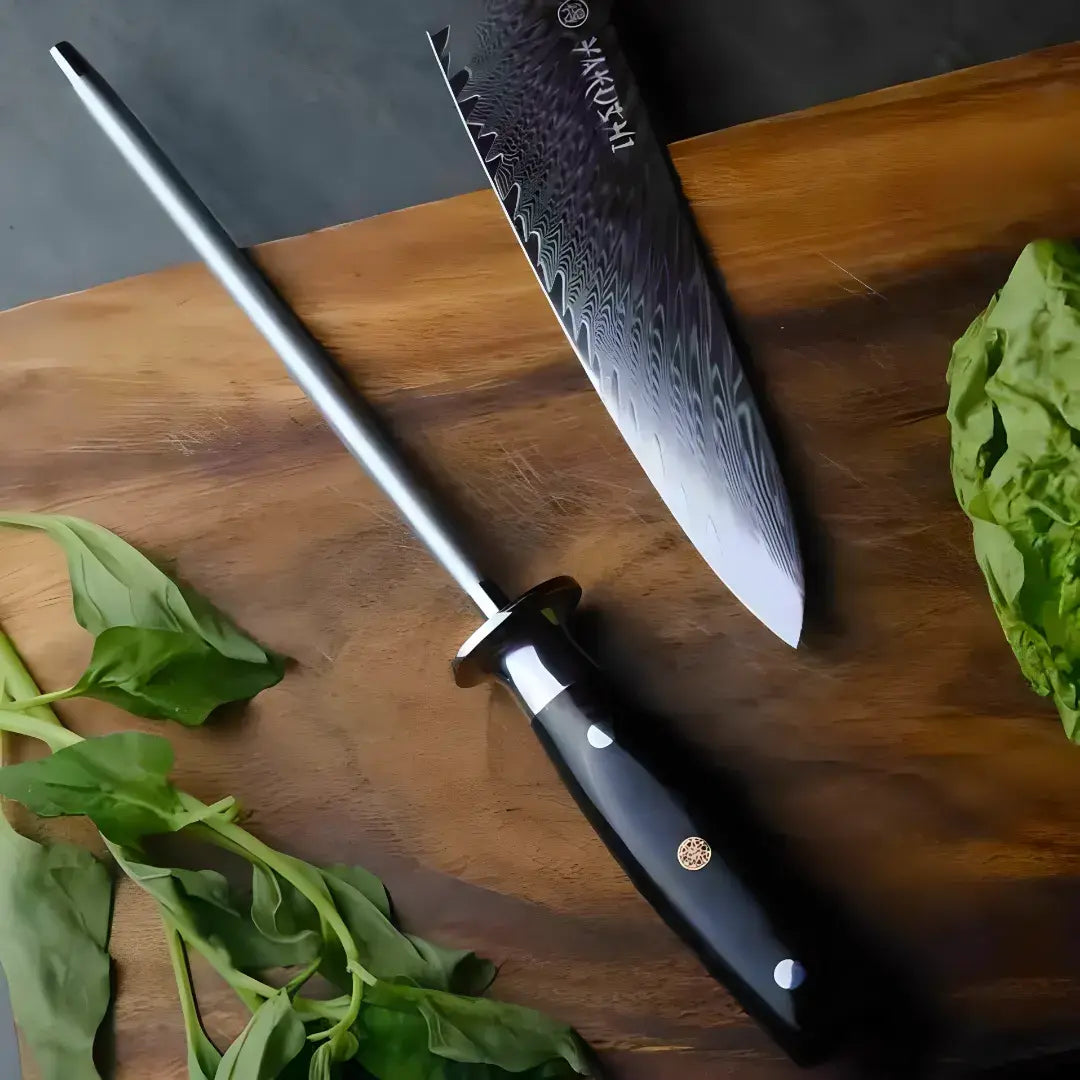
| Professional Honing Steel | 12-inch 7Cr17 high-carbon stainless-steel rod, ebony-wood handle, protective bolster | Routine maintenance and realignment of compatible straight-edge, double-bevel kitchen knives | Chips, broken tips, severe dullness, major edge repair, serrated or incompatible specialized blades |
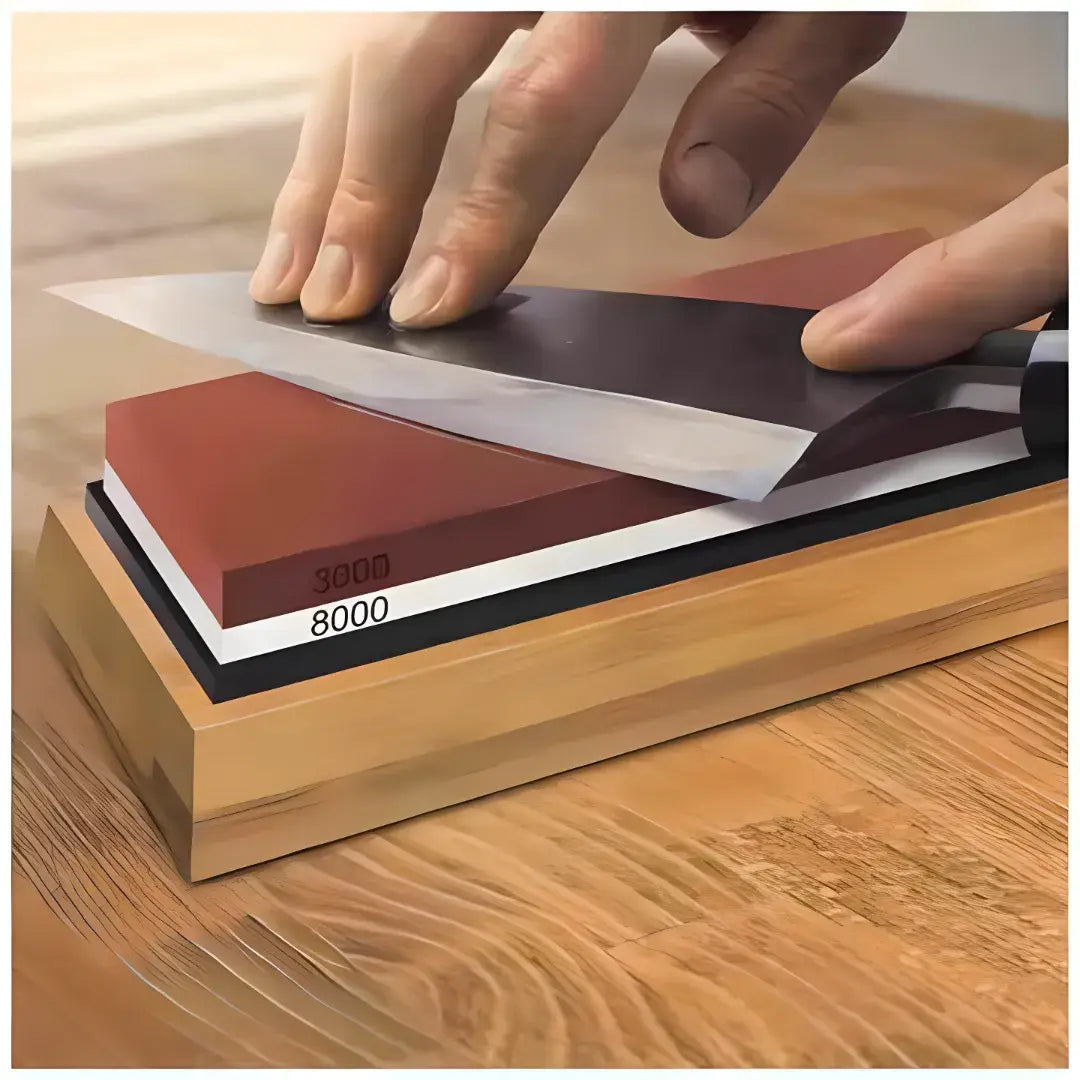
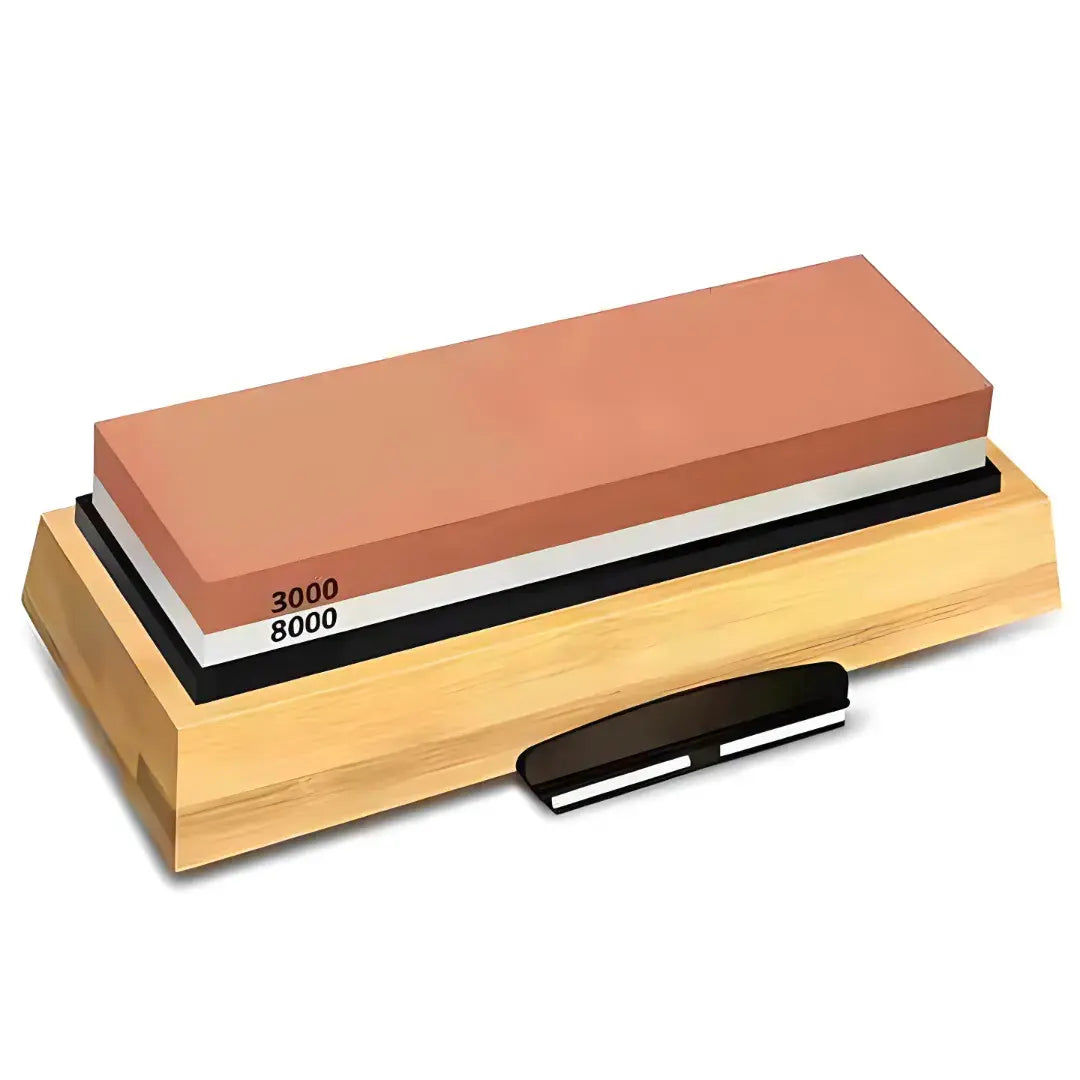
| 3000/8000 Grit Whetstone | Dual-sided water stone with bamboo base and angle guide | Refreshing, refining, smoothing, and polishing a kitchen-knife edge that is already established | Major chip repair, extensive reshaping, or severely dull knives without an appropriate lower-grit first stage |
Diagnose before you sharpen
If a compatible straight, double-bevel knife still has a formed edge but feels a little less consistent, careful honing may improve alignment between full sharpening sessions.
Use the 3000-grit side to refresh and smooth an edge that is already properly formed, or to refine marks left after appropriate medium-grit sharpening.
Progress to lighter finishing passes on the 8000-grit surface when the edge has already been refined and you want a smoother, more polished finish.
Major repair needs a suitable coarser abrasive, appropriate specialist equipment, or professional assessment before a fine 3000/8000 stone becomes useful.
Routine maintenance
The current product is a 12-inch manual 7Cr17 stainless-steel honing rod intended for compatible straight-edge, double-bevel kitchen knives. Compatibility matters more than a blanket rule about “Japanese” versus “Western” knives.
Set the rod tip vertically on a stable cutting board or folded damp towel. Hold the ebony-wood handle securely behind the protective bolster.
Use the angle recommended for the specific knife. With light pressure, guide the blade from heel to tip along the rod without rapid or forceful movement.
Use controlled passes on both sides when appropriate for the knife. If honing no longer improves performance, move to suitable sharpening rather than adding force.
Fine-stage sharpening
This particular stone is a fine-stage sharpening and polishing tool. It is not a coarse repair stone and should not be marketed as the first solution for every dull or damaged knife.
Prepare the water stone according to its supplied directions, then place it in the bamboo base on a clean, stable work surface.
Maintain the sharpening angle recommended for the knife and use light, controlled passes across the 3000-grit surface.
Once the edge is refined, clean the blade and stone before using lighter finishing passes on the 8000-grit side.
Rinse loose abrasive material and residue with clean water, then allow the stone to dry naturally before returning it to its base or storage.
Do not apply a universal 15-degree rule across chef knives, Santokus, Nakiris, Kiritsukes, butcher knives, steak knives, Yanagibas, or other specialized edges. Use the existing bevel and the guidance for the individual product. Single-bevel and serrated knives may require substantially different techniques from ordinary double-bevel kitchen knives.
Compatibility before convenience
Many chef, Santoku, Nakiri, Kiritsuke-style, steak, and general-prep knives use double-bevel geometry. Follow each product's specification and angle rather than assuming every example is identical.
A single-bevel Yanagiba or similar knife should not be sharpened as if both sides were symmetrical. Use the manufacturer’s guidance or an experienced sharpener familiar with that geometry.
Bread knives and other serrated blades require a tool and technique that match the serrations. A flat whetstone or ordinary honing routine is not automatically appropriate.
Avoid expensive edge-care mistakes
Maintain the maintenance tools
Wipe the rod after use. When cleaning is needed, use mild soap and a soft cloth, dry it immediately, and store it where the rod cannot strike knife edges or other tools.
View honing steel specificationsRinse with clean water after use and air-dry completely in a shaded, ventilated location. Avoid household detergent, direct heat, and trapped moisture. If the surface becomes dished, restore it with a compatible flattening stone or lapping plate.
View whetstone specificationsUse the right sharpening tool together with an appropriate cutting surface, protected storage, and product-specific maintenance guidance.
Straight answers
It depends on how dull the knife is. The Yakushi 3000/8000-grit whetstone is a fine-stage stone for refining and polishing an edge that is already established. A severely dull, chipped, or misshapen knife generally needs an appropriate lower-grit stone or professional repair first.
The Yakushi honing steel is primarily a routine maintenance and realignment tool for compatible straight, double-bevel edges. It does not replace full sharpening once the edge is genuinely dull or damaged.
Use it only when the individual knife is compatible with a straight-edge, double-bevel honing routine. “Japanese knife” is too broad to determine compatibility by itself: single-bevel, serrated, damaged, or unusual edges may require another method.
The 3000-grit side refreshes and refines an established edge. The 8000-grit side is used afterward for lighter finishing and polishing passes. Neither side is intended as the first repair stage for major chips or severe dullness.
Wet and prepare the stone according to its supplied instructions. Preparation requirements vary between water stones, so do not assume a universal soaking time.
Use the sharpening angle recommended for the specific knife and preserve its existing bevel geometry. Do not apply one universal 15-degree angle to every Japanese-style, Damascus, double-bevel, single-bevel, or specialist knife.
Not as an ordinary flat-edge sharpening routine. Serrated blades generally require a method that matches the individual serrations or a professional service familiar with serrated kitchen knives.
Not efficiently as the first stage. A chip usually requires a suitable coarser abrasive or professional assessment to restore the primary edge before progressing to the 3000- and 8000-grit finishing stages.
If careful honing no longer improves cutting performance, stop adding pressure. The edge may need actual sharpening, a coarser restoration stage, or professional repair depending on its condition.
Use the honing steel for compatible routine alignment. Use the 3000/8000 water stone to refine and polish an established edge. Move to a coarser or professional solution when the knife needs real repair rather than fine maintenance.