Filters
13 products
I really like the traditional look. They have perfect balance and grip. Incredibly sharp as well!

The Knives are perfect and sharp! I love chopping vegetables with my family now!

I ordered the 5 Piece Set and it exceeds my expectations!

High-End Kitchen Knives — Professional-Grade Blades for Discerning Kitchens

Your cuts define your cooking. When your knife dulls after a week of chopping onions or your wrist aches from an unbalanced blade, the problem isn’t your technique—it’s your tool. Yakushi Knives delivers durable Japanese steel kitchen knives with 60+ HRC hardness, precision-ground edges, and ergonomic handles that transform every kitchen task into effortless precision work.
Finally, High-End Kitchen Knives Built for Serious Culinary Enthusiasts
Mass-produced chef knives from big-box stores share a common flaw: they’re built to a price point, not a performance standard. That weighty blade you bought last year? It’s likely hardened to only 52-57 HRC, meaning the cutting edge dulls quickly and requires constant sharpening. The handle? Generic plastic designed for no one’s hand in particular.
Yakushi Knives exists because serious home cooks and professional chefs deserve better. Our collection features 67-layer Damascus steel construction around a VG-10 core, heat treated to achieve 60+ Rockwell Hardness. This isn’t marketing speak—it’s metallurgical engineering that keeps your blade super sharp through months of daily prep work. In making knives, we focus on advanced manufacturing techniques and careful steel selection, ensuring exceptional durability and long-lasting performance.
Every knife in our high-end collection addresses the frustrations you’ve experienced with inferior tools:
-
Poor edge retention solved with premium Japanese steel that holds its edge 3-5x longer
-
Uncomfortable handles replaced with ergonomic pakkawood handles and wood-resin combinations that fit naturally in a pinch grip
-
Unbalanced blades engineered with full tang construction for perfect weight distribution
-
Imprecise cuts eliminated through blade geometry optimized at 12-15° per side
Our craftsmanship stands alongside renowned brands like WÜSTHOF, who are known for merging traditional techniques with modern technology to create durable and sharp blades.
Whether you’re slicing tomatoes paper-thin or breaking down proteins for the dinner table, these knives deliver the performance your cooking experience demands.
Why Our High-End Kitchen Knives Work
The difference between a good knife and an exceptional one comes down to five factors: steel composition, heat treatment, blade geometry, handle ergonomics, and craftsmanship. Yakushi Knives excels in all five, forging each knife from a single piece of steel for superior durability and quality.
Premium Japanese Steel Construction
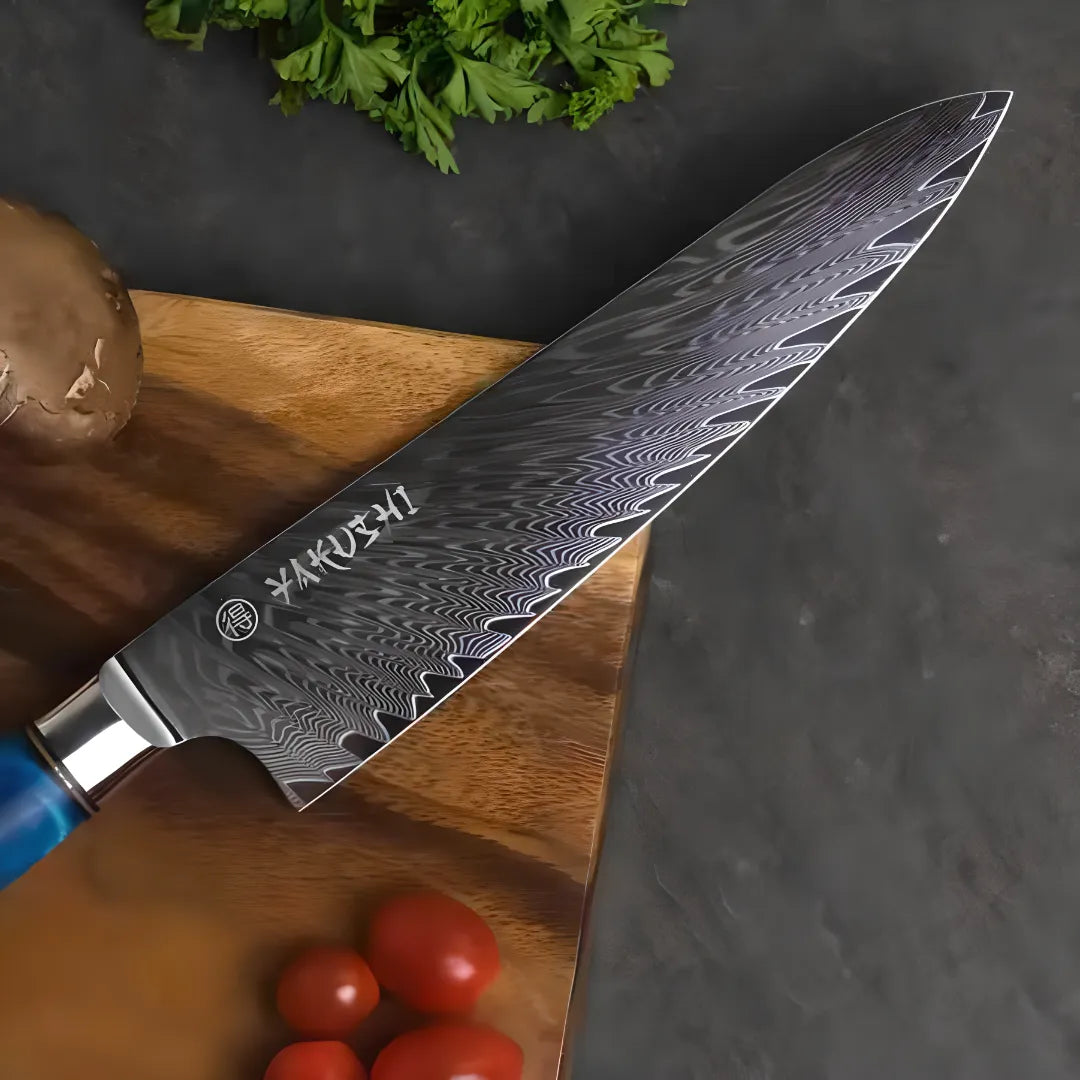
Our Damascus steel chef knives feature a VG-10 stainless steel core wrapped in 67 alternating layers of tough steel. VG-10 represents the pinnacle of Japanese blade engineering—high carbon steel content for exceptional hardness combined with chromium for corrosion resistance. The Damascus layering isn’t merely decorative; it creates structural integrity and a blade that’s simultaneously hard and resilient.
Superior Hardness Ratings
Where western style knives typically achieve 54-58 HRC, our Japanese knives reach 60+ HRC. This harder steel means a thinner, sharper edge that stays sharp through countless kitchen tasks. The trade-off—slightly more care required—is worth it for chefs who value precision over convenience.
Precision Blade Geometry
Every blade shape in our collection is ground to optimal angles. Double-bevel knives feature 12-15° edges per side—significantly sharper than the 20-25° angles common in western style chef’s knife designs. This geometry creates less resistance when cutting, allowing for precise cuts through vegetables, proteins, and delicate ingredients alike.
Ergonomic Handle Design
Hours of chopping shouldn’t leave your hand cramped. Our handles—crafted from premium Pakka wood, stabilized wood-resin composites, or polished natural wood—are shaped to reduce fatigue during extended use. The full tang construction extends through the handle, creating balance and durability that cheap riveted handles simply cannot match.
Handcrafted Excellence
These aren’t stamped from sheet metal by machines. Yakushi knives are forged in small batches, with each blade receiving individual attention during the manufacturing process. The heat treatment is precisely controlled, the grind is checked by hand, and the edge is finished to our exacting standards.
When to Choose These Knives
High-end Japanese kitchen knives aren’t for everyone. They’re specifically designed for cooks who recognize that their tools directly impact their results.
Choose these knives when:
-
Precision matters to your cooking—whether you’re creating restaurant-worthy presentations or simply want uniform cuts that cook evenly
-
You’ve outgrown standard blades—if you find yourself frustrated with dull edges and imprecise cuts from mass-produced knives
-
You’re ready to invest in tools that last decades—these are buy-once, use-forever investments for your kitchen
-
Your cooking demands reliability—professional chefs need knives that perform consistently through hours of busy service
-
You appreciate craftsmanship—the difference between a factory knife and a handcrafted Japanese blade is immediately apparent
-
Personal preference plays a key role—factors like weight, handle design, and blade shape affect comfort and performance. The weight of a chef's knife can affect its performance, with some cooks preferring a heavier knife for cutting power and others favoring a lighter knife for precision.
If you’re still using the knife sets you received as wedding gifts or the stainless steel blades you grabbed at a department store, upgrading to professional-grade cutlery will transform your relationship with cooking.
What Makes Our Knives Different
Walk into any kitchen store and you’ll find walls of chef knives claiming to be “professional grade” or “razor sharp.” Yakushi stands out as one of the best chef knives available, thanks to its exceptional craftsmanship, premium materials, and the perfect balance between German and Japanese knife-making traditions. High-end kitchen knives like Yakushi offer better edge retention, balance, and durability compared to budget knives. Here’s what actually separates Yakushi from the competition:
Authentic Japanese Steel vs. Marketing Claims
Many brands label their products “Japanese style” while manufacturing overseas with inferior steel. Our VG-10 Damascus blades are genuinely crafted using traditional Japanese metallurgical techniques. The 67-layer pattern you see isn’t laser-etched for appearance—it’s the visible result of forge-welding multiple steel layers together.
Compared to the Shun Classic series, which is also renowned for its traditional craftsmanship and high-quality VG-10 steel, Yakushi knives offer similar authenticity in steel quality and forging methods, but with a distinct handle design and blade profile tailored for both professional chefs and serious home cooks.
Optimized Heat Treatment
The same steel, improperly heat treated, performs dramatically differently. Our blades undergo controlled heating and cooling cycles that maximize hardness without creating brittleness. This is why our VG-10 achieves 60+ HRC while maintaining enough flexibility to resist chipping during normal use.
Individual Blade Attention
Mass-produced shun knives and other knives roll off assembly lines by the thousands. Our small-batch approach means each blade is inspected, tested, and refined individually. This isn’t scalable, but it’s the only way to maintain consistent excellence.
Transparent Specifications
We tell you exactly what you’re buying: the steel type, the hardness rating, the blade length, the weight, the handle material. No vague claims about “German engineering” or “surgical steel”—just honest specifications you can compare.
Price-to-Performance Ratio
By selling directly to you without retail markup, we deliver premium knives at prices significantly below comparable quality from established Japanese makers. Our Damascus Steel Chef Knife performs at the same level as blades costing twice as much from traditional retailers.
Steel Guidance
Understanding steel types helps you choose the right knife for your cooking style and maintenance preferences. Blade material is a personal preference—stainless steel is more forgiving and resistant to rust but tends to dull faster, while carbon steel holds a sharper edge but is more prone to chipping.
When comparing high end kitchen knives, consider the bolster design: a full bolster provides better balance and acts as a hand guard, but can make sharpening more challenging, while a half bolster offers easier sharpening and still enhances handle stability.
VG-10 Damascus Steel
Best for: Daily use, professional environments, cooks who want excellent performance with manageable maintenance
VG-10 is a high-carbon stainless steel developed in Japan specifically for premium cutlery. It contains vanadium for hardness, chromium for corrosion resistance, and cobalt for edge stability. Our 67-layer Damascus construction wraps this core in alternating layers of softer steel, creating a blade that’s visually stunning and structurally superior.
-
Hardness: 60+ HRC
-
Edge Retention: Excellent—stays sharp through weeks of regular use
-
Corrosion Resistance: Good—still requires drying after washing
-
Sharpening: Requires quality whetstones but takes an excellent edge
High-Carbon Stainless Steel
Best for: Home cooks, those wanting lower maintenance, everyday kitchen tasks
Our high-carbon stainless blades offer a balance between performance and convenience. Lower hardness than VG-10 Damascus means slightly less edge retention but easier sharpening and greater resistance to chips.
-
Hardness: 56-58 HRC typical
-
Edge Retention: Very good
-
Corrosion Resistance: Excellent
-
Sharpening: Easier than VG-10, responds well to honing
Premium Serbian High-Carbon Steel
Best for: Butchery, heavy cutting tasks, those who don’t mind more maintenance
Our Handmade Butcher Knife uses traditional Serbian high carbon steel. The blade is thick, providing the strength and heft needed for heavy-duty butchery tasks. This isn’t stainless—it will develop a patina and requires careful drying—but delivers exceptional toughness for cutting through tough proteins and bones.
-
Hardness: Variable, optimized for toughness over extreme hardness
-
Edge Retention: Good
-
Corrosion Resistance: Requires active maintenance
-
Sharpening: Takes an excellent edge quickly
Hardness Matters—Here’s Why
The Rockwell Hardness Scale (HRC) measures how resistant metal is to deformation. For kitchen knives:
-
52-56 HRC: Typical western style knives (Wusthof, etc.)—softer, duller faster, easier to sharpen
-
58-60 HRC: Quality Japanese knives—harder, sharper, holds edge longer
-
60-65 HRC: Premium Japanese blades—excellent edge retention, requires proper technique
Higher hardness enables thinner edges at more acute angles. This is why Japanese knives cut so precisely—their steel supports geometry that softer steels cannot maintain.
Size Guidance
Blade length directly impacts what you can accomplish efficiently. The chef's knife is the primary, versatile tool for most kitchen tasks, typically ranging from 6 to 12 inches in length and used for slicing, dicing, and chopping. Here’s how to match size to task.
Chef’s Knife / Gyuto Sizes
|
Length |
Best For |
Considerations |
|---|---|---|
|
8 inch (200-210mm) |
All-purpose cutting, most home cooks |
Most versatile size, works for 90% of kitchen tasks |
|
7 inch |
Smaller hands, limited counter space |
More maneuverable, slightly less efficient for large vegetables |
|
10 inch+ |
Professional kitchens, large-volume prep |
Covers more surface area, requires more space |
Our Damascus Steel Chef Knife features an 8 inch blade—the ideal go-to length for most cooks.
Specialty Knife Sizes
-
Santoku (5-7 inch): The Japanese alternative to the chef’s knife. Shorter, with a flatter blade shape that excels at up-and-down chopping rather than rocking cuts
-
Nakiri (5-7 inch): Vegetable specialist with a rectangular profile for precise cuts through vegetables
-
Paring Knives (3-3.5 inch): Precision work, peeling, detail cuts
-
Cleaver (8 inch): Heavy chopping, breaking down proteins
-
Yanagiba (9-12 inch): Single-bevel slicing knife essential for sushi and sashimi
-
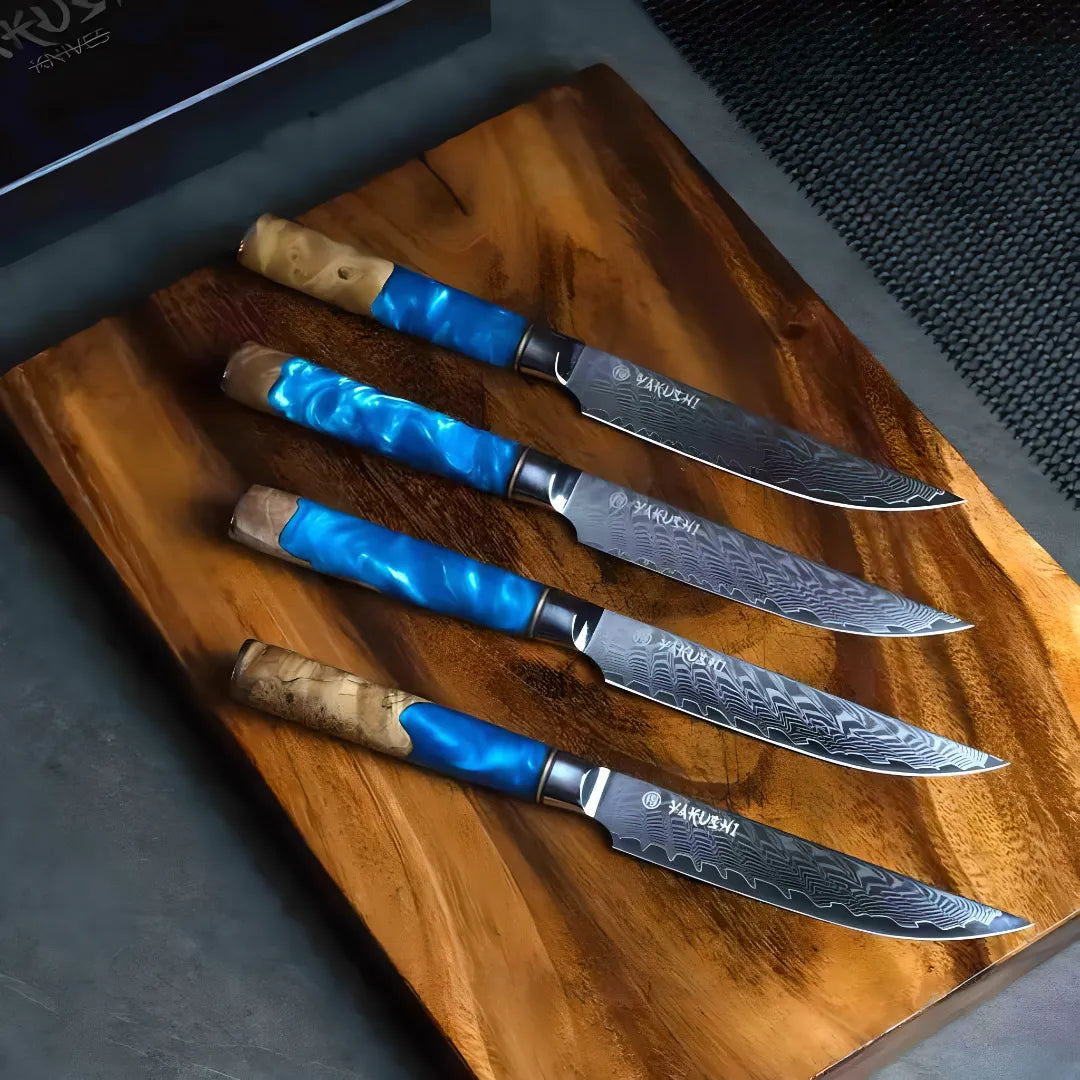
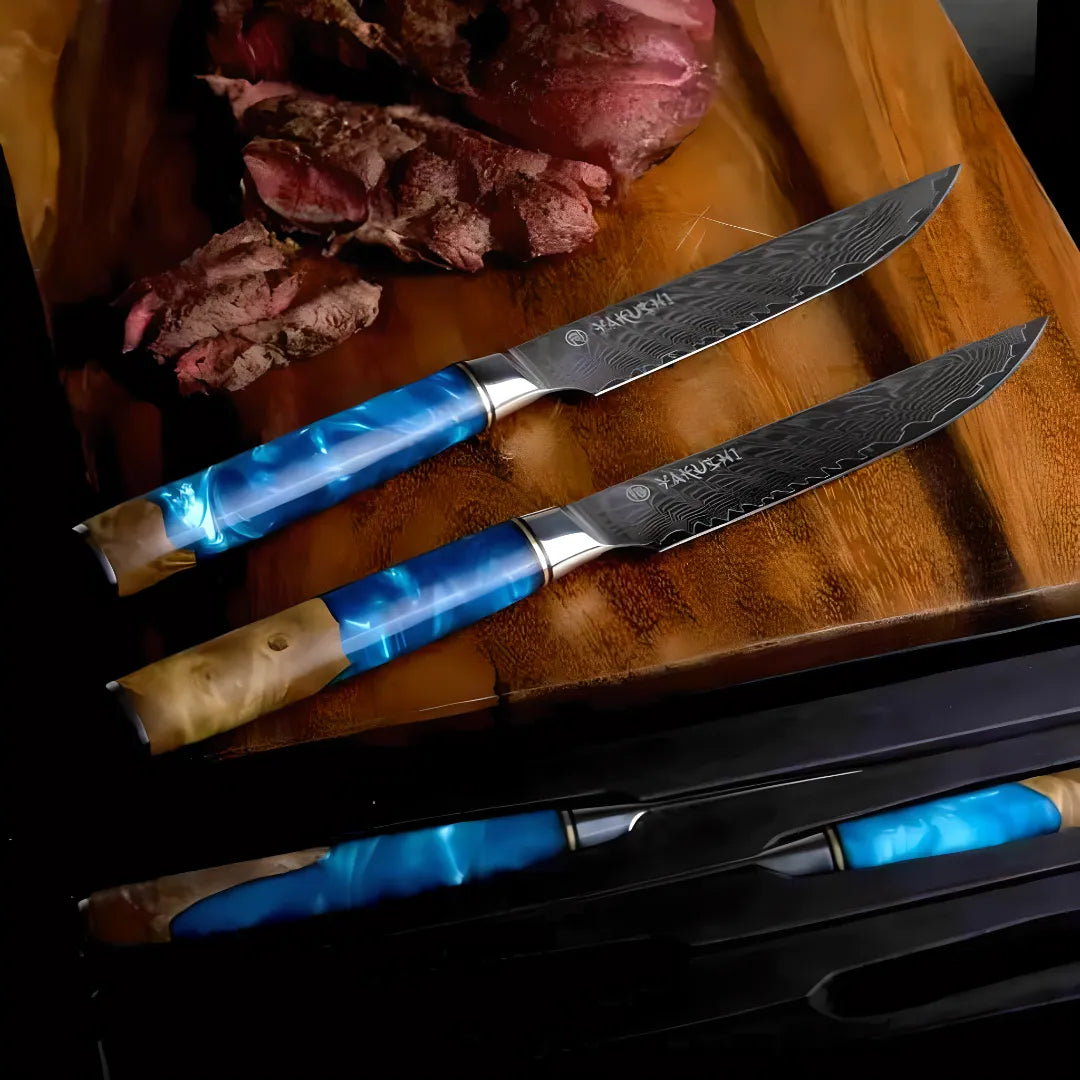
Steak Knives: Commonly included in comprehensive high end kitchen knife sets, steak knives are designed for the dinner table and are ideal for cutting cooked meats.
Matching to Your Hand
If you have smaller hands, an 8 inch blade with a slim handle offers better control than longer options. Larger hands benefit from more knives in the 8-10 inch range. The key is comfort—if you’re fighting your knife instead of working with it, the size is wrong.
Building a Complete Set
Most cooking can be accomplished with three knives:
-
Chef’s knife (8 inch) – Your primary tool for 80% of tasks
-
Paring knife (3.5 inch) – Detail work, peeling, trimming
-
Santoku or utility knife (5-7 inch) – Secondary cutting, smaller ingredients
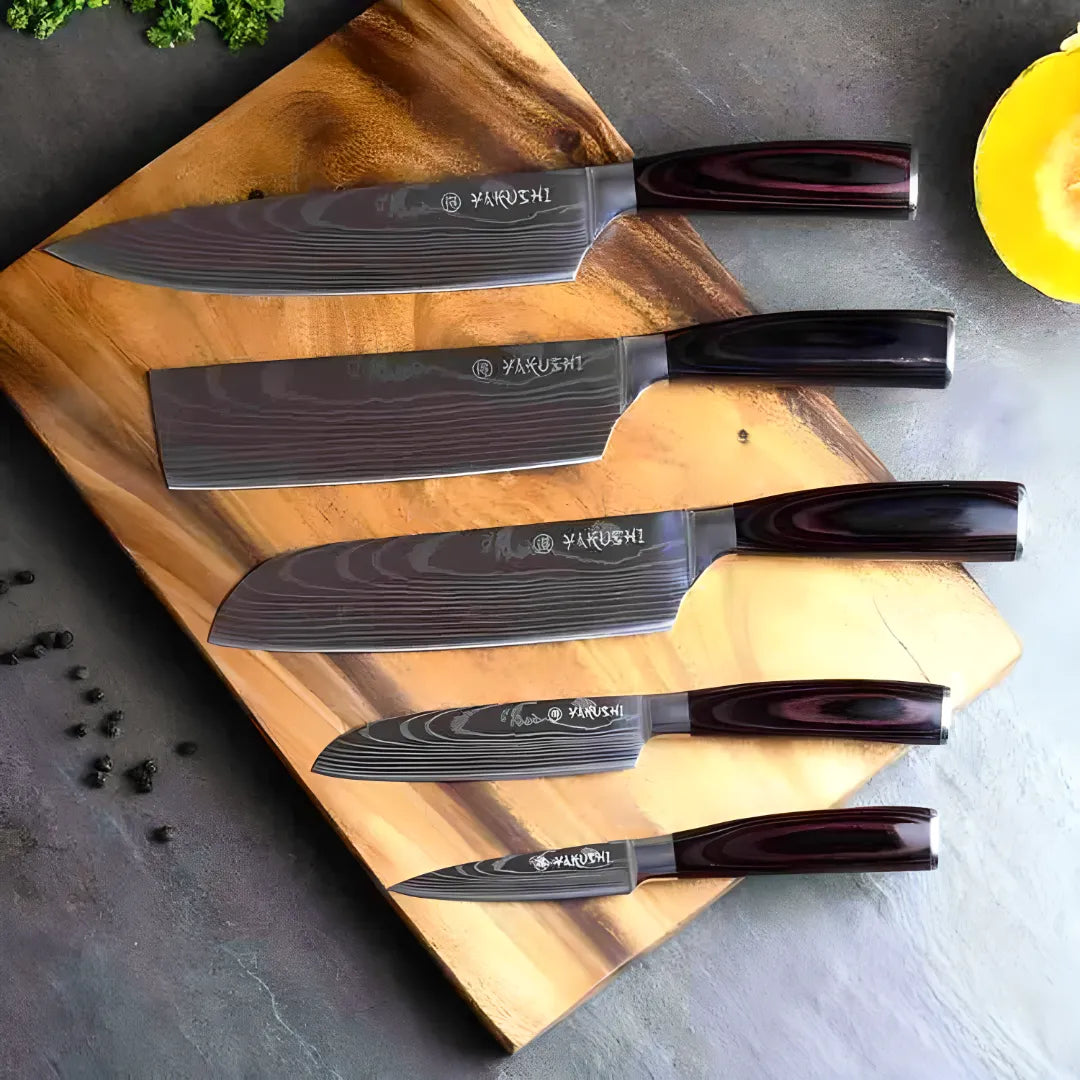
Our Master Knife Set (5-piece) covers all essential tool needs: 8” chef, 7” and 5” Santoku, 3.5” paring, and 8” cleaver.
Who These Knives Are For
Professional Chefs
When you’re preparing a hundred covers per service, your knife cannot fail. The edge retention of VG-10 Damascus means you’re not stopping mid-service to hone. The precision geometry means every slice of protein is consistent. The ergonomic handle means your hand isn’t cramped by the end of your shift.
Culinary Students
You’re investing in skills that will last a lifetime—your knives should match. Starting your career with professional-grade Japanese knives teaches you proper technique from day one. These are tools you’ll carry into every kitchen you work in.
Serious Home Cooks
If you cook daily and find joy in the process, inferior tools are stealing that joy. Upgrading to proper Japanese knives transforms meal prep from a chore into a pleasure. The super sharp edge glides through food rather than crushing it. The precise cuts mean better presentation and more even cooking.
Collectors and Enthusiasts
Our Damascus patterns are unique to each blade—no two are identical. For those who appreciate traditional craftsmanship and the intersection of function and art, these knives are meant to be used, admired, and passed down.
Anyone Ready for Better
If your current knives frustrate you—if they’re dull, uncomfortable, or simply inadequate—you’re ready. You don’t need to be a professional chef to deserve professional tools.
Our High-End Kitchen Knife Collection
Featured Models
|
Model |
Steel |
Blade Length |
Weight |
Handle |
Sale Price |
Regular Price |
|---|---|---|---|---|---|---|
|
Damascus Steel Chef Knife (Western-style chef's knife) |
67-layer VG-10 Damascus |
8” (23.1cm) |
198g |
Wood & Blue Resin |
$150 |
$250 |
|
Master Knife Set (5-piece) |
High-Carbon Stainless |
Various (8”, 7”, 5”, 3.5”) |
927g total |
Premium Pakka Wood |
$180 |
$300 |
|
Handmade Butcher Knife |
Serbian High-Carbon |
7” |
Heavy |
Polished Pakka Wood |
$126 |
$210 |
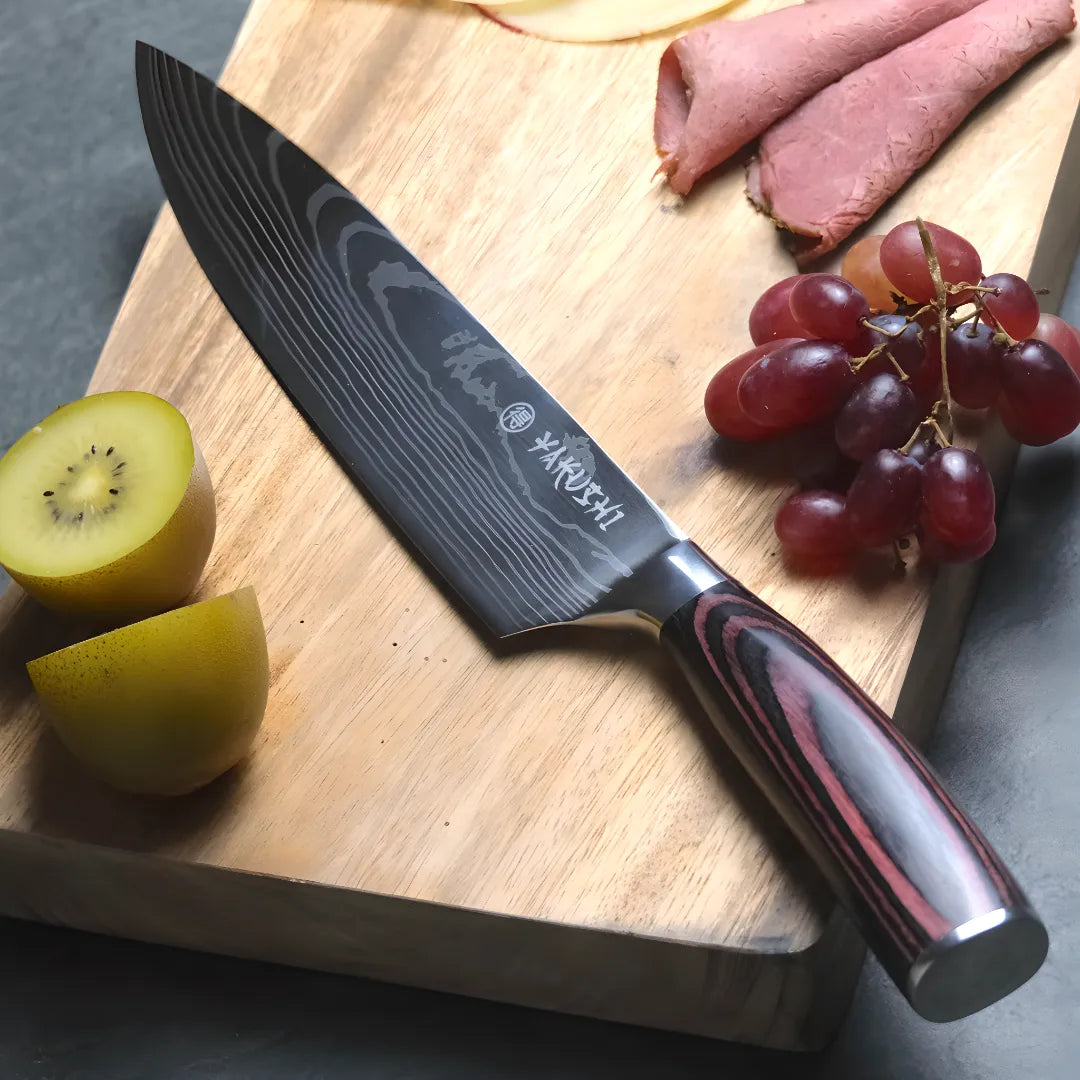
The Damascus Steel Chef Knife is a Western-style chef's knife, known for its heft, curved blade, and versatility for chopping, slicing, and heavy-duty food prep. Compared to Japanese-style knives, it offers more weight and a curved edge for rocking motions, making it ideal for a variety of kitchen tasks.
The price range for high-end knife sets typically starts around $500 and can go up to $2400.
Individual Knives
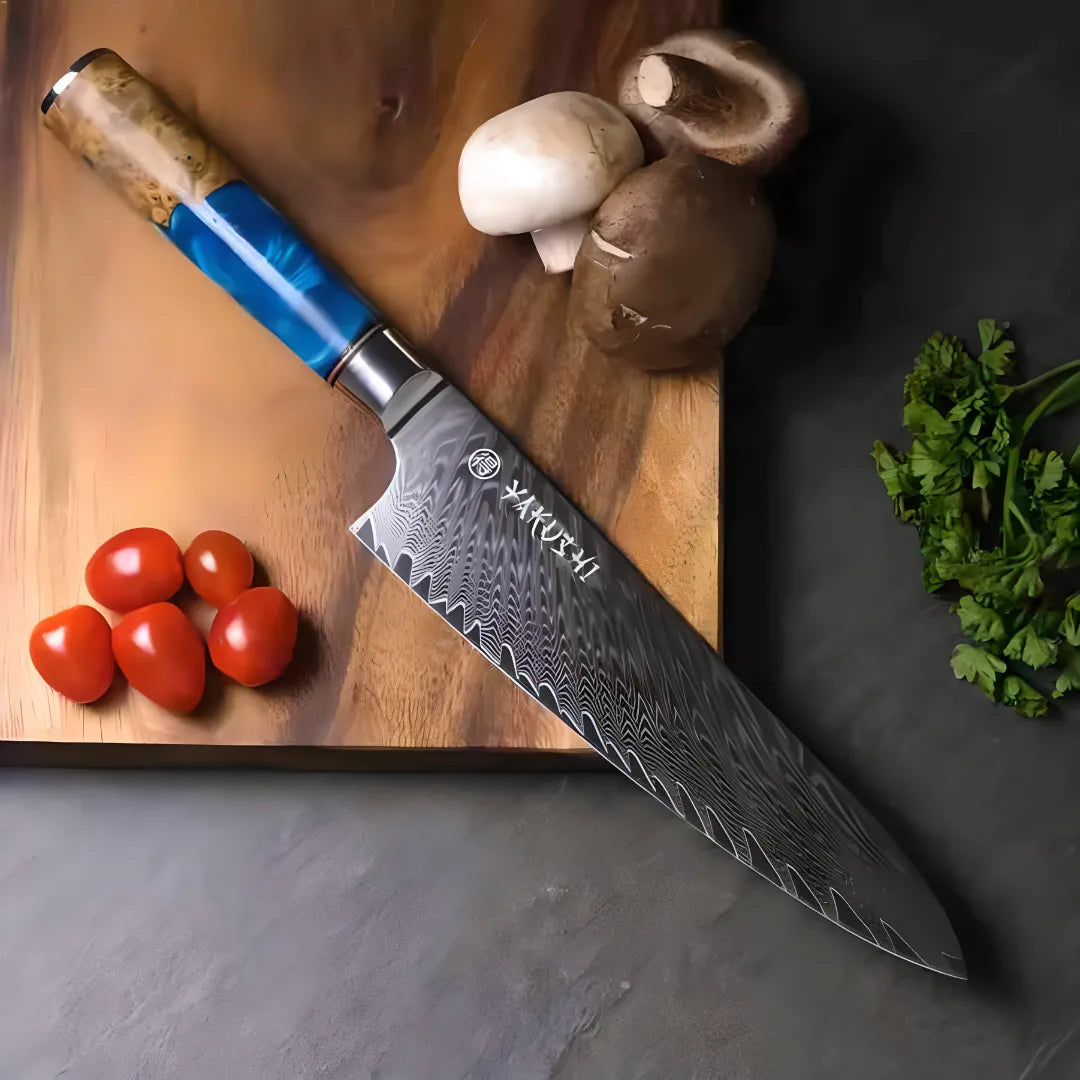
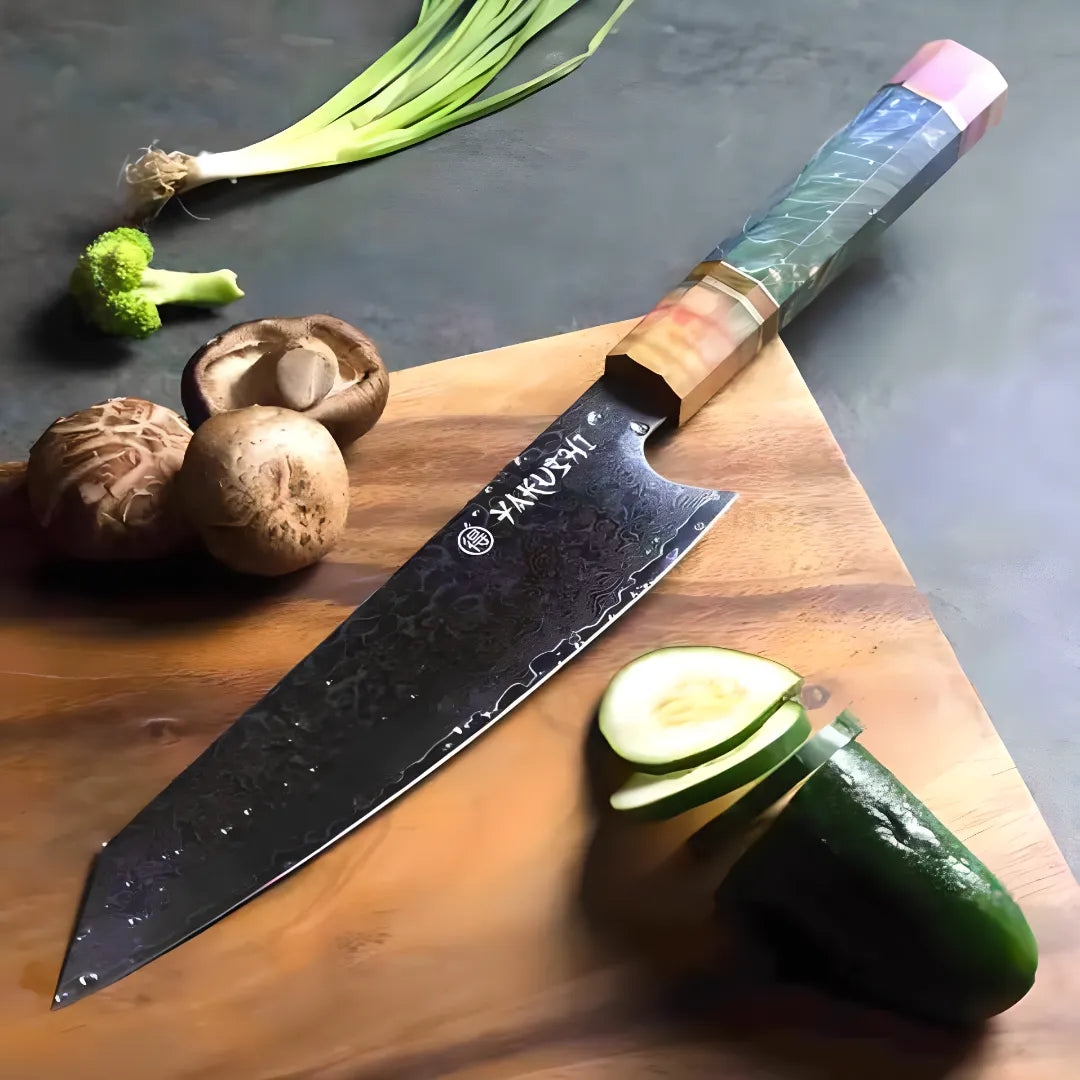
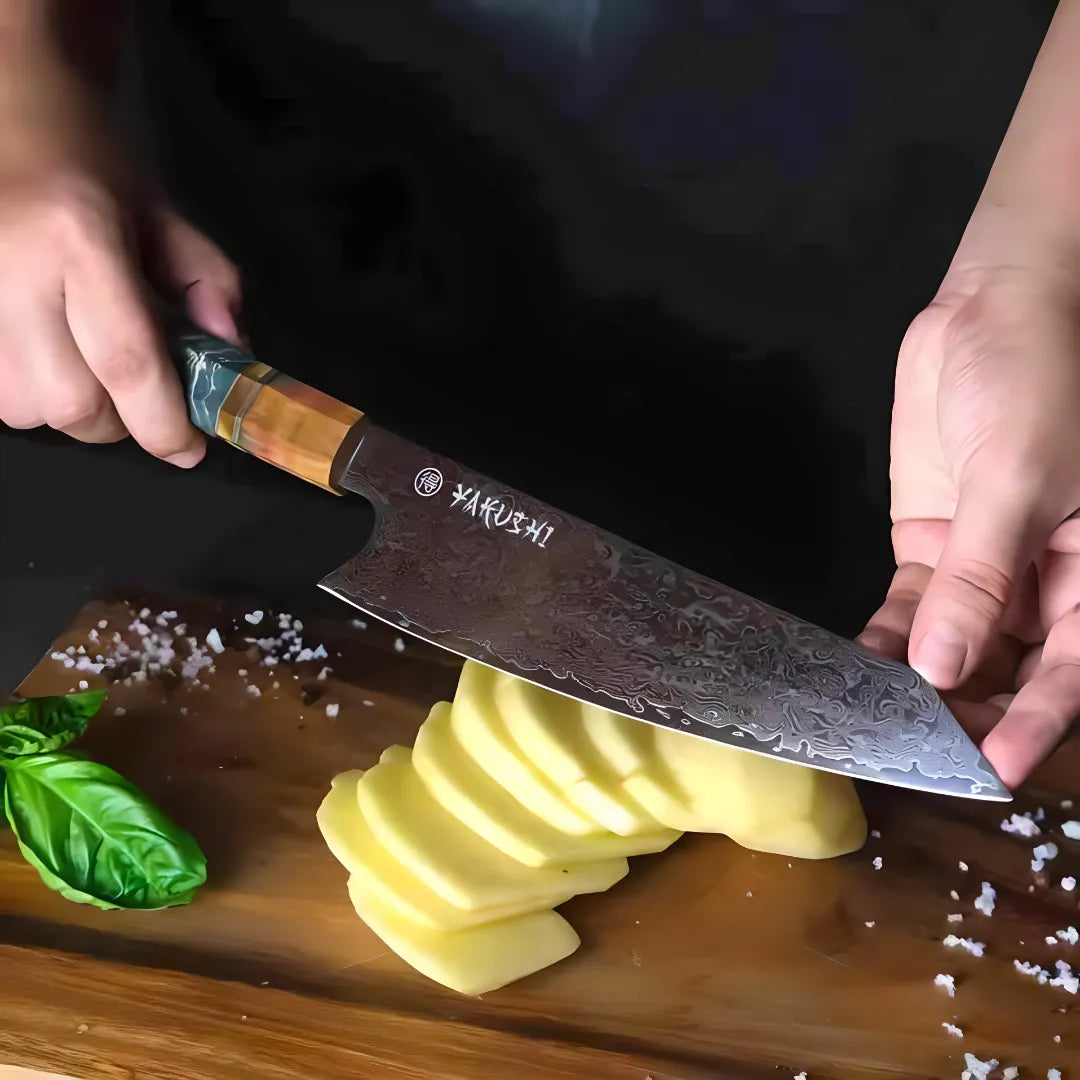
Damascus Steel Chef Knife – Our flagship blade. 67-layer Damascus with VG-10 core, stunning wave pattern, and exceptional performance. The wood and blue resin handle provides a secure grip wet or dry. This is the knife most of our customers start with—and the one they reach for most often.
Kiritsuke – A hybrid Japanese style blade combining the slicing ability of a yanagiba with the versatility of a gyuto. Single-bevel or double-bevel options available, featuring the same VG-10 Damascus construction as our chef’s knife.
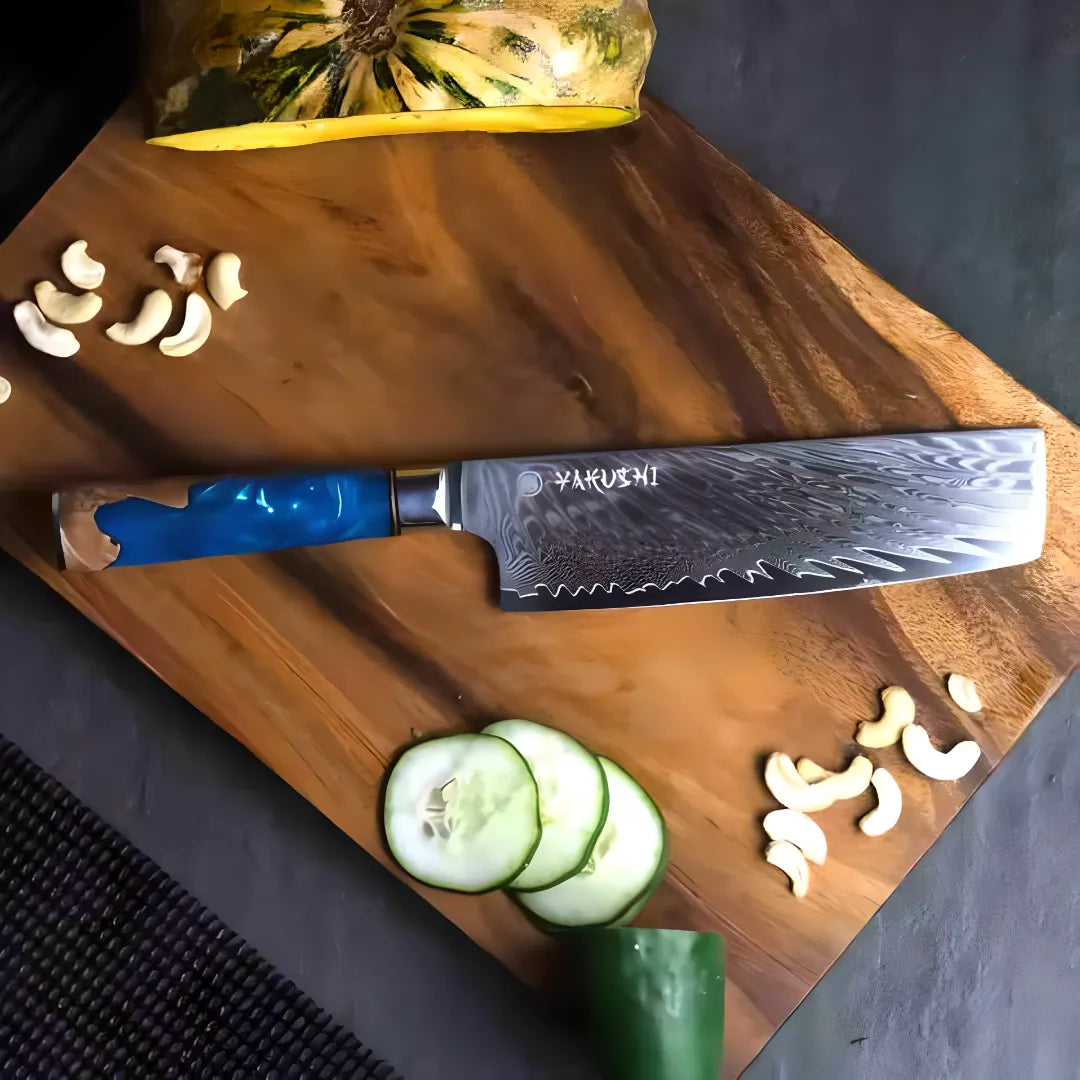
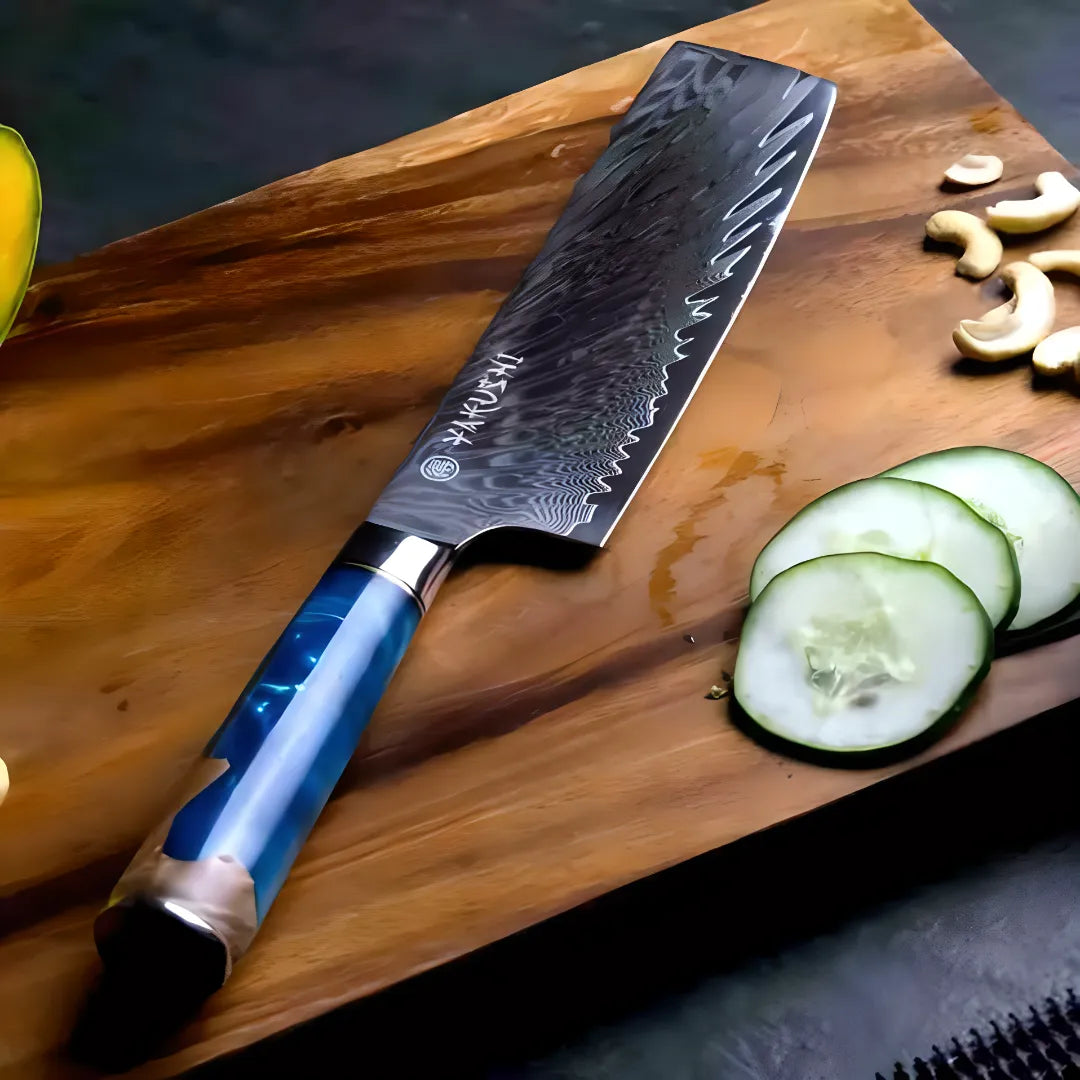
Nakiri – The vegetable specialist. Rectangular profile with a flat edge excels at clean cuts through everything from delicate herbs to dense squash. If you find yourself frequently chopping vegetables, this blade belongs in your collection.
Yanagiba – The sushi knife. Long, thin, and single-bevel, designed specifically for pulling cuts through fish. If you’re serious about sashimi or sushi at home, this is an essential tool.
Knife Sets
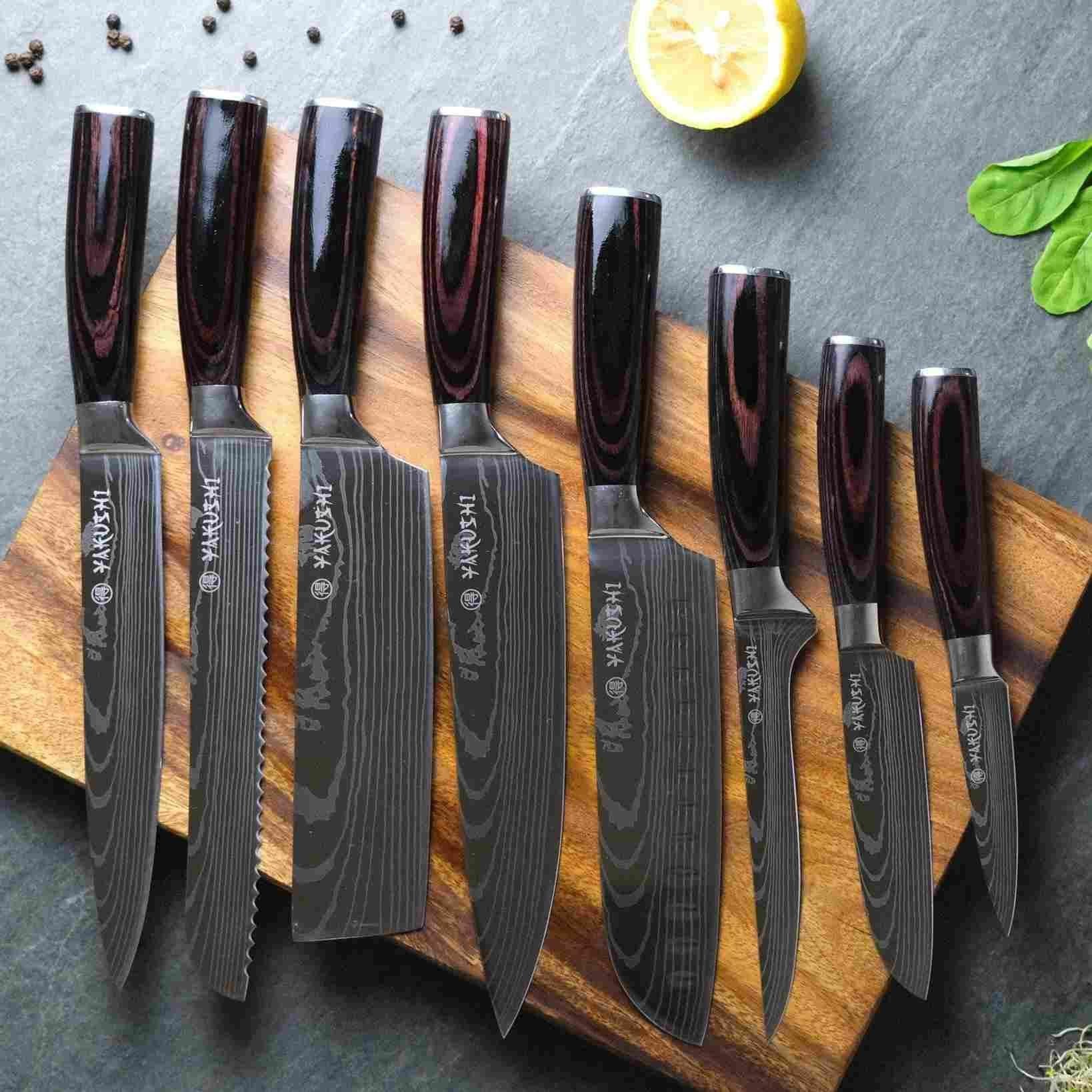
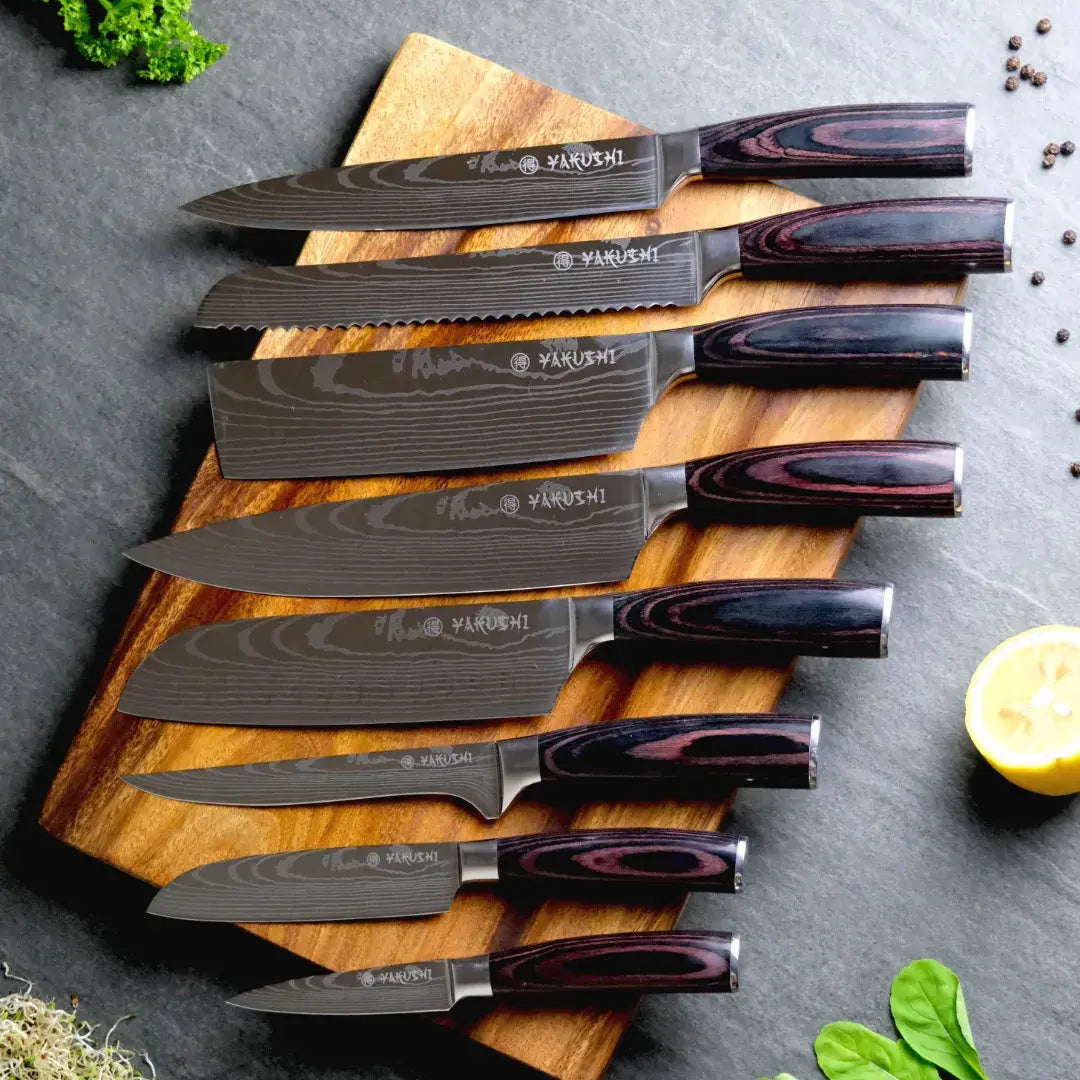
Master Knife Set (5-Piece) – Everything you need in one collection: 8” chef, 7” Santoku, 5” Santoku, 3.5” paring, and 8” cleaver. High-carbon stainless steel with premium Pakka wood handles. An exceptional value for outfitting a complete kitchen.
Full Knife Set (8-Piece) – Our comprehensive collection for those who want every blade they’ll ever need. Includes all the knives in the Master Set plus specialized options.
Recommendations by Experience
Beginners: Start with the Damascus Steel Chef Knife or Master Knife Set. These provide excellent performance while being forgiving enough for those learning proper technique.
Intermediate: Add specialty knives like the Nakiri or Santoku to complement your chef’s knife for specific tasks.
Advanced: Explore single-bevel options like the Yanagiba, and consider higher-end Damascus variants for the ultimate cutting experience.
Care Tips
High-end kitchen knives reward proper care with decades of excellent performance. Neglect them, and even premium steel will underperform.
Cleaning
-
Hand wash immediately after use—never leave food residue on the blade
-
Dry completely before storing—even stainless steel can develop spots if left wet
-
Never put in dishwasher—the harsh detergents and jostling damage both blade and handle
-
Use soft sponge, not abrasive scrubbers
Sharpening
Your Yakushi knives will need sharpening less frequently than mass-produced alternatives, but they will need sharpening eventually.
Recommended schedule:
-
Home cooks: Sharpen every 2-3 months with regular use
-
Professional chefs: Sharpen weekly or bi-weekly depending on volume
-
Honing: Use a ceramic honing rod between sharpening sessions to maintain alignment
Recommended method: Use Japanese whetstones. Start with 1000 grit to reset the edge, then move to 3000-6000 grit for finishing. Maintain consistent angles: 12-15° per side for double-bevel, 10-12° for single-bevel.
Storage
How you store your knives affects how long they stay sharp:
-
Magnetic strips (wood surface preferred)—keeps edges from contacting anything
-
Knife blocks—traditional option, ensure slots are clean
-
Blade guards/Sayas—essential if storing in drawers
-
Never store loose in drawers—edges contact other metal and dull rapidly
What to Avoid
-
Frozen food—can chip the blade
-
Bones—use the butcher knife, not your chef’s knife
-
Glass or stone cutting boards—use wood or plastic only
-
Twisting or prying—these knives are designed for cutting, not leverage
-
Lateral pressure—cut straight down, don’t rock and twist simultaneously
Reviews and Trust
Our customers validate what we promise. Here’s what they’re saying:
“First time I’ve ever had knives this sharp. The Damascus Chef Knife changed how I cook—cuts through everything like it’s nothing.” — Verified Buyer
“These are the best knives I own. I’m a culinary school graduate and these outperform knives at three times the price.” — Verified Buyer
“Beautiful blade, incredibly sharp, balanced perfectly. The wood and resin handle is a work of art.” — Verified Buyer
By the Numbers
-
Damascus Steel Chef Knife: 88 reviews, 4.8/5 average rating
-
Master Knife Set: 147+ reviews with consistent praise for sharpness and value
-
Over 5,000 orders shipped to professional and home kitchens worldwide
-
Featured on 500+ news sites and culinary publications
What Professionals Notice
Chefs consistently highlight edge retention as the standout feature. Where other knives require mid-shift honing, Yakushi blades maintain their cutting edge through service. The balance—achieved through full tang construction and proper weight distribution—reduces fatigue during long prep sessions.
Home cooks most frequently mention the immediate difference from their previous knives. The precision, the sharpness, the way vegetables slice instead of crush—these are the transformations that convert customers into advocates.
Warranty, Shipping & Returns
Warranty Coverage
All Yakushi knives include a 3-month craftsmanship warranty covering defects in materials and workmanship. This covers:
-
Blade defects from manufacturing
-
Handle separation or defects
-
Steel quality issues
Not covered: damage from misuse (cutting bones with chef knives, dropping, improper sharpening), normal wear, or cosmetic changes from use.
Satisfaction Guarantee
We offer a 30-day test run with 100% money-back guarantee. If your knife doesn’t meet your expectations within 30 days of delivery, contact our team for a full refund. The knife must be returned in the condition received.
Shipping
United States: Free shipping on all orders. Processing within 1-2 business days. Delivery typically 4-6 business days depending on location.
Canada: International shipping available. Delivery 5-8 business days after processing.
United Kingdom & Australia: International shipping available. Delivery 7-12 business days after processing.
Europe: Shipping available to most countries. Contact for specific delivery estimates.
Returns Process
-
Contact our customer service within 30 days of receiving your order
-
Receive return authorization and shipping instructions
-
Ship knife in original packaging
-
Refund processed upon inspection of returned item
Our “knife connoisseurs” are available to help with any questions about your purchase, warranty claims, or care guidance.
Frequently Asked Questions
How do I choose the right steel type for my needs?
For most cooks, VG-10 Damascus offers the best balance of performance and maintenance. If you cook daily and don’t mind occasional sharpening with whetstones, this steel will reward you with exceptional edge retention and corrosion resistance. If you prefer lower maintenance and easier sharpening, high-carbon stainless (like in our Master Set) is a practical choice.
What’s the difference between your knives and department store brands?
Three things: steel hardness, blade geometry, and craftsmanship. Department store knives (even expensive ones) typically use softer steel (52-56 HRC) with thicker edges at 20°+ angles. Our knives achieve 60+ HRC with 12-15° edges—sharper, longer-lasting, more precise. They’re also handcrafted in small batches rather than mass-produced.
How often should I sharpen my high-end kitchen knife?
Less often than you’d expect. Home cooks using their knives a few times per week can typically go 2-3 months between sharpening sessions. Professional chefs with daily high-volume use should sharpen weekly. Between sharpening, use a ceramic honing rod to maintain edge alignment.
Are these knives suitable for beginners?
Yes—with one caveat. Beginners need to learn proper cutting technique (no twisting, no prying, appropriate cutting surface). The sharper edge actually makes cutting safer because you use less pressure and the blade won’t slip. Our Damascus Steel Chef Knife and Master Set are specifically recommended for those upgrading from mass-produced knives.
What’s included with each knife purchase?
Each knife ships in protective packaging with a blade guard or sheath. Sets include all knives with their individual protections and a storage solution. All purchases include access to our care guides and customer support from our knife specialists.
What cutting board should I use?
Wood or high-quality plastic only. Never cut on glass, ceramic, stone, or metal surfaces—these will rapidly dull any blade, including ours.
Can I use these knives on bones?
Not the chef knives, nakiri, or specialty blades—they’re hardened for precision cutting, not heavy work. For bones and tough proteins, use our Handmade Butcher Knife, which is specifically designed with the thickness and steel composition for that task.
Do you ship internationally?
Yes. We ship to Canada, UK, Australia, and most European countries. US orders ship free. International shipping costs and delivery times vary by destination—see Shipping section above for estimates.
How do I register my knife for warranty coverage?
Your warranty is automatically active upon purchase—no registration required. Keep your order confirmation email as proof of purchase. Contact our customer service team for any warranty claims.
Ready to transform your cutting experience? Browse our collection and find the knife that matches your cooking style. Every blade ships with free US delivery and our 30-day satisfaction guarantee.

About the Knives
We are passionate craftsmen, dedicated to creating exceptional Japanese knives that embody beauty, function, and tradition. We use only the finest materials and employ conventional forging techniques to ensure that our knives are not only razor-sharp and durable but also a work of art.