The steel at the edge matters
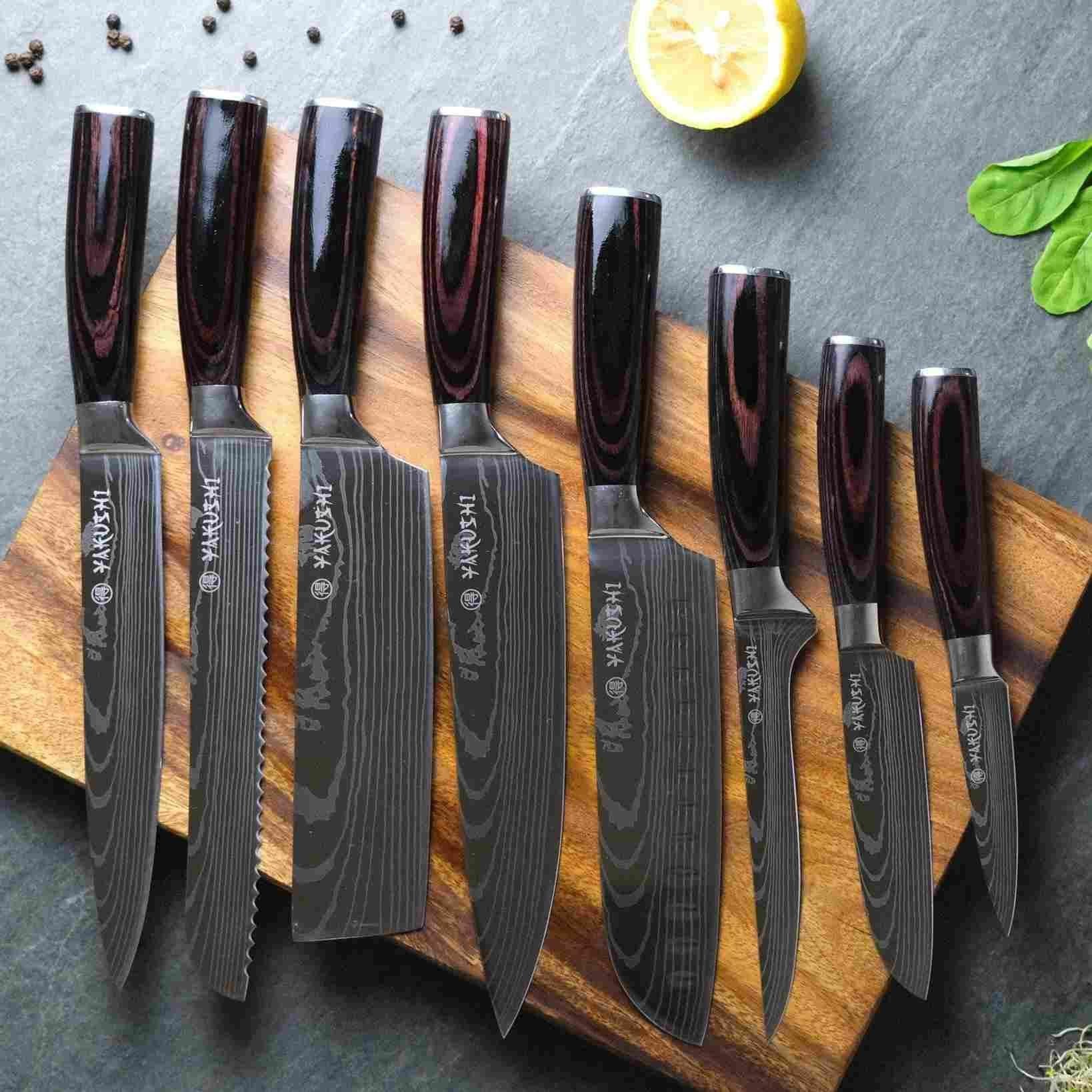
The chef knife, Nakiri, and steak knives publish VG-10 cores. The Kiritsuke publishes patterned stainless steel without assigning a named cutting-core alloy.
Distinctive patterns, clearly explained
Compare four Yakushi options—from an 8-inch VG-10 chef knife and 7-inch Nakiri to a K-tip Kiritsuke and straight-edge steak knife sets—using verified product-specific steel and construction details.
Damascus terminology can describe layered steel construction, cladding, or a patterned finish depending on the individual knife. Browse the native product grid below, then use the guide to compare each Yakushi model by its published core steel, blade profile, construction, intended tasks, and care requirements.
Filters
4 products
Look beyond the pattern
Modern kitchen-knife listings use Damascus language in several ways: for layered construction around a cutting core, for Damascus cladding, or for a flowing patterned finish. Those descriptions are not interchangeable. The steel at the cutting edge, heat treatment, blade geometry, bevel, and intended use matter more than appearance alone, so this guide follows each Yakushi product’s current specification.
Four live products, accurately compared
The comparison avoids applying one core steel, layer count, hardness, tang, or sharpening angle to every knife simply because each has a visible pattern.
| Product | Verified steel and construction | Best suited to | Key specification |
|---|---|---|---|
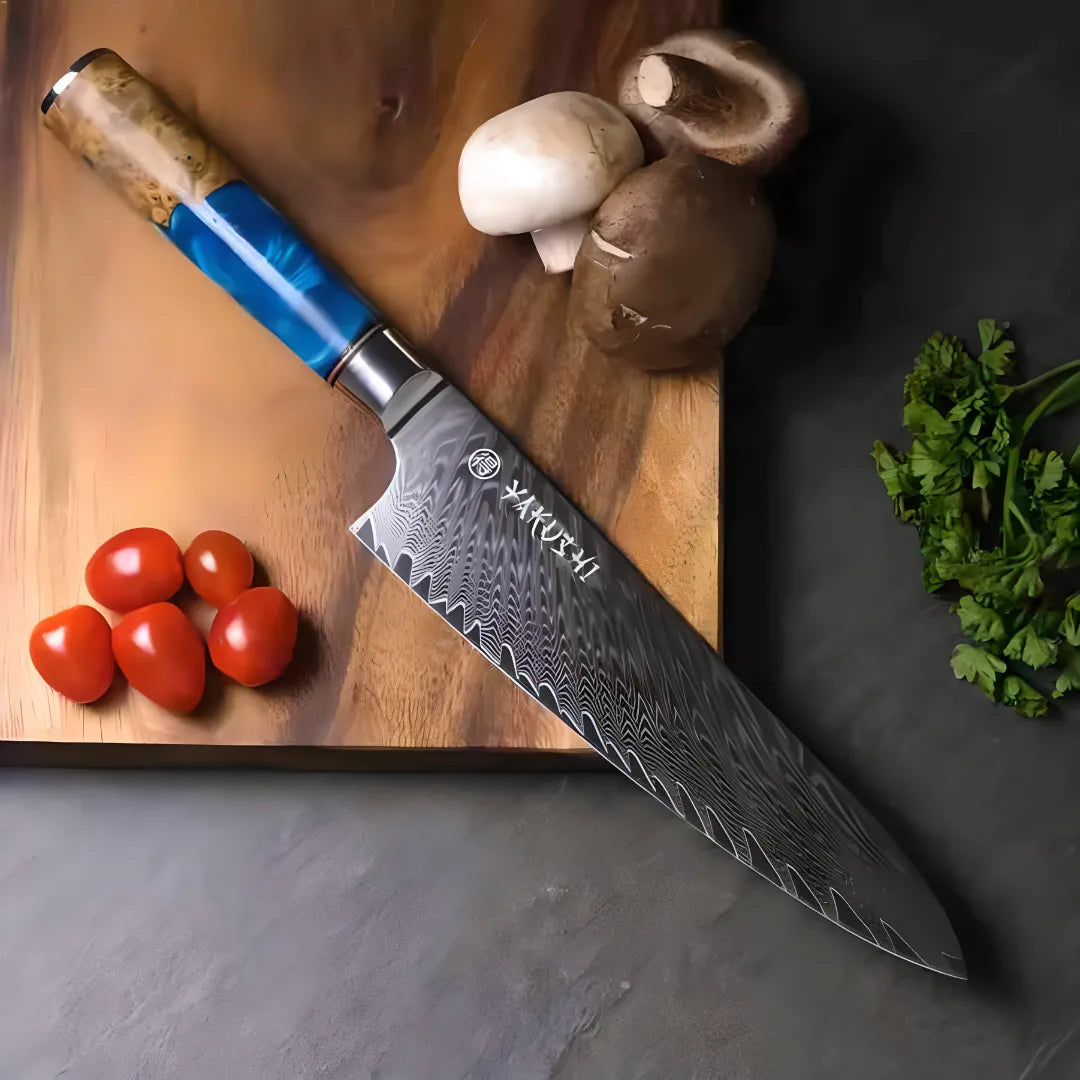
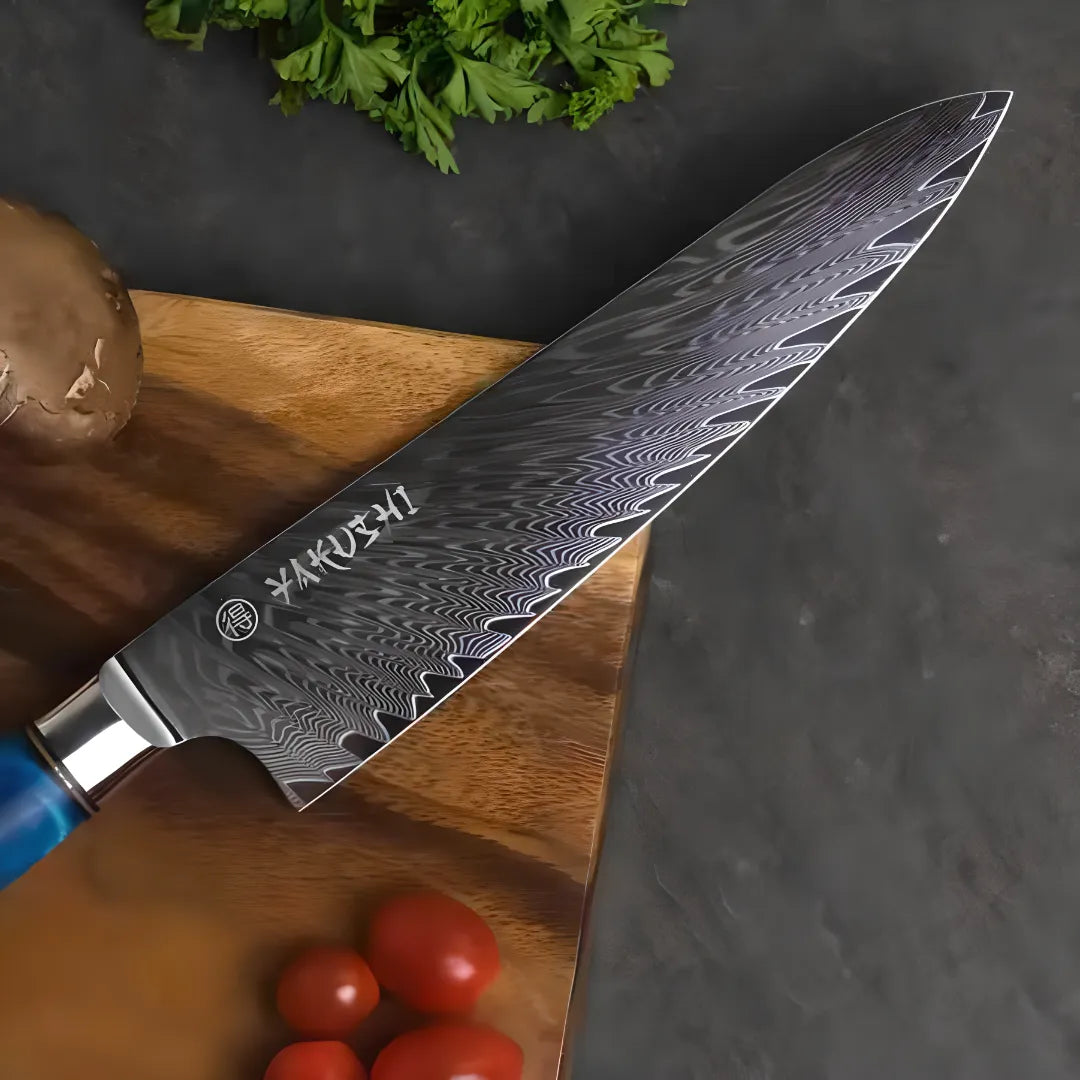
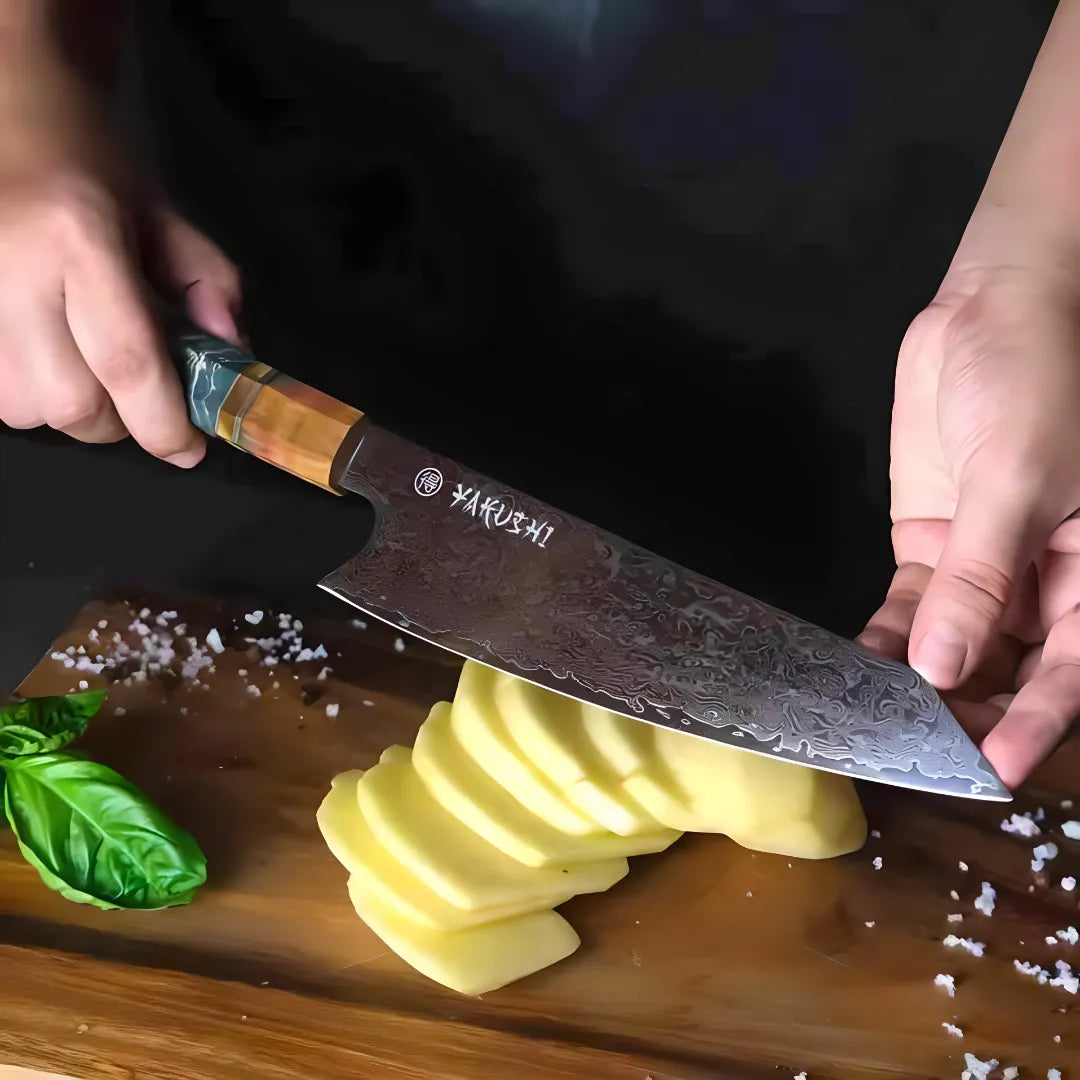
| Damascus Steel Chef Knife | VG-10 stainless cutting core, Damascus-style flowing pattern, double bevel, full tang | Everyday chopping, slicing, dicing, mincing, and boneless protein preparation | 8-inch blade, 198g, solidified wood-and-blue-resin handle |
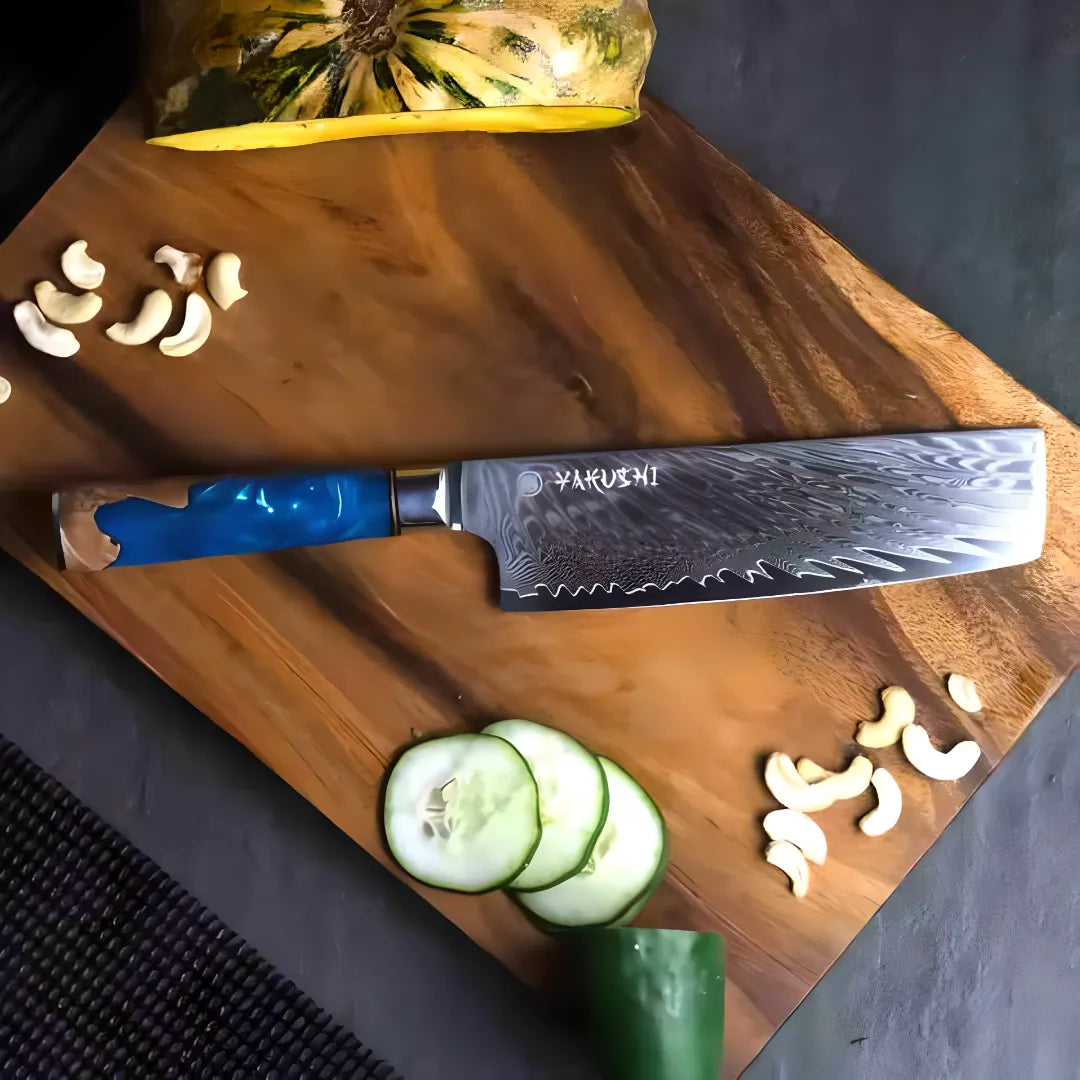
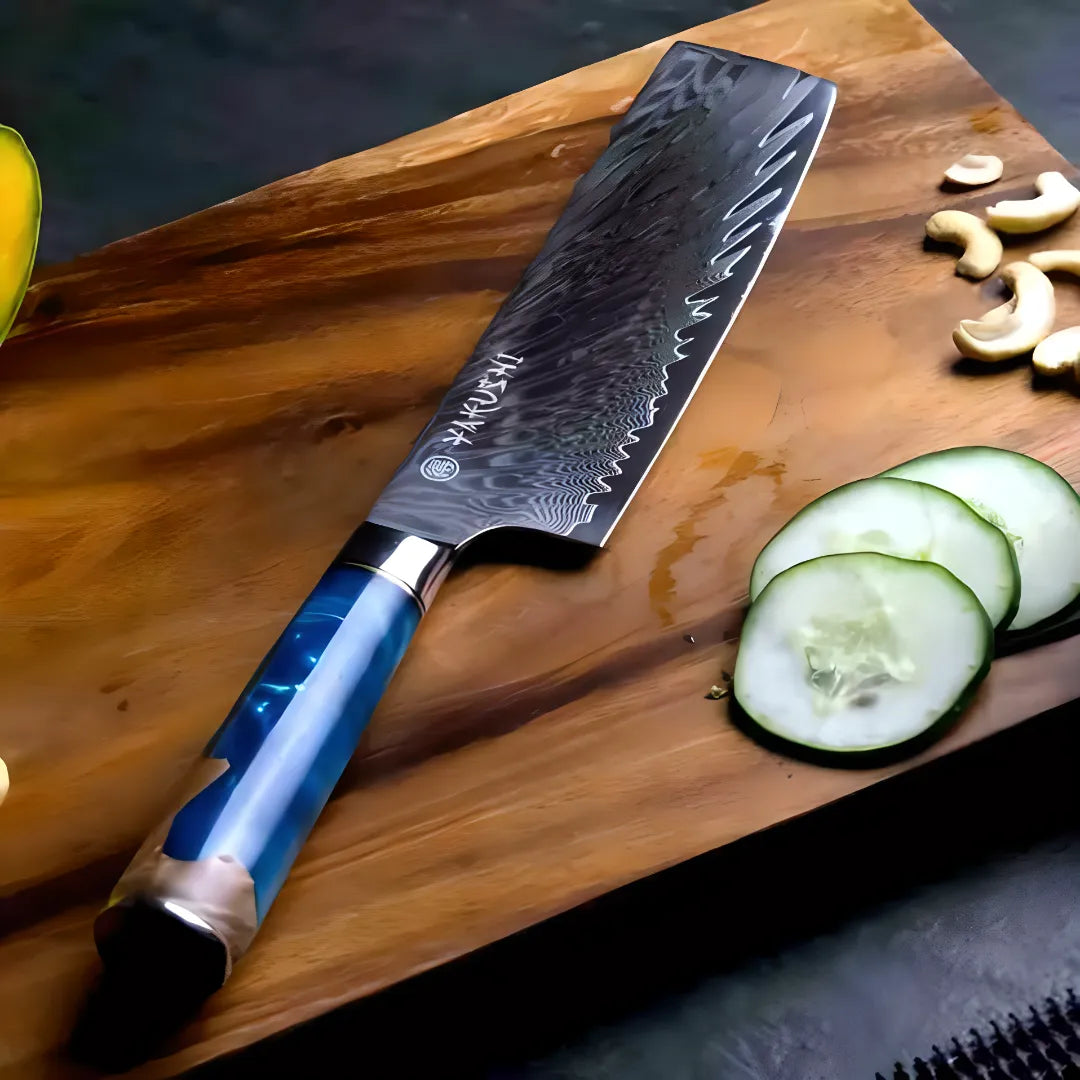
| Damascus Nakiri Knife | VG-10 core, 67-layer Japanese Damascus steel, HRC 60+, straight double bevel, full tang | Vegetables, herbs, fruit, and controlled up-and-down chopping | 7-inch blade, 240g, solidified wood-and-blue-resin handle |
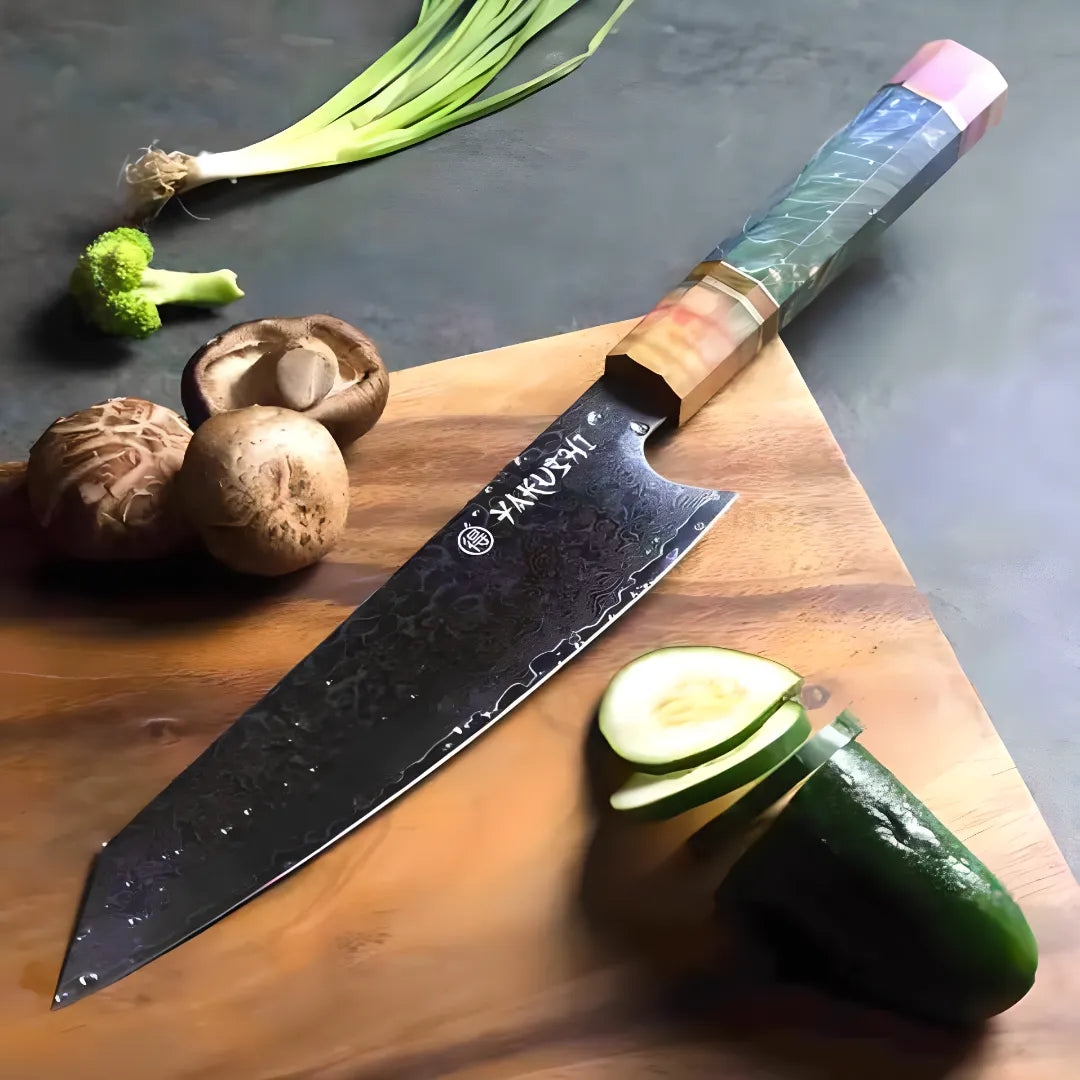
| Damascus Kiritsuke Knife | Patterned stainless steel, Damascus-style flowing finish, double bevel, half tang | Push cutting, pull slicing, scoring, trimming, and precise K-tip work | 8-inch blade, 192g, octagonal coloured-sandalwood handle |
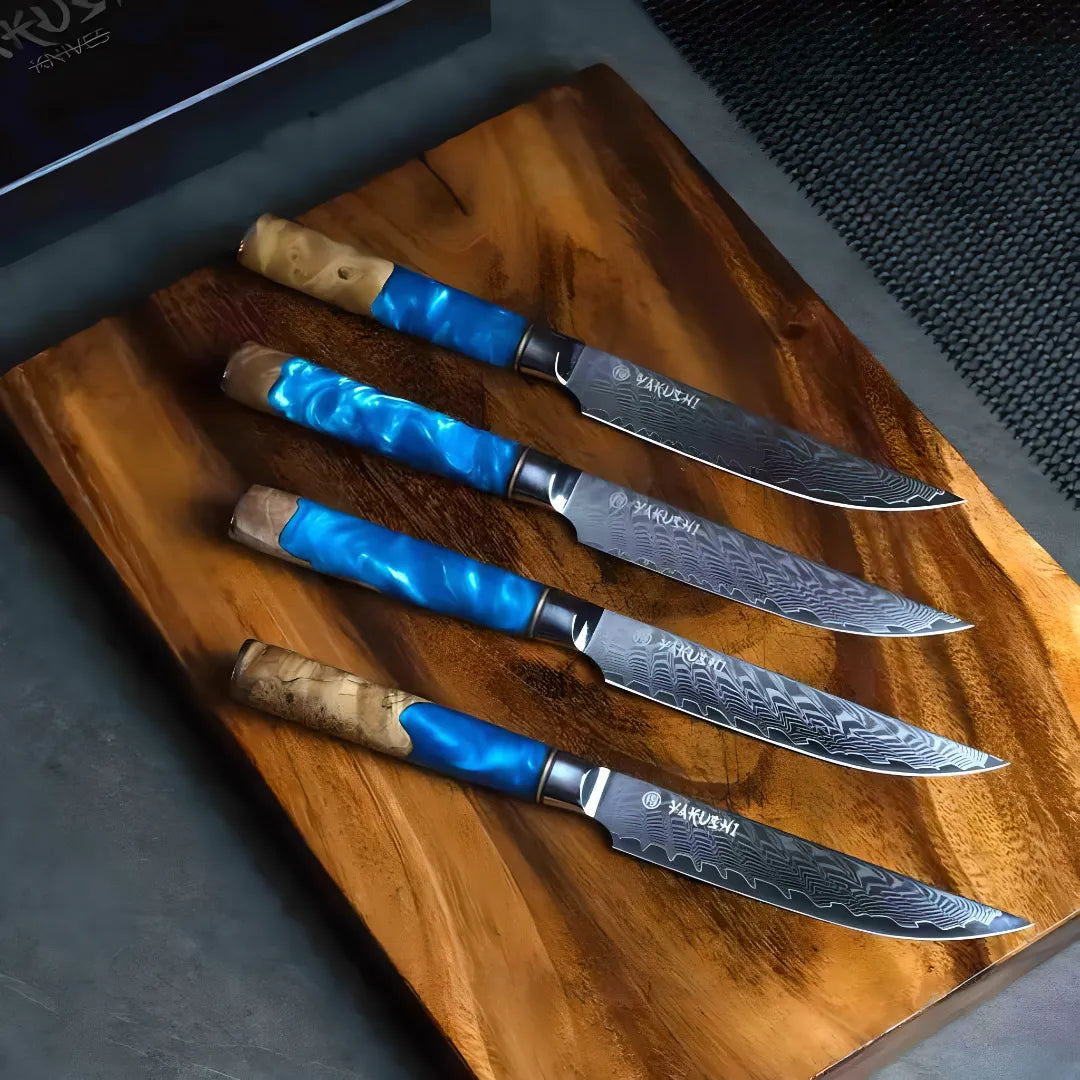
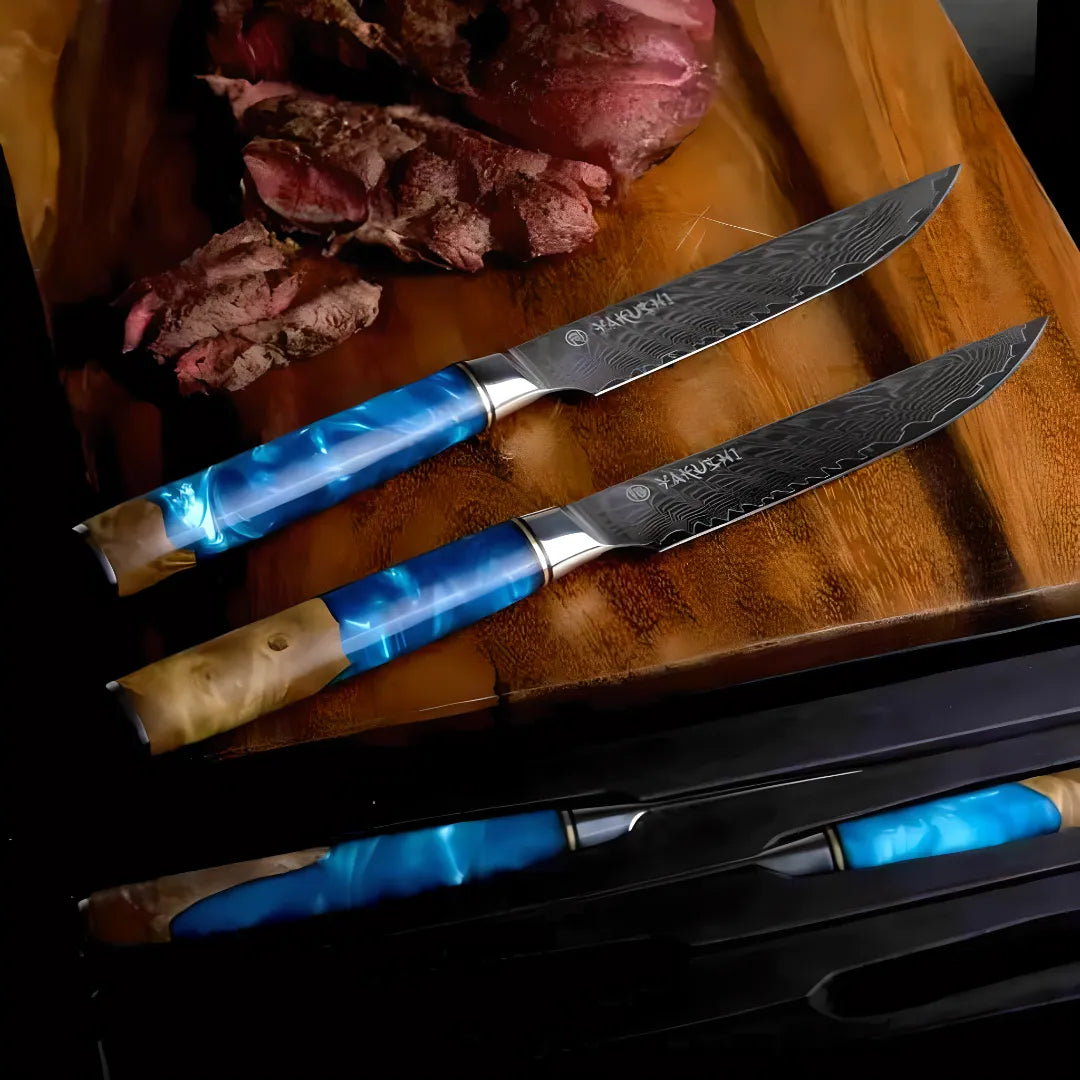
| Damascus Steak Knife Set | VG-10 core, 67-layer Japanese Damascus steel, HRC 60+, straight double-bevel edge | Clean table-side slicing through steaks, chops, and cooked proteins | 5.5-inch blades; sets of 4, 8, or 12; 79g per knife |
Pattern is only part of the knife
The chef knife, Nakiri, and steak knives publish VG-10 cores. The Kiritsuke publishes patterned stainless steel without assigning a named cutting-core alloy.
The Nakiri and steak knives publish 67-layer Japanese Damascus steel. The chef knife and Kiritsuke product pages describe patterned finishes without publishing the same layer count.
A curved chef knife, flatter Kiritsuke, rectangular Nakiri, and compact steak knife behave differently even when their surfaces share a visually related pattern.
The chef knife and Nakiri are full tang, while the Kiritsuke is half tang. Published weights and handle materials also vary, so compare the complete product specification.
Start with how you cook
Choose the curved all-purpose chef profile when you want one main knife for vegetables, fruit, herbs, aromatics, suitable boneless proteins, and everyday meal preparation.
View the chef knifeChoose the tall rectangular Nakiri when produce-heavy cooking, clean board contact, and controlled up-and-down chopping are your priorities.
View the NakiriChoose the Kiritsuke-style profile for flatter push cuts, long pull slices, scoring, trimming, and shallow detail work with a low angled tip.
View the KiritsukeChoose matching 5.5-inch straight-edge knives for steaks, chops, and cooked proteins. Sets of four, eight, or twelve let you match the number of place settings.
View the steak knivesFour patterns, four different jobs
| Knife | Blade profile | Preferred motion | Best reason to choose it |
|---|---|---|---|
| Chef knife | Curved, pointed 8-inch all-purpose blade | Chopping, slicing, dicing, mincing, draw cuts, and gentle rocking | One versatile primary knife for everyday preparation |
| Nakiri | Tall 7-inch rectangular blade with a straighter edge | Up-and-down chopping and forward push cuts | Focused vegetable preparation and consistent board contact |
| Kiritsuke-style knife | Flatter 8-inch edge with an angled K-tip | Push cutting, pull slicing, scoring, and shallow tip work | Long slicing reach combined with precise tip control |
| Steak knife | Compact 5.5-inch straight-edge table blade | Controlled slicing through cooked food | Matching individual knives for steaks, chops, and entertaining |
Protect patterned blades with appropriate use
Simple habits preserve the edge and finish
Use mild dish soap, warm water, and a soft sponge. Do not soak a knife or place it in a dishwasher.
Dry immediately, then use a sheath, stable knife block, or safe magnetic rack that prevents contact with other utensils.
Use a suitable whetstone, quality guided system, or trusted professional service. Do not impose one universal angle on different knife geometries.
HRC refers to the Rockwell C hardness scale used for testing steel. NIST maintains Rockwell C reference standards for calibrating and verifying hardness-testing equipment. In this collection, HRC 60+ is published for the Nakiri and steak knives; it should not automatically be assigned to the chef knife or Kiritsuke. Learn more from the National Institute of Standards and Technology.
Compare related collections and practical guides before choosing the patterned knife that best matches your cutting motion, ingredients, maintenance preferences, and available storage.
Straight answers
Modern Damascus terminology commonly refers to layered or pattern-welded steel, Damascus cladding around a cutting core, or a Damascus-style patterned finish. The exact meaning depends on the product specification, so appearance alone should not be used to infer the core alloy or layer count.
No. The chef knife, Nakiri, and steak knives publish VG-10 cores, while the Kiritsuke lists patterned stainless steel without a named core. Published layer count, hardness, tang, weight, handle, and blade profile also vary.
The current Nakiri and steak knife product pages publish 67-layer Japanese Damascus steel, VG-10 cores, and HRC 60+ hardness. The chef knife and Kiritsuke do not publish that same complete specification.
The 8-inch Damascus Steel Chef Knife is the most versatile single option for everyday chopping, slicing, dicing, mincing, and suitable boneless protein preparation.
The 7-inch Nakiri is the most vegetable-focused model. Its tall rectangular profile and straight edge favor controlled push cuts and up-and-down chopping.
Use the 8-inch Kiritsuke-style knife for push cutting, pull slicing, vegetables, suitable boneless proteins, scoring, trimming, and shallow work with its angled K-tip. It is less suited to continuous rocking.
The straight-edge Damascus steak knives are available in sets of four, eight, or twelve. Each knife has a 5.5-inch blade and a published weight of 79g.
No. Cutting performance also depends on the steel at the edge, heat treatment, blade thickness, profile, grind, sharpening, intended use, and care. Patterned knives can differ substantially even when their finishes look related.
No. Keep these knives away from bones, joints, frozen food, hard pits, shells, hard surfaces, twisting, prying, and forceful impacts that can damage an edge or pointed tip.
Hand-wash with mild dish soap, dry immediately, cut on wood or a suitable synthetic board, and store the edge safely. Maintain the existing bevel with an appropriate method instead of assuming every Damascus knife uses the same angle.
Start with the verified steel and construction, then select the chef knife, vegetable-focused Nakiri, precision K-tip Kiritsuke, or steak knives that match the work you actually do.