Chef Knife
All-purpose chopping, slicing, dicing, mincing, vegetables, fruit, herbs, and suitable boneless proteins.
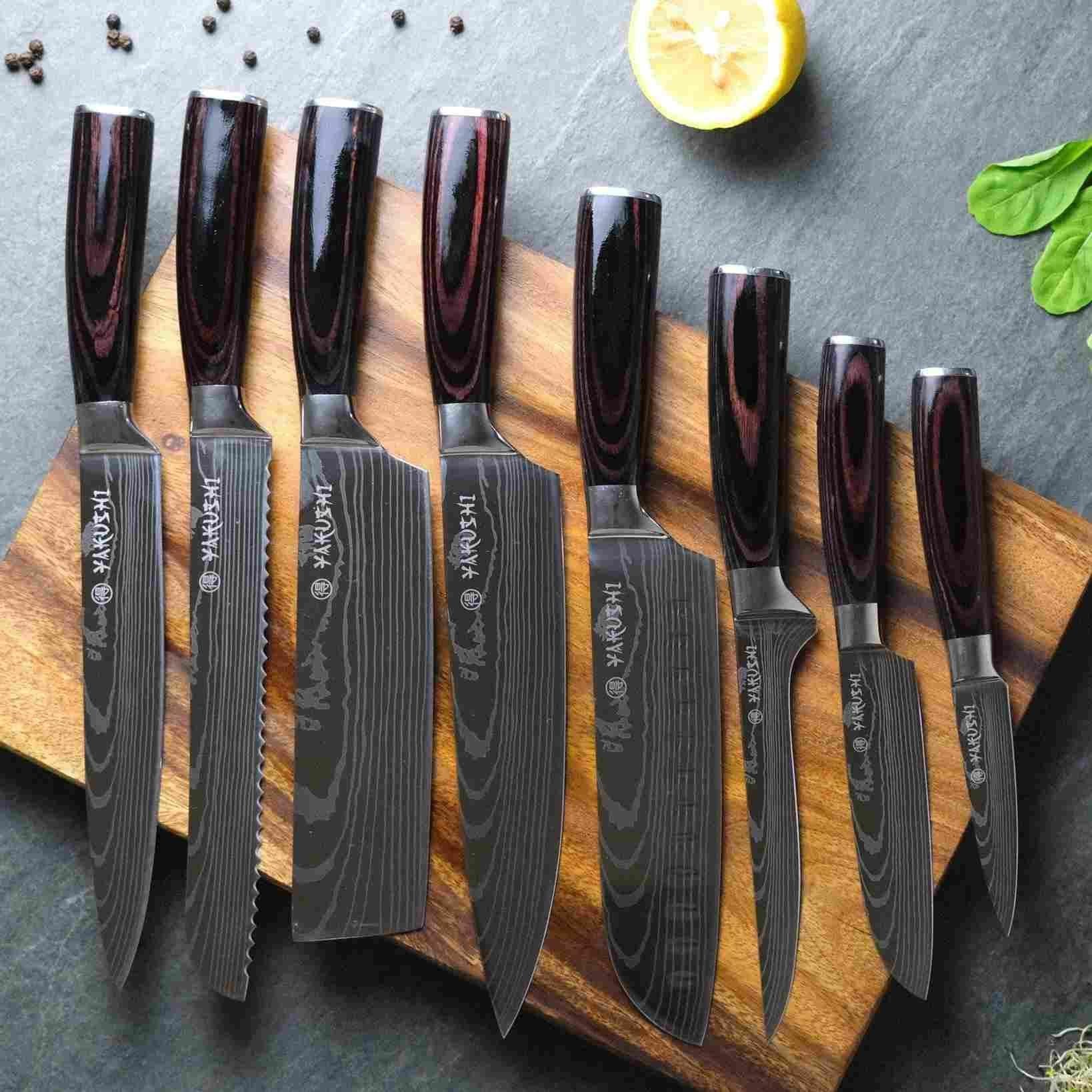

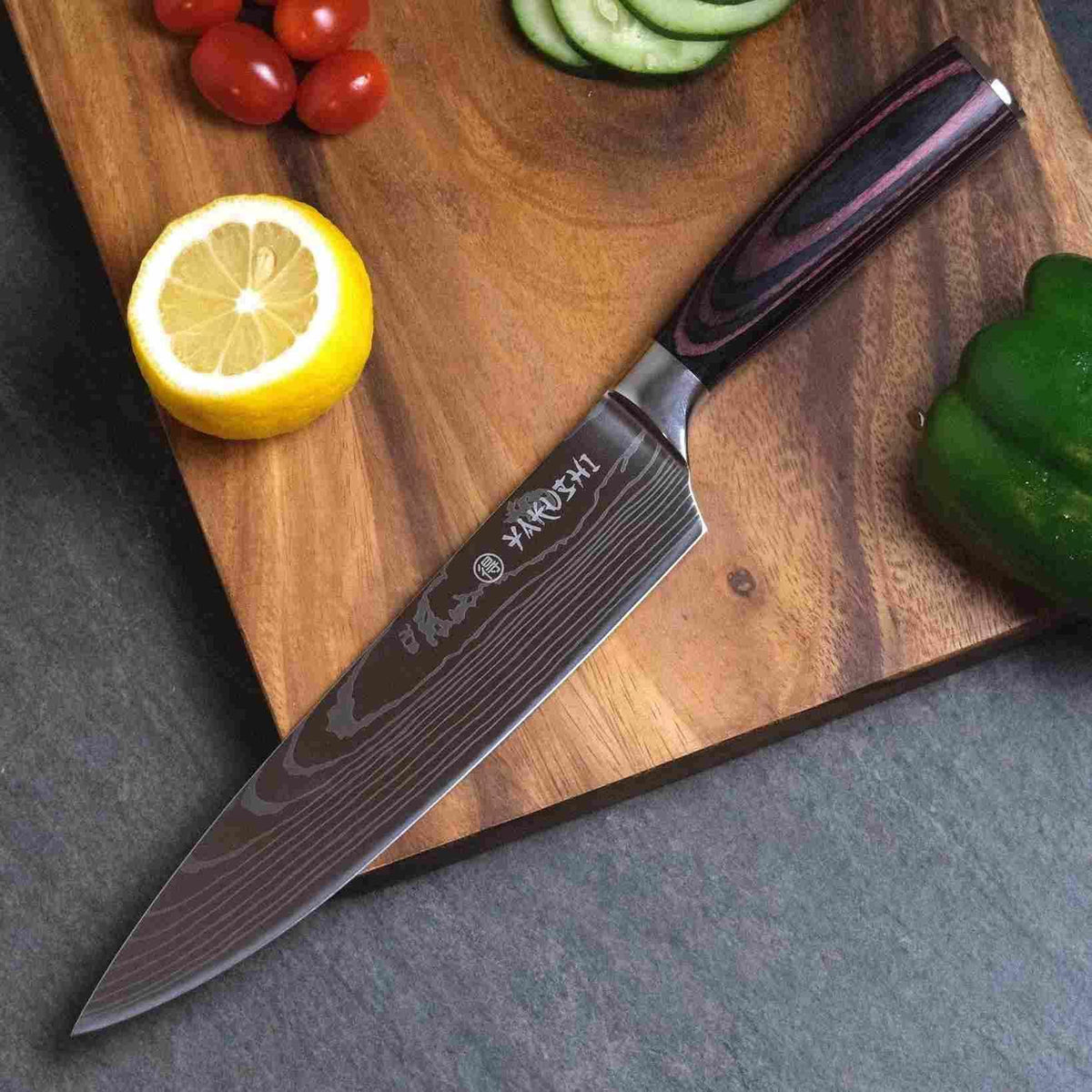
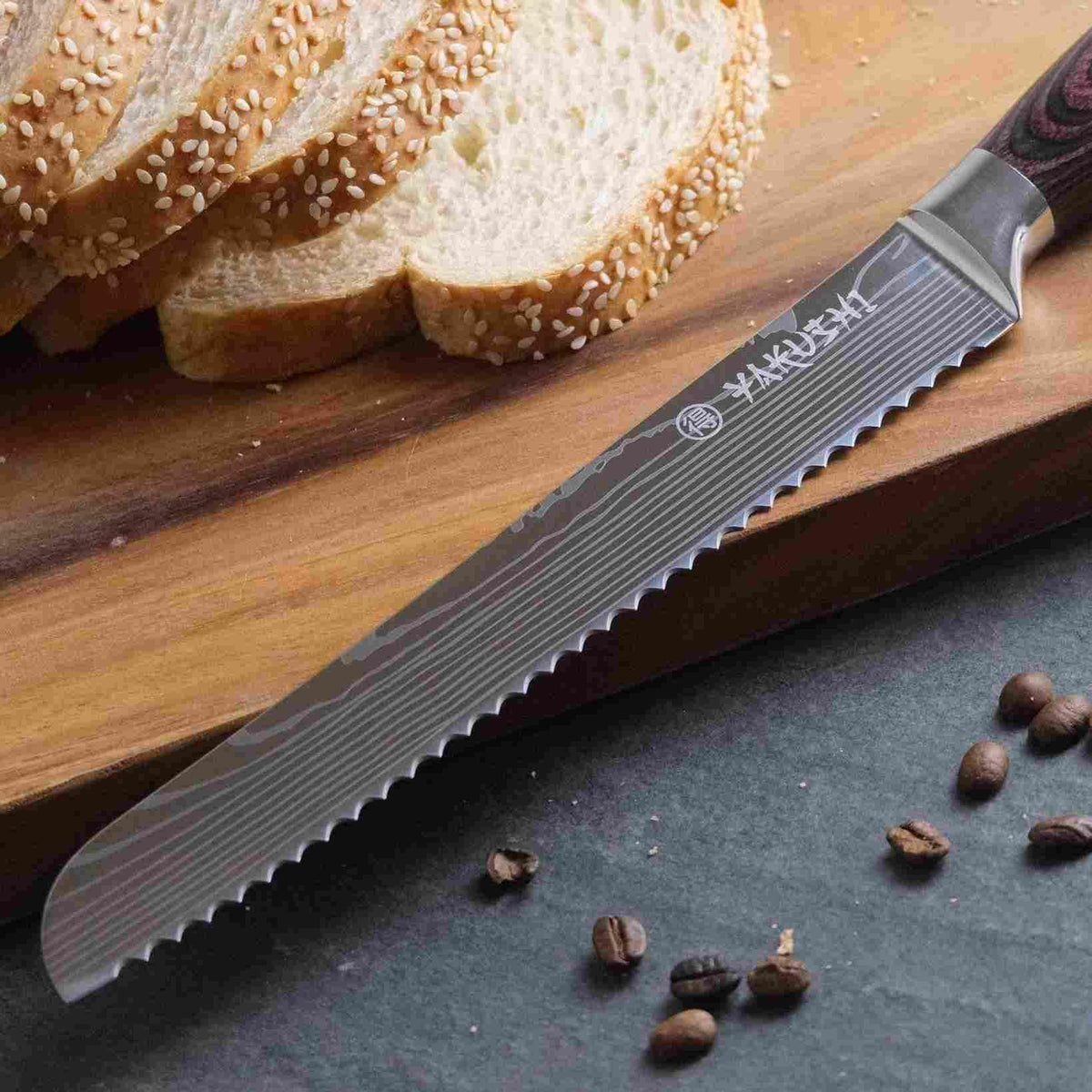

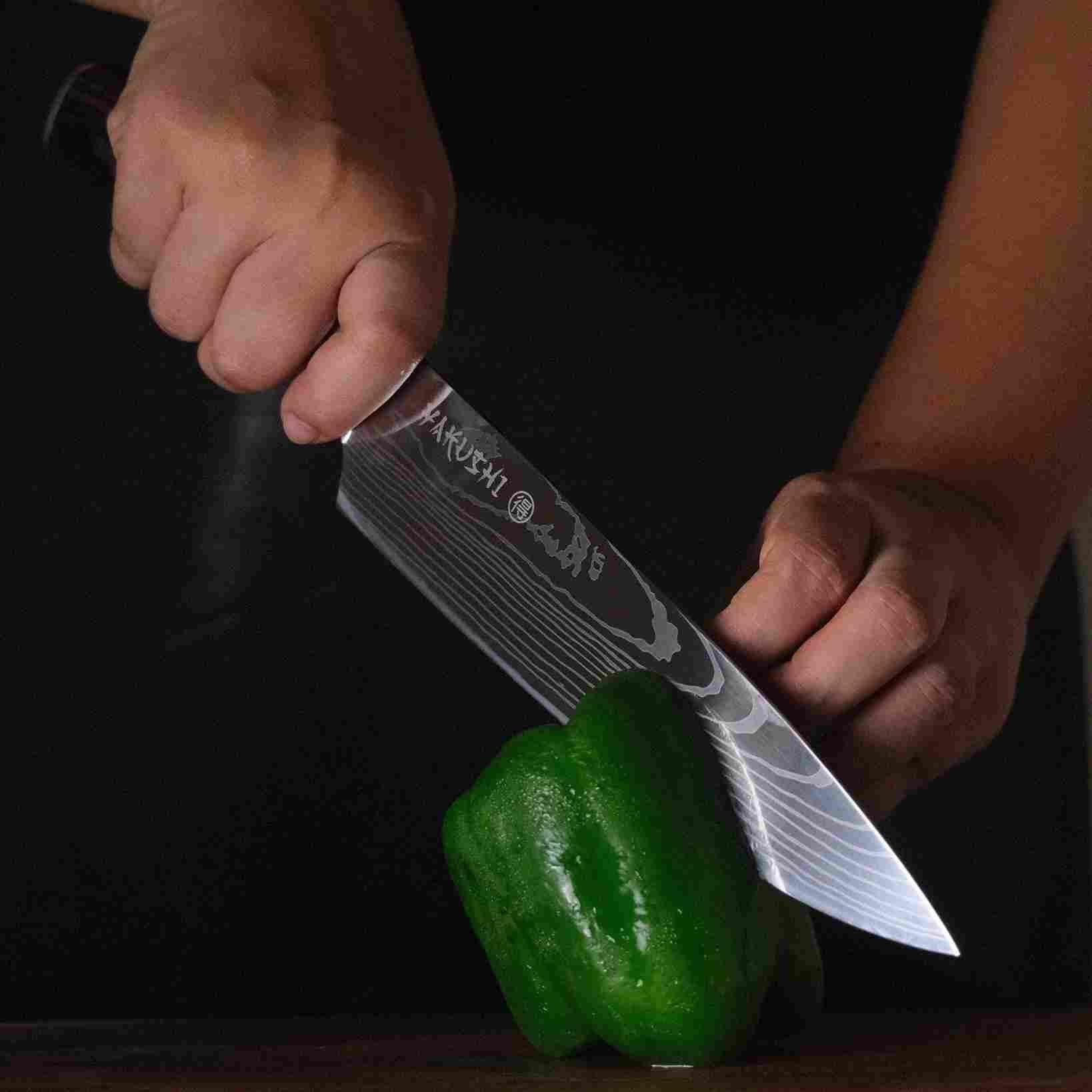
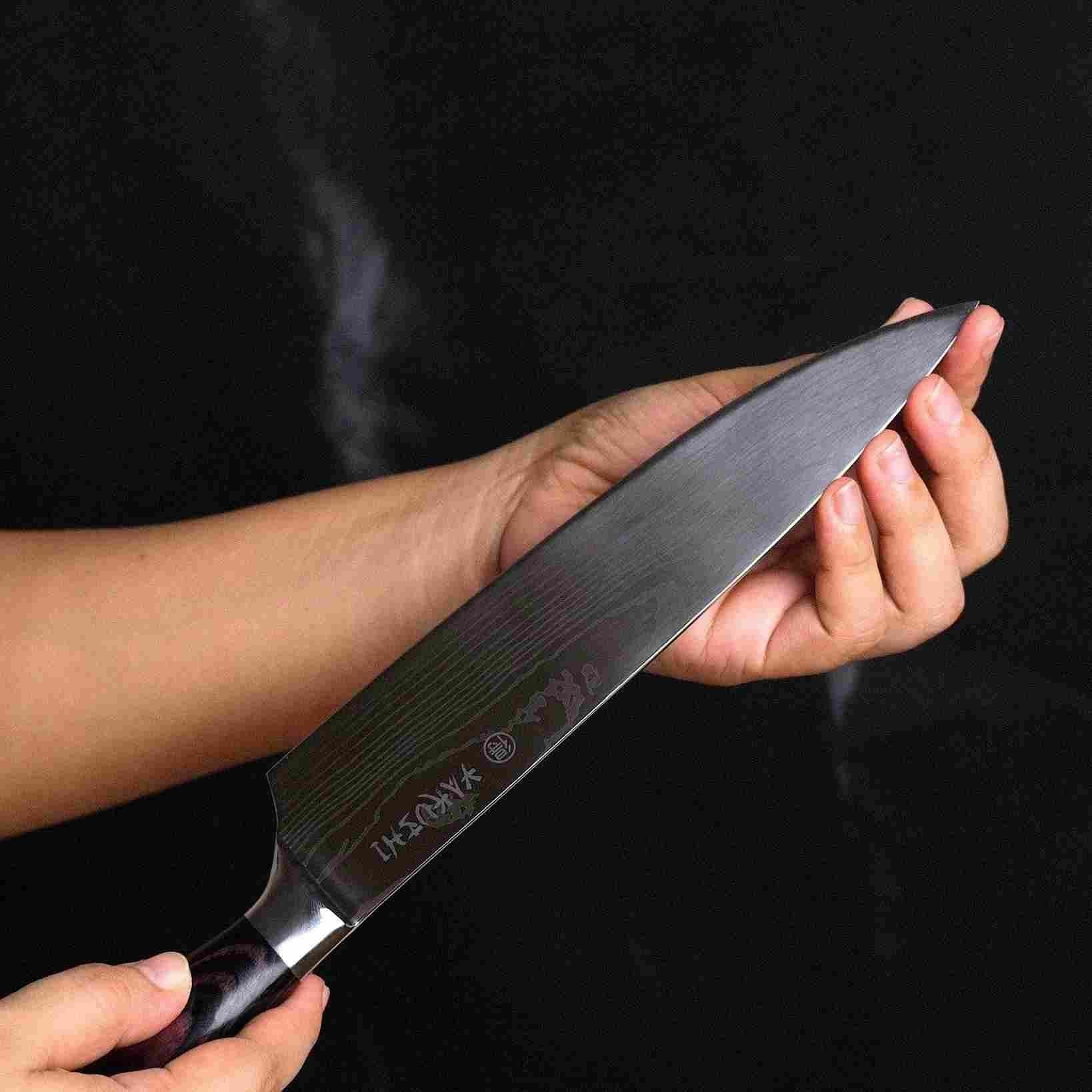
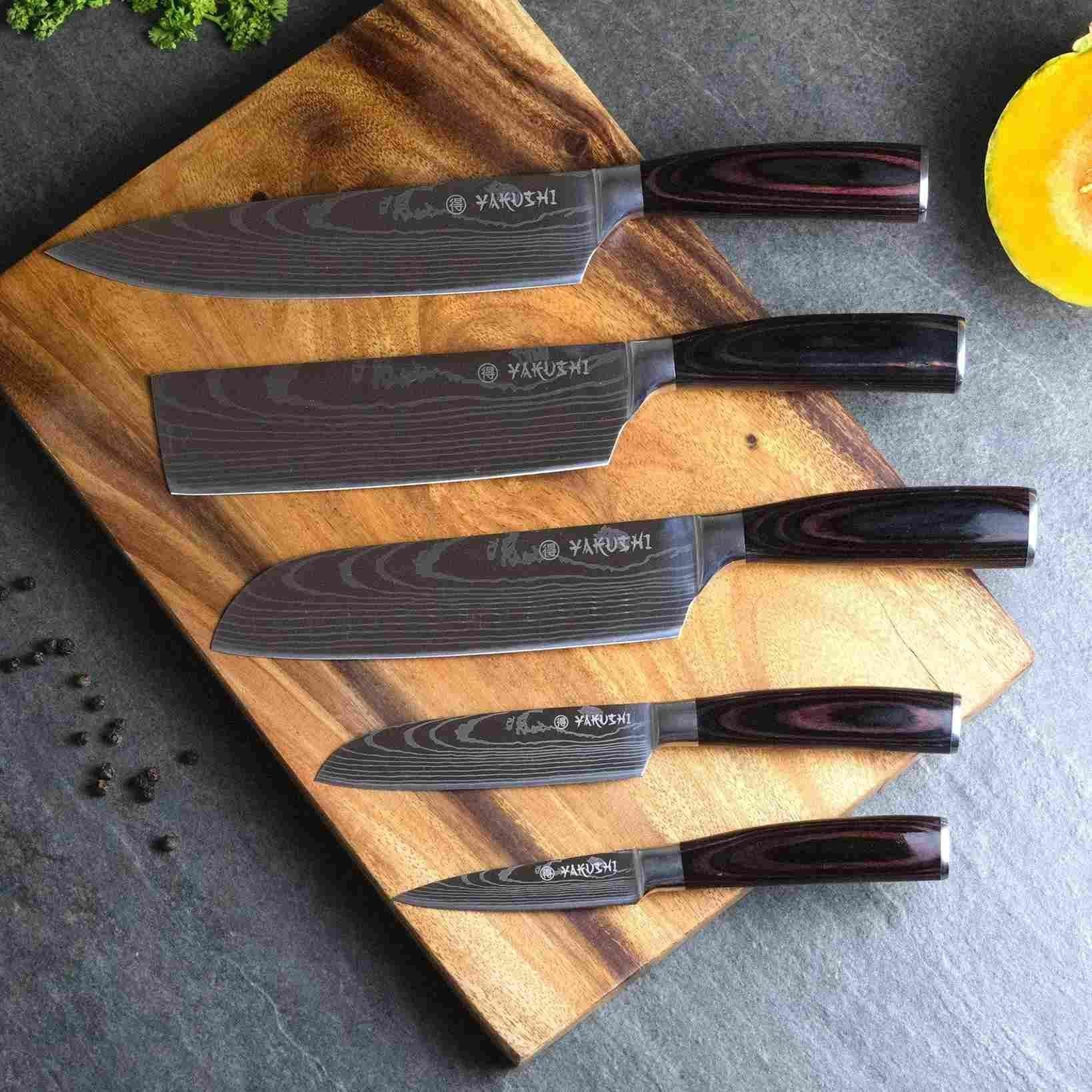
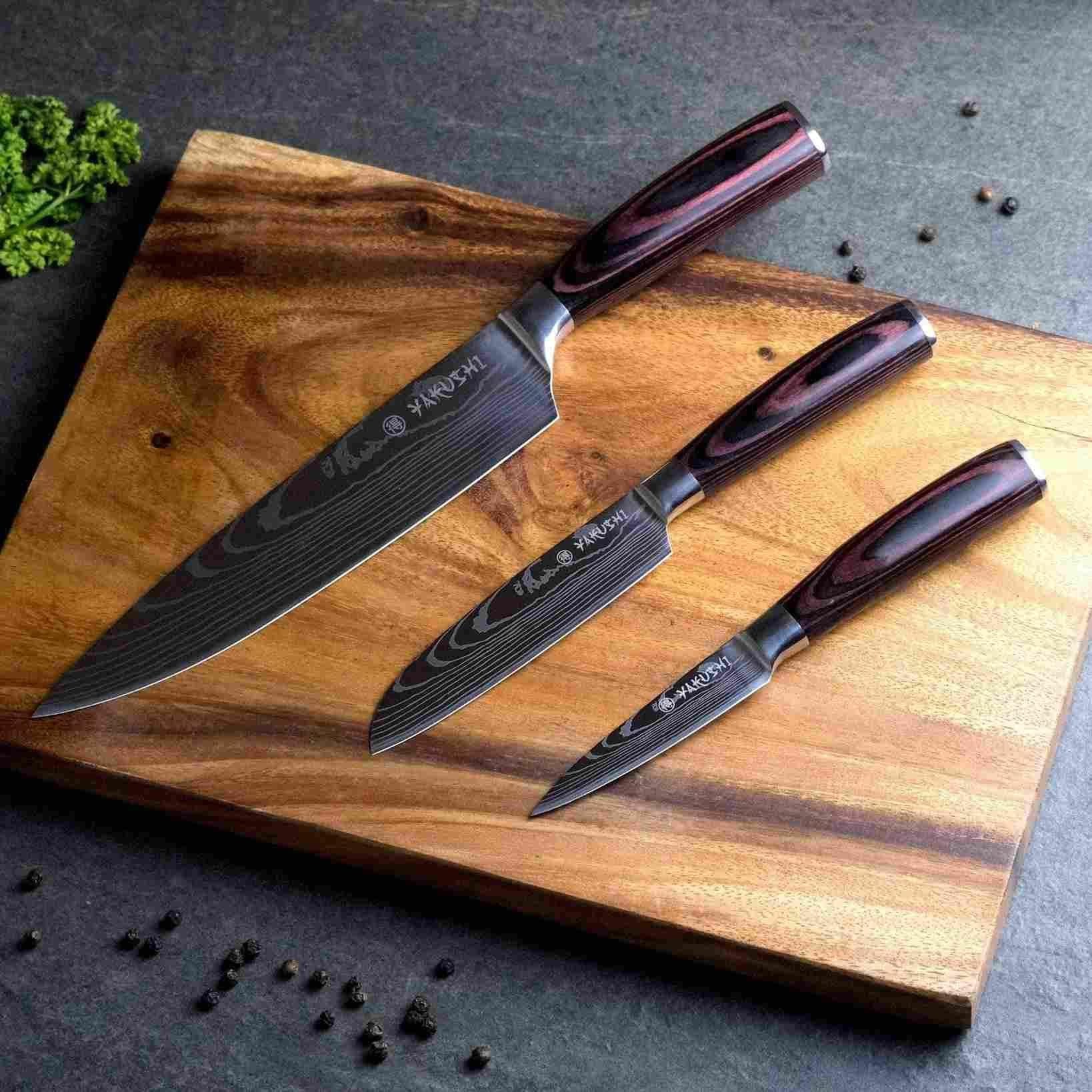
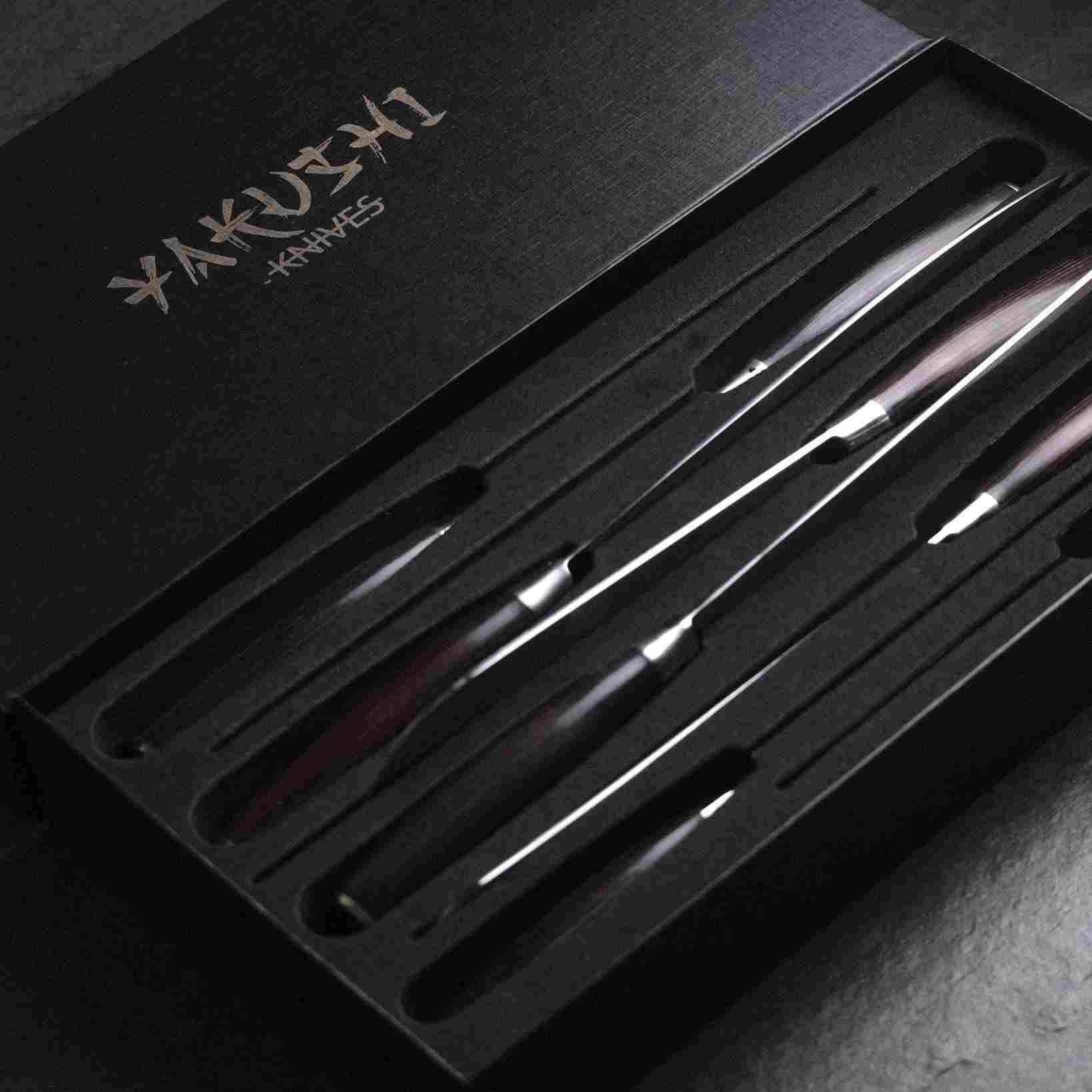
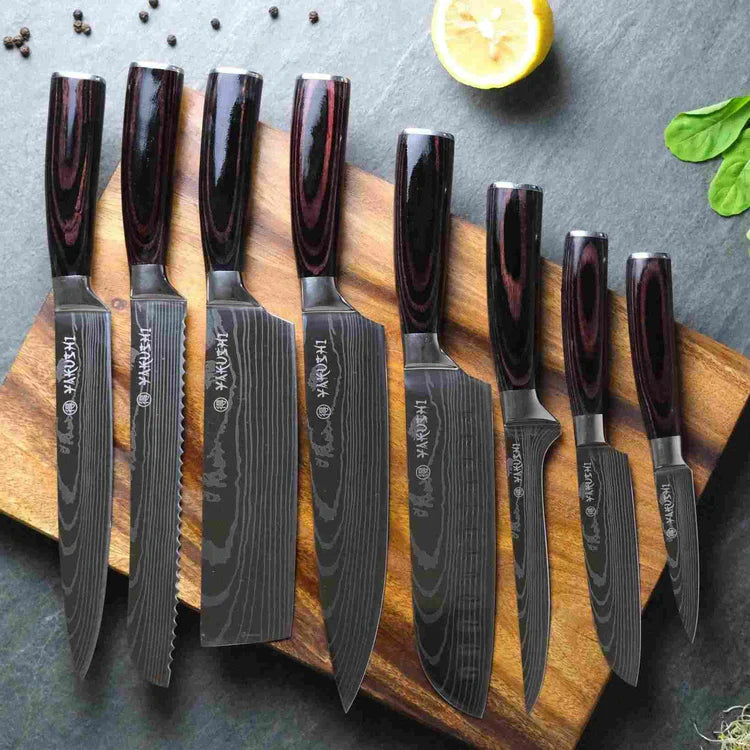
Eight purpose-built double-bevel knives for complete everyday prep, bread cutting, precise slicing, and boneless meat work.
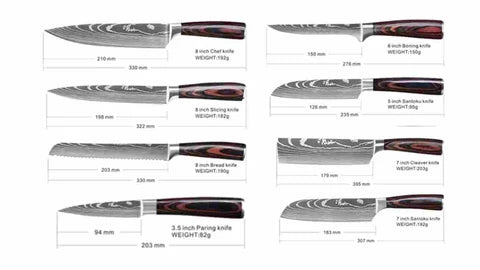
Build a complete kitchen toolkit with an 8-inch chef knife, 7-inch and 5-inch Santokus, 7-inch cleaver, 8-inch bread and slicing knives, 6-inch boning knife, and 3.5-inch paring knife.


Orders are processed and shipped within 1–2 business days. Estimated delivery after dispatch:
Tracking details are emailed as soon as your order ships. International shipping charges are shown at checkout. Carrier delays may occasionally occur outside our control.
Try your knife at home with our 15-day satisfaction guarantee. If you’re not completely satisfied, contact us within 15 days of ordering to arrange a return and full refund.
Your knife is also covered by a 3-month warranty. If you experience a workmanship or quality issue, contact us with your order number and photos so we can help.
View our full Return Policy.
Watch the 30-second unboxing
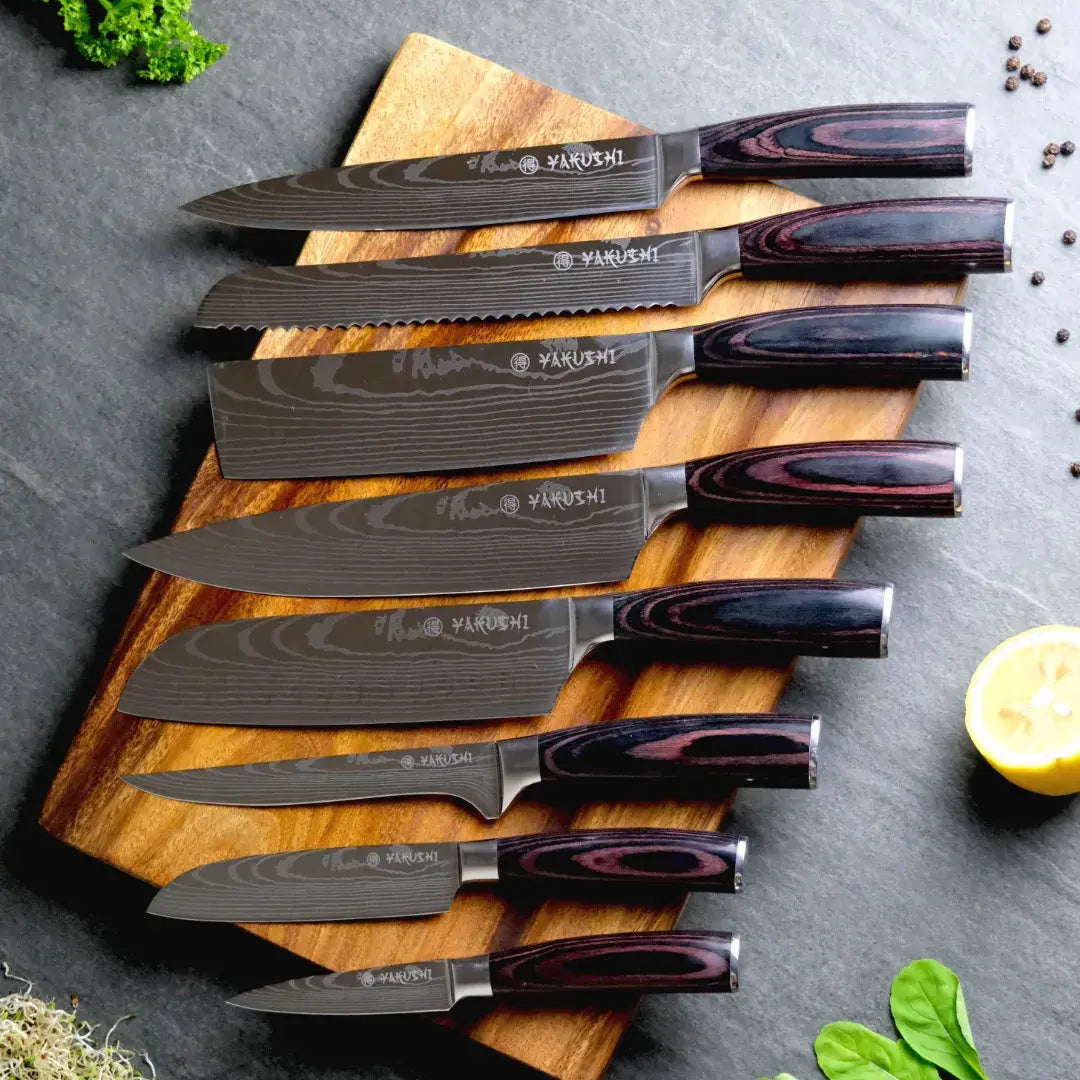
Take a closer look at the coordinated blade profiles, patterned finish, and Pakka wood handles of the Yakushi™ 8-Piece Full Knife Set before choosing it for your kitchen.
Eight profiles, one coordinated kitchen system
The Yakushi™ 8-Piece Full Knife Set combines the everyday chef, Santoku, cleaver, and paring profiles with dedicated bread, slicing, and boning knives. Its high-carbon stainless-steel blades feature a Damascus-style patterned finish, double-bevel edges, Pakka wood handles, and full composite tang construction.
Every knife has a job
The advantage of the 8-piece configuration is not simply quantity. It adds dedicated geometries for bread, carving, and trimming around joints to the everyday prep knives.
All-purpose chopping, slicing, dicing, mincing, vegetables, fruit, herbs, and suitable boneless proteins.
For vegetables, fruit, herbs, boneless meat, and fish when you want a more controlled, straighter cutting motion.
Quick vegetable prep, fruit slicing, dicing, and smaller jobs where a shorter blade is easier to maneuver.
Peeling, trimming, scoring, berries, deveining shrimp, and other precise short-blade tasks.
Crusty loaves, soft breads, tomatoes, and soft-skinned foods where a serrated edge reduces crushing.
Dense produce, larger vegetables, thicker cuts of boneless meat, and transferring prepared ingredients. Not for bones.
Long, controlled slices through roasts, poultry, cooked proteins, and foods where cleaner presentation matters.
Trimming poultry, meat, and fish around joints and bones. Designed for controlled trimming—not chopping through bone.
Why the last three knives matter
The dedicated serrated blade handles crusts and delicate interiors more effectively than forcing a straight chef knife through every loaf.
A narrower dedicated slicer is useful for roasts, poultry, and cooked proteins when you want long strokes and cleaner presentation.
The narrower 6-inch profile adds control around joints and contours while trimming meat, poultry, and fish.
Pick the smallest set that covers your real work
Chef knife, compact Santoku, and paring knife for everyday chopping, quick prep, and detail work.
View the 3-piece setAdds a full-size Santoku and broad cleaver for more vegetable, dense-produce, and boneless-meat work.
View the 5-piece setAdds the dedicated bread, slicing, and boning profiles for cooks who regularly bake, carve, trim, and want a matched full kitchen toolkit.
Broad coverage, clear limits
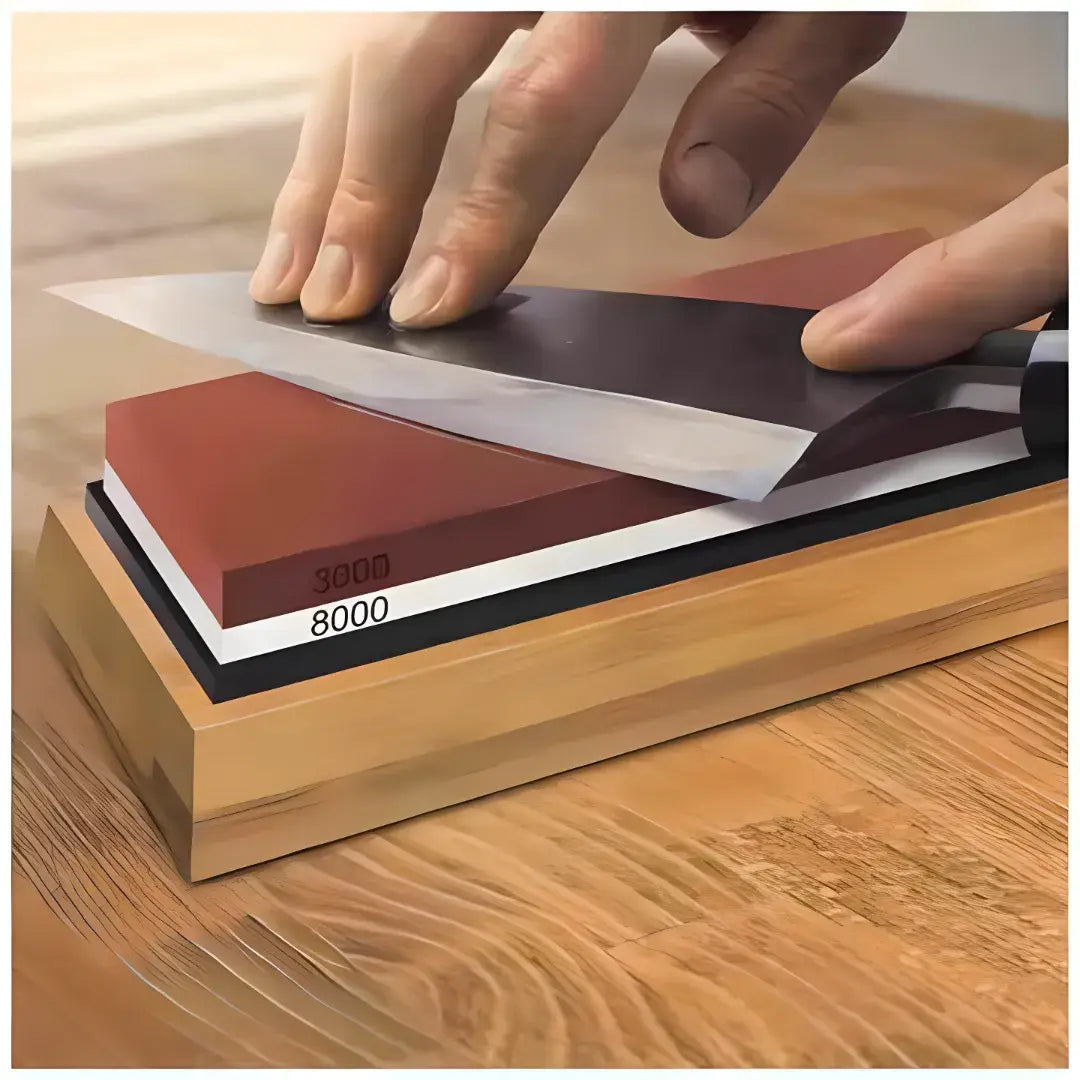
One set, two sharpening approaches
Hand-wash every knife with mild dish soap and dry immediately. Use a wood or suitable synthetic cutting board and store the edges separately. Maintain the straight-edged knives with an appropriate whetstone or quality sharpener. The serrated bread knife should be serviced with a method designed for serrations or by a sharpening professional.
Use the focused collections and guides for deeper comparisons, storage, boards, sharpening, and steel education.
Useful independent kitchen-safety references
Quick answers
The set includes an 8-inch chef knife, 7-inch Santoku, 5-inch Santoku, 3.5-inch paring knife, 8-inch bread knife, 7-inch cleaver, 8-inch slicing knife, and 6-inch boning knife.
The set uses high-carbon stainless-steel blades with a Damascus-style patterned finish.
Yes. The double-bevel edges are suitable for both right- and left-handed cooks.
No. Use the 7-inch cleaver for dense produce, larger vegetables, and thicker cuts of boneless meat. It is not designed for chopping through bones or frozen food.
The 6-inch boning knife is designed for controlled trimming of poultry, meat, and fish around joints and bones. It is not intended to chop through bone.
The 8-inch slicing knife is intended for longer, controlled cuts through roasts, poultry, cooked proteins, and similar foods where clean slices improve presentation.
Use a sharpening method specifically designed for serrations, or have the bread knife serviced by a professional experienced with serrated blades.
The Full Set adds dedicated bread, slicing, and boning knives to the five everyday blade profiles found in the Master Set, giving broader coverage for loaves, carving, and trimming.
No. Materials and construction can differ between Yakushi collections. Review the specifications on each set's product page when comparing the 3-, 5-, and 8-piece options.
Hand-wash each knife with mild dish soap, dry immediately, use a wood or suitable synthetic board, and store the knives so their cutting edges cannot strike one another or other utensils.
The 8-piece configuration makes the most sense for cooks who want the everyday chef, Santoku, cleaver, and paring profiles plus dedicated tools for bread, carving, and careful boning work—all in one coordinated Yakushi collection.
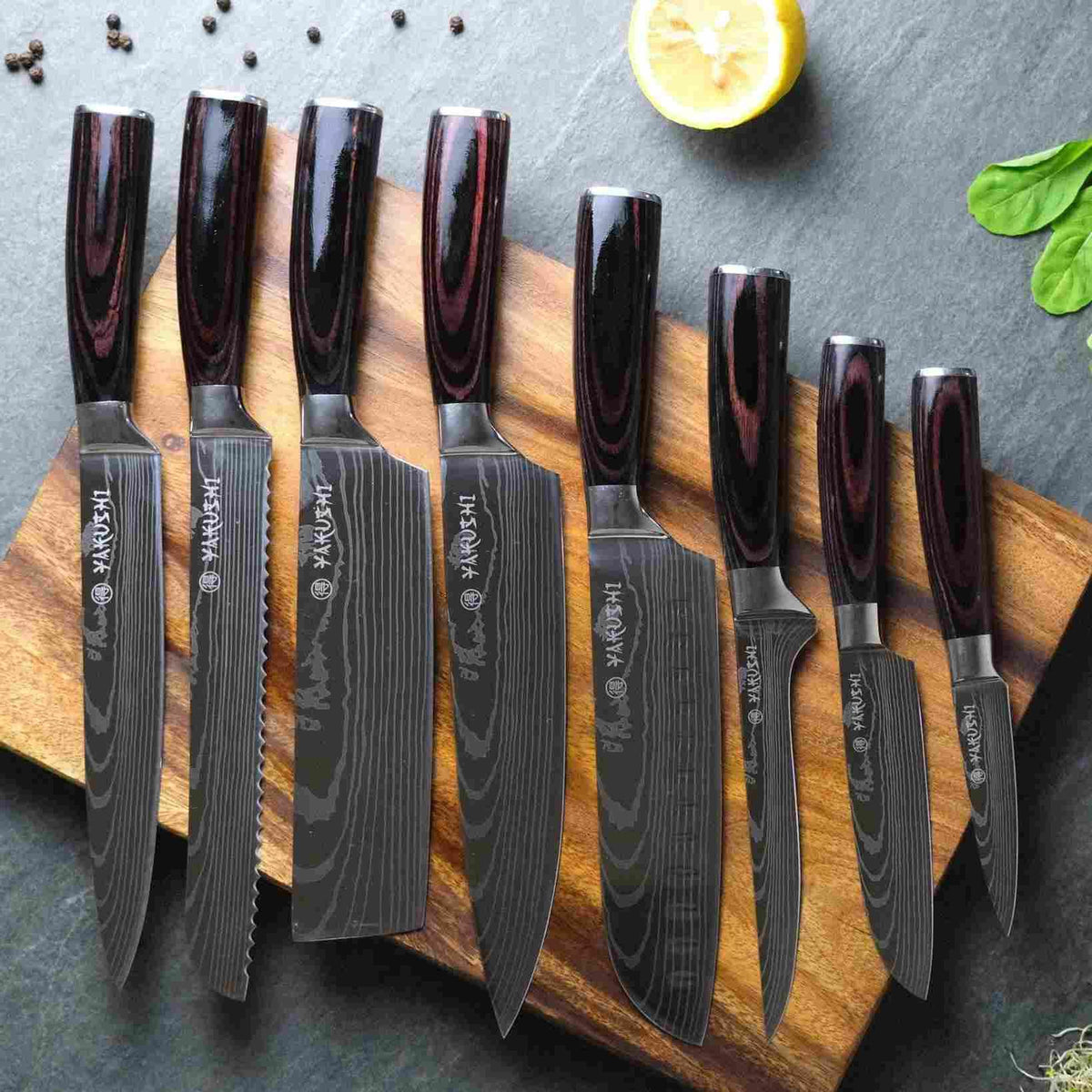
EIGHT KNIVES. ONE COMPLETE COLLECTION.
The Right Blade for Every Stage of Prep
From everyday chopping and quick vegetable prep to bread cutting, carving, trimming, and detailed knife work, the eight coordinated blade profiles give you a practical tool for every major stage of home cooking.