
Learn through real meals
Knife Skill-Based Recipes for Better, More Confident Prep
Practice dicing, julienne, chiffonade, push cuts and precision slicing while preparing food you will actually want to eat. Start slowly, concentrate on consistent pieces and let speed develop naturally.
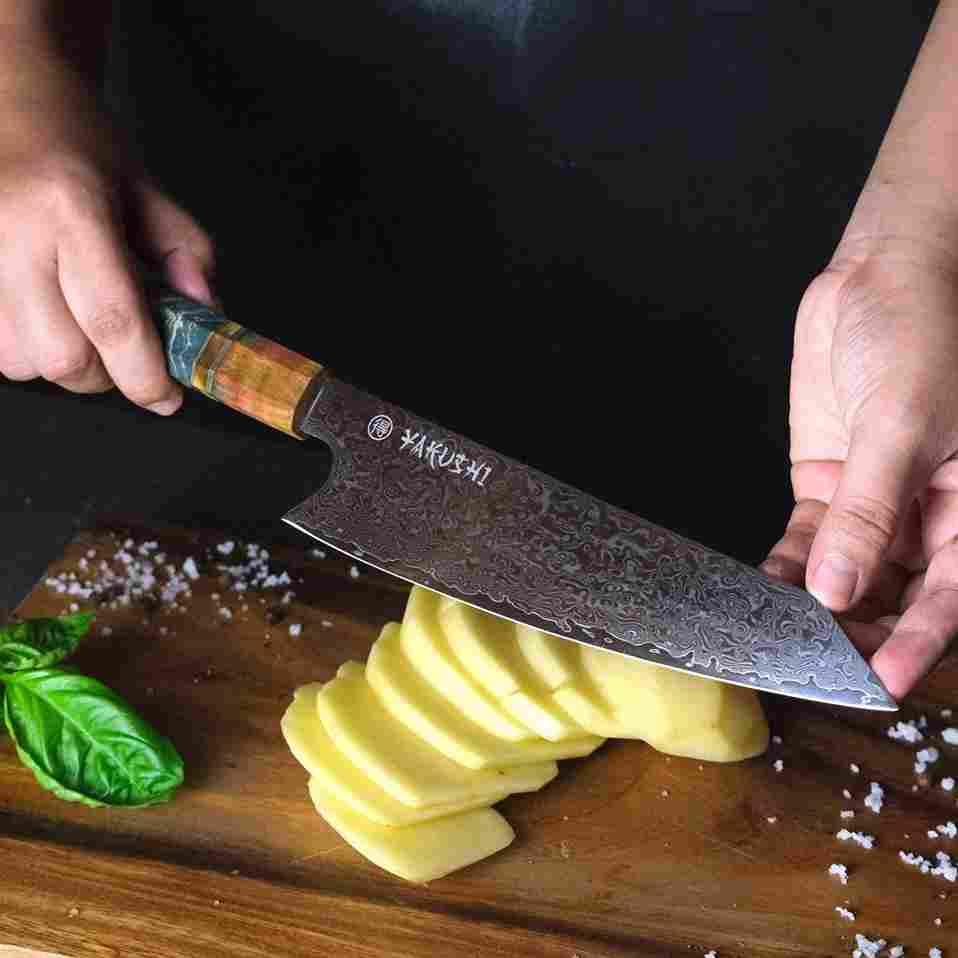
Knife skill-based recipes turn everyday meal preparation into useful practice. Instead of cutting vegetables simply to finish a task, you focus on one repeatable technique and observe how the size and shape of each piece affect cooking, texture and presentation.
Uniform pieces generally cook more predictably because similarly sized ingredients spend the same amount of time in contact with heat. Practicing through recipes also gives you immediate feedback: uneven vegetables may soften at different rates, while consistent cuts produce a more balanced result.
Before the first cut
Set Up a Safe Practice Station
A few simple habits make practice calmer, cleaner and more productive.
Stabilize the board
Put a damp, folded towel or a nonslip mat beneath the cutting board so it cannot move as you work.
Use a controlled grip
Hold the blade near the handle with a relaxed pinch grip. Curl the fingertips of your guiding hand back into a claw.
Create a flat surface
When practical, trim a small side from round ingredients so they rest securely instead of rolling under the blade.
Keep the workspace clean
Wash hands, utensils and work surfaces. Separate raw proteins from produce that will be served without further cooking.
For detailed produce and cutting-board guidance, consult the FDA’s produce-safety recommendations.
Your practice path
Choose a Recipe by Skill Level
Repeat a recipe until the pieces become consistent, then advance to a preparation that combines several cuts.
| Recipe | Main skill | Level | What to observe |
|---|---|---|---|
| Pico de gallo | Small dice and fine chopping | Beginner | Consistent distribution of tomato, onion and pepper |
| Chopped herb salad | Slicing and chiffonade | Beginner | Clean herb ribbons with limited bruising |
| Sheet-pan vegetables | Push cuts and uniform chunks | Beginner | Vegetables that finish roasting together |
| Vegetable stir-fry | Julienne and bias slicing | Intermediate | Thin vegetables that cook quickly and evenly |
| Chicken vegetable soup | Medium dice and protein slicing | Intermediate | Consistent vegetables and safely cooked chicken |
| Hasselback potatoes | Parallel slicing and depth control | Advanced | Even spacing without cutting through the base |
Cook and practice
Six Knife Skill-Based Recipes
Each recipe identifies one primary cutting skill, a simple target and an observable result.
1. Consistent-Dice Pico de Gallo
This uncooked salsa gives immediate feedback. When the tomato, onion and pepper are cut to a similar size, every spoonful has a more balanced texture and flavor.
Ingredients
- 4 ripe Roma tomatoes
- 1/2 small white or red onion
- 1 jalapeño, seeded if desired
- 1/2 cup fresh cilantro
- Juice of 1 lime
- Salt to taste
Practice method
- Wash and dry the produce. Quarter the tomatoes and remove excess watery seeds if desired.
- Cut the tomatoes into even strips, then cross-cut them into small cubes.
- Repeat the same slab, strip and cross-cut process with the onion.
- Cut the jalapeño into narrow strips, then into a fine dice. Keep your hands away from your eyes afterward.
- Gather the cilantro and chop it with controlled passes. Combine everything with lime juice and salt.
2. Cucumber, Tomato and Herb Salad
This simple salad combines stable vegetable slicing with the lighter pressure needed for delicate herbs.
Ingredients
- 1 large cucumber
- 2 medium tomatoes
- 1/4 red onion
- 8 to 10 basil leaves
- A small handful of mint
- 2 tablespoons olive oil
- 1 tablespoon lemon juice
- Salt and black pepper
Practice method
- Trim the cucumber and cut it into even rounds or half-moons.
- Cut the tomatoes into similarly sized wedges. Thinly slice the onion.
- Stack several basil leaves, roll them gently and slice across the roll to form ribbons.
- Repeat with the mint, using clean strokes rather than a back-and-forth sawing motion.
- Toss the vegetables and herbs with oil, lemon juice, salt and pepper.
3. Uniform-Cut Sheet-Pan Vegetables
Roasting reveals whether your pieces are consistent. Smaller pieces brown sooner, while oversized pieces need more time to soften.
Ingredients
- 2 carrots
- 1 sweet potato
- 1 bell pepper
- 1 zucchini
- 1 small red onion
- 2 tablespoons cooking oil
- Salt, pepper and dried herbs
Practice method
- Heat the oven to 425°F or 220°C.
- Create a flat side on round vegetables before making additional cuts.
- Cut dense carrots and sweet potato slightly smaller than the faster-cooking pepper and zucchini.
- Use a forward-and-down push cut, lifting and repositioning the blade between cuts.
- Coat with oil and seasoning. Roast in one layer for approximately 25 to 35 minutes, turning once, until tender and browned.
4. Julienne Vegetable Stir-Fry
Thin, even vegetables cook quickly, making stir-fry an excellent test of julienne consistency and organized preparation.
Ingredients
- 2 carrots
- 1 bell pepper
- 1 small zucchini
- 2 scallions
- 1 cup snap peas
- 1 tablespoon neutral oil
- 2 tablespoons soy sauce
- 1 teaspoon sesame oil
- Cooked rice or noodles
Practice method
- Cut the carrots into manageable sections. Make thin slabs, stack them safely and cut them into matchsticks.
- Flatten the bell pepper and cut it into strips similar in width to the carrots.
- Julienne the zucchini. Cut scallions on a slight bias.
- Arrange every ingredient before heating the pan; the cooking stage moves quickly.
- Stir-fry carrots and snap peas first. Add pepper and zucchini, then finish with soy sauce and sesame oil.
- Serve immediately over rice or noodles.
5. Chicken and Uniform-Dice Vegetable Soup
Soup offers a clear test of medium dice: properly sized vegetables become tender together without disappearing into the broth.
Ingredients
- 1 pound boneless chicken
- 1 medium onion
- 2 carrots
- 2 celery stalks
- 2 garlic cloves
- 6 cups chicken stock
- 1 tablespoon cooking oil
- Salt, pepper and fresh herbs
Practice method
- Dice the onion, carrot and celery into similarly sized pieces. Mince the garlic.
- Prepare vegetables before handling the raw chicken. Keep raw chicken and ready-to-eat ingredients separated.
- Cut the chicken into even, bite-sized pieces using a separate clean board or thoroughly cleaned work surface.
- Cook the vegetables in oil until they begin to soften. Add garlic, chicken and stock.
- Simmer until the vegetables are tender and the chicken reaches a safe internal temperature of 165°F or 74°C.
- Season and finish with chopped fresh herbs.
6. Precision-Sliced Hasselback Potatoes
Hasselback potatoes require a series of thin parallel cuts while keeping the bottom of each potato intact.
Ingredients
- 4 medium potatoes
- 2 tablespoons olive oil or melted butter
- Salt and black pepper
- Fresh rosemary or thyme
- Two chopsticks or wooden spoon handles
Practice method
- Heat the oven to 425°F or 220°C.
- Wash and dry the potatoes. Trim a very thin piece from the bottom if a potato will not sit securely.
- Place chopsticks along both sides of one potato to act as depth stops.
- Make parallel cuts approximately 1/8 to 1/4 inch apart, allowing the blade to stop against the chopsticks.
- Brush with oil or butter, season and bake for approximately 50 to 65 minutes until tender and crisp at the edges.
Technique guide
Five Skills to Practice Across the Recipes
Concentrate on one skill during each cooking session rather than trying to improve everything at once.
Pinch grip
Hold the blade near the handle between your thumb and index finger while the remaining fingers rest around the handle. Keep the grip secure but relaxed.
Claw guide
Curl the fingertips of your guiding hand away from the blade. Advance the hand only after the blade has completed its cut.
Consistent dice
Create slabs, turn them into even strips and cross-cut the strips into cubes. Slow down when the ingredient changes shape.
Julienne
Cut vegetables into thin matchsticks with comparable thickness. Establish a flat, stable surface before stacking slabs.
Chiffonade
Stack broad herb leaves, roll them without crushing and slice across the roll using light, clean strokes.
Bias slicing
Angle the ingredient relative to the blade to create longer slices. Maintain the same angle from the first piece to the last.
For an additional professional demonstration, see the Institute of Culinary Education’s slicing, dicing and julienne guide.
Match the blade to the practice
Which Japanese Knife Should You Use?
You can complete most of these recipes with one versatile, properly maintained knife.
Gyuto or chef knife
A versatile option for dicing, slicing proteins, chopping herbs and preparing complete meals with one primary knife.
Explore chef knives →Nakiri
The tall blade and relatively straight edge suit push-cutting, vegetable dicing, julienne and repeated board work.
Explore Nakiri knives →Kiritsuke
A long, multipurpose profile suited to confident cooks practicing clean draw cuts, vegetable preparation and detailed tip work.
Explore Kiritsuke knives →Improve without rushing
A Simple Four-Week Practice Plan
| Week | Recipe focus | Practice goal |
|---|---|---|
| Week 1 | Pico de gallo and chopped herb salad | Stable grip, claw guide and consistent basic cuts |
| Week 2 | Sheet-pan vegetables | Controlled push cuts and size adjustments by density |
| Week 3 | Vegetable stir-fry and soup | Organized preparation and multiple cuts in one meal |
| Week 4 | Hasselback potatoes | Repeated spacing, depth control and patience |
Keep learning
Related Yakushi Guides
Knife care
Learn washing, drying, storage and maintenance habits that protect a Japanese knife between cooking sessions.
Read the knife-care guide →Vegetable knives
Compare the shapes and cutting characteristics most useful for chopping, slicing and dicing produce.
Find a vegetable knife →Meal-prep knives
Explore versatile options for cooks who routinely prepare larger batches of vegetables and proteins.
Read the meal-prep guide →First Japanese knife
Understand the practical factors that matter when choosing your first Japanese kitchen knife.
Choose your first knife →Sharpening angles
Learn how sharpening angle affects edge performance and why the correct method depends on the blade.
Study sharpening angles →Nakiri or Santoku?
Compare two popular Japanese profiles for vegetable preparation and general home cooking.
Compare Nakiri and Santoku →Trusted references
Food-Safety and Technique Resources
These independent references are educational or governmental sources, not competing knife stores.
Frequently asked questions
Knife Skill-Based Recipe FAQs
What are knife skill-based recipes?
They are recipes selected to provide meaningful repetition of culinary cutting techniques such as slicing, dicing, julienne, chiffonade and precision chopping while producing a complete dish.
Which recipe is best for a complete beginner?
Pico de gallo or a simple chopped salad is a useful starting point. Both provide plenty of repetition without requiring you to coordinate complicated cooking steps at the same time.
Which knife skills should I learn first?
Begin with a secure grip, the claw position for your guiding hand, basic slicing, chopping and dicing. Add julienne, chiffonade and more detailed cuts after those movements feel controlled.
Do I need several knives for these recipes?
No. A well-maintained gyuto, santoku or chef knife can complete most of the recipes on this page. Specialized shapes can be useful, but they are not required for learning the fundamentals.
How can I make my cuts more consistent?
Create a flat surface on unstable ingredients, use the first piece as a visual reference and reduce your speed until the blade follows the same path repeatedly.
Why do evenly sized ingredients matter?
Similar pieces tend to cook at a comparable rate. Consistency can therefore improve texture, doneness and how ingredients are distributed throughout a finished dish.
How often should I practice knife skills?
One or two focused cooking sessions each week can create steady progress. Frequent, controlled practice is more valuable than occasional attempts to cut as quickly as possible.
How should I practice safely?
Use a stable cutting board, keep your guiding fingertips curled away from the blade, work slowly and stop if your grip becomes tired. Clean tools and work surfaces between raw proteins and ready-to-eat foods.