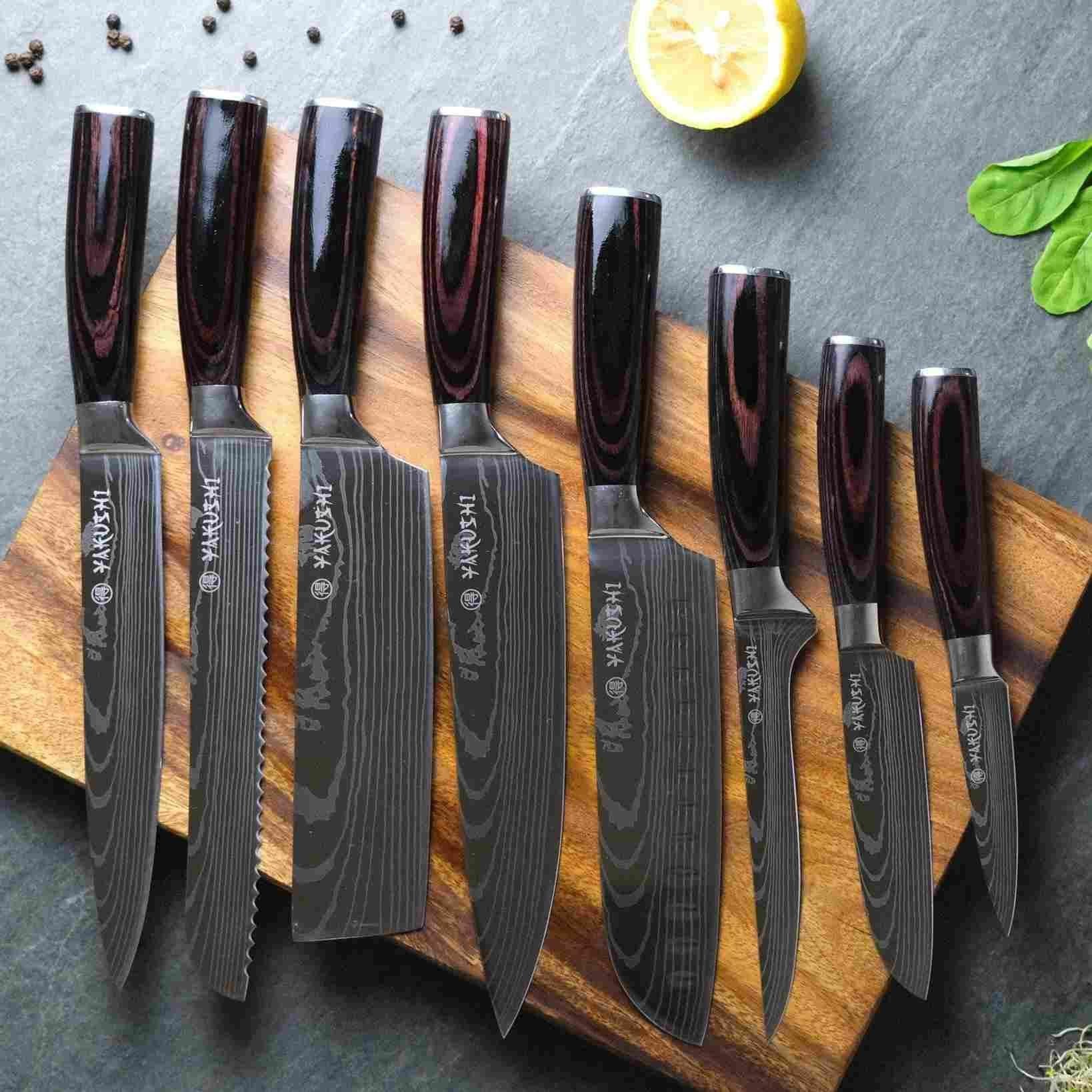
Yakuba Knives Set in Box

Cleaver Knives

5,000+ Customers Yearly

5,000+ Customers Yearly

3 Month Warranty

3 Month Warranty

Free USA Shipping

Free USA Shipping

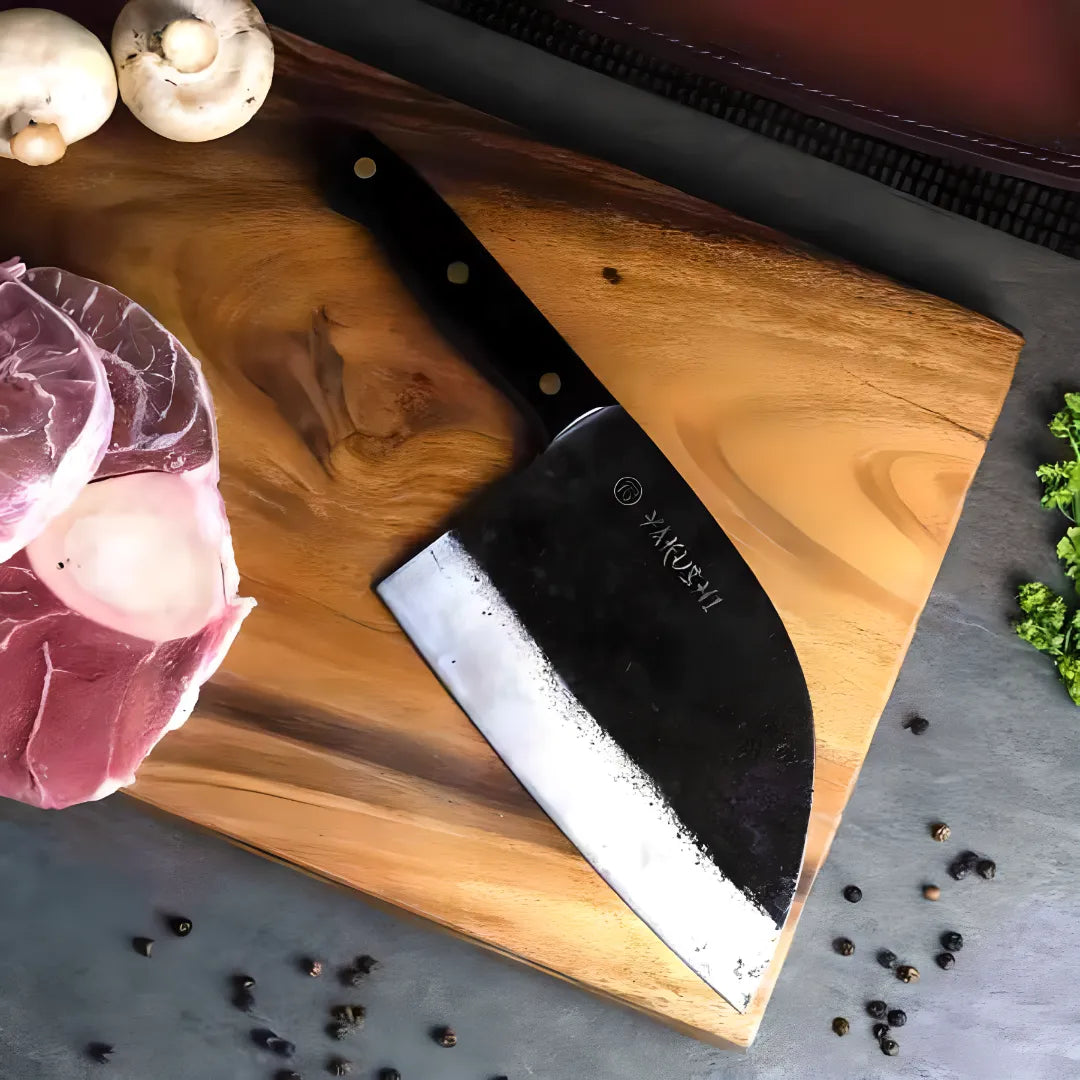
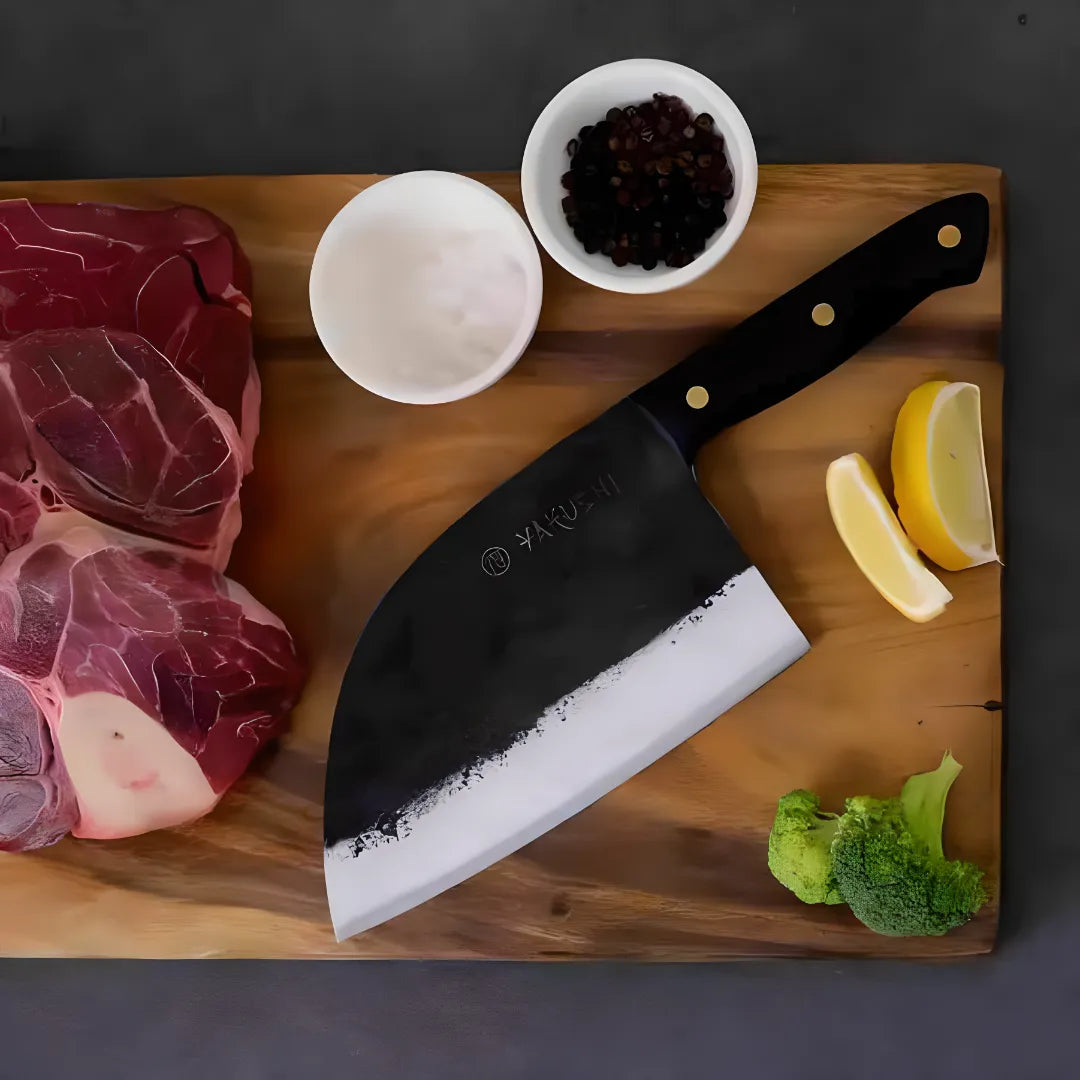
A cleaver knife is built for heavy kitchen tasks that are too demanding for a standard chef knife. The Yakushi cleaver knife uses a 7-inch, Serbian-style blade with a 390g forward-heavy profile, full-tang construction, high-carbon steel, and a Pakka wood handle for controlled chopping through meat, poultry, BBQ cuts, and hard vegetables.

Unlike thin Chinese vegetable cleavers, this knife is designed as a meat-focused butcher cleaver alternative for home cooks, BBQ enthusiasts, camp cooks, and anyone who wants more chopping power in the kitchen.

Filters

Sort by:

What Is a Cleaver Knife?

A cleaver knife is a large, heavy-duty kitchen knife characterized by a broad, rectangular blade and a thick spine. Unlike agile, thin-profile Japanese cutlery like the Santoku or Gyuto, a traditional cleaver is engineered for high-impact culinary tasks. The sheer mass and weight distribution of a premium cleaver allow it to utilize momentum and gravity to cut through dense materials. While often associated with butcher shops for processing raw meat, the architectural design of a modern cleaver spans from thick-spined Western bone crushers to surgically sharp, thin-profile Eastern vegetable slicers, making it an essential tool for both professional chefs and home cooks.

What Is a Cleaver Knife Used For?

A cleaver knife is primarily used for heavy-duty butchery, portioning large cuts of meat, splitting poultry joints, and hacking through thick cartilage or soft bones. However, its culinary utility extends far beyond processing proteins. The expansive, flat surface area of the blade makes it an exceptional tool for crushing whole ingredients like garlic cloves, ginger, and lemongrass. Additionally, the wide rectangular profile functions as a built-in bench scraper, allowing you to easily scoop up large quantities of diced vegetables, herbs, or minced meat directly from the cutting board and transfer them into a hot pan or prep bowl.

Yakushi Cleaver Knife: Key Specs

To understand the performance capabilities of the Yakushi Damascus Steel Cleaver, it helps to evaluate its exact material composition and physical engineering dimensions:

  • Core Steel: Ultra-hard VG10 high-carbon Japanese steel core.
  • Blade Cladding: 67 layers of Damascus stainless steel for superior structural flexibility and corrosion resistance.
  • Rockwell Hardness (HRC): 60-62 HRC for exceptional, long-lasting edge retention.
  • Blade Edge Angle: Traditional double-bevel edge, sharpened to a razor-sharp 15 degrees per side.
  • Spine Thickness: 3.0mm at the bolster, tapering forward to balance high-impact durability with clean cutting physics.
  • Handle Material: Full-tang ergonomic G10 composite handle secured with triple rivets for a moisture-resistant, lifetime grip.
  • Blade length: 7 inches / 178 mm
  • Weight: 390g
  • Steel: High-carbon Serbian steel
  • Edge: Double bevel
  • Construction: Full tang
  • Handle: Polished Pakka wood
  • Best for: BBQ prep, poultry breakdown, hard vegetables, meat chopping, camp cooking
  • Not for: frozen food, thick beef bones, precision filleting

Meat Cleaver vs Butcher Knife vs Chinese Cleaver

While these heavy-duty blades are often confused, they feature completely different geometries, cutting dynamics, and intended kitchen applications:

Specialty Knife Profiles & Mechanics

Knife Type Design Characteristics Primary Cutting Motion Best Used For
Meat Cleaver Thick spine (3.5mm-5mm), heavy weight, wide edge angle (22°-25°). Vertical hacking, heavy chopping utilizing downward momentum. Splitting heavy bones, processing primal cuts, cutting frozen meats.
Butcher Knife Long, curved blade with a pronounced belly and a sharp, swept point. Long, drawing slices and precise skinning motions. Trimming fat caps, portioning steaks, and breaking down whole carcasses.
Chinese Cleaver Thin spine (1.8mm-2.2mm), lightweight, acute edge angle (15°).
⚠️ Not for bones
Vertical push-cutting and up-and-down rapid dicing. Precision vegetable preparation, julienning, and slicing boneless proteins.

Who This Cleaver Knife Is Best For

The Yakushi Cleaver Knife is ideal for avid home cooks, BBQ pitmasters, and professional chefs who regularly process whole poultry, break down ribs, or portion large, dense cuts of meat. It is a must-have tool for culinary creators who value a commanding, blade-heavy instrument that uses its own physical weight to glide through dense winter squash, thick-skinned root vegetables, and fibrous ingredients with minimal wrist fatigue. If you want a striking, high-performance luxury centerpiece on your magnetic knife block that combines raw splitting power with a razor-sharp edge, this knife is designed for you.

Who Should Not Buy This Cleaver Knife

You should not buy this specific Japanese high-carbon Damascus cleaver if you are looking for a crude, low-cost utility tool to repeatedly smash through thick, frozen beef leg bones or heavy marrow bones. Because premium Japanese VG10 steel is hardened to 60+ HRC to deliver surgical sharpness, it is inherently more rigid than softer, low-grade Western steel. If your cooking style involves high-velocity hacking against hard metals, stone countertops, or dense animal bones, a soft, thick-profile commercial butcher's cleaver is a more appropriate choice.

How to Care for a High-Carbon Cleaver Knife

Proper maintenance is critical to protecting the structural integrity and aesthetic artistry of your high-carbon cleaver:

  1. Hand Wash Only: Clean your cleaver immediately after use with warm water and mild dish soap. Never place it in a dishwasher, as the extreme heat and harsh chemicals will ruin the handle and dull the blade.
  2. Dry Immediately: Wipe the blade completely dry with a clean microfiber towel before storing. Leaving moisture on high-carbon steel causes rust and pitting.
  3. Oil the Blade: Periodically apply a food-safe mineral oil (like tsubaki oil) to the blade surface to create a protective barrier against humidity and atmospheric moisture.
  4. Use the Right Surface: Cut exclusively on thick wooden or end-grain cutting boards. Avoid glass, ceramic, marble, or plastic boards, which will instantly dull or micro-chip the fine edge.

How to Sharpen a Cleaver Knife

Maintaining a razor edge on a heavy-duty cleaver requires traditional whetstone sharpening rather than destructive pull-through mechanical sharpeners:

  1. Soak the Stones: Completely submerge your dual-grit whetstone (typically a 1000-grit for sharpening and a 6000-grit for polishing) in water for 10-15 minutes.
  2. Establish the Angle: Set the blade against the whetstone at a consistent 15-degree angle (roughly the height of a stack of two pennies placed under the spine).
  3. Execute the Stroke: Using moderate downward pressure, push the blade forward across the stone from the heel to the tip in smooth, sweeping motions. Maintain a constant angle.
  4. Feel for the Burr: Continue sharpening one side until you feel a uniform raised lip of steel (a burr) forming along the opposite side of the edge. Flip the blade and repeat the process.
  5. Strop and Polish: Move to the 6000-grit stone or a leather strop to polish away the burr and refine the cutting edge to a mirror finish.

Ergonomics and Balance: The Anatomy of a Heavy-Duty Cleaver

The physics of an elite cleaver rely entirely on its weight distribution and structural ergonomics. A premium cleaver features a full-tang construction, meaning the blade steel extends seamlessly through the entire length of the handle. This configuration shifts the balance point slightly forward toward the bolster, providing "blade-heavy" leverage. This forward balance allows gravity and momentum to execute the cut, minimizing the physical force your wrist and forearm must generate. The handle geometry is wider near the butt to prevent the knife from slipping out of your hand during forceful downward strokes.

How to Safely Use a Cleaver: Proper Grip and Striking Technique

Operating a heavy cleaver safely requires moving away from casual knife grips to a precise, secure hold:

  • The Pinch Grip: Place your thumb and the side of your index finger directly onto the base of the blade just ahead of the handle, wrapping your remaining three fingers tightly around the handle scale. This grip provides total lateral control and prevents the heavy blade from twisting or wobbling upon impact.
  • The Downward Stroke: When chopping through poultry joints or cartilage, utilize a fluid downward motion originating from your elbow and shoulder, rather than bending your wrist. Let the weight of the steel do the work.
  • The Free Hand: Always curl the fingers of your non-cutting hand into a tight "claw grip," tucking your fingertips completely under your knuckles to guide the flat face of the blade safely.

How to Safely Store Your Cleaver Knife

Because a cleaver features a uniquely wide rectangular footprint and significant weight, it should never be stored loose in a standard kitchen drawer where it can collide with other utensils, ruining its edge and creating a serious safety hazard. The safest storage solutions include:

  • Heavy-Duty Magnetic Strips: Wall-mounted wooden magnetic strips equipped with high-intensity rare-earth magnets that can safely support a heavy full-tang blade.
  • Custom Wooden Saya: A form-fitting wooden sheath or guard that locks over the blade, allowing safe storage in a drawer or knife roll.
  • Wide-Slot Knife Blocks: Specialized under-cabinet countertop blocks engineered with wide horizontal slots explicitly sized for wide-profile cleavers and Chinese chef knives.

How to Choose the Right Cleaver: Blade Thickness and Steel Hardness

Selecting the perfect cleaver requires matching the blade's steel hardness and spine thickness to your specific culinary workflow:

  • Heavy-Duty Butchering (Meat Cleavers): Look for thick spines measuring between 3.5mm and 5.0mm, paired with a lower steel hardness (54-56 HRC). Softer steel is more resilient and flexes under intense impact, allowing the edge to strike heavy bone without chipping.
  • Precision Preparation (Chinese Slicing Cleavers): Opt for an ultra-thin spine (1.8mm to 2.2mm) constructed from high-hardness Japanese steel (60+ HRC). This allows the edge to be ground to a surgically sharp 15-degree angle, optimized for gliding cleanly through vegetables and proteins with zero resistance.
  • The All-Purpose Hybrid: Choose a balanced profile featuring a 2.5mm to 3.0mm spine thickness and an intermediate hardness (58-60 HRC). This hybrid geometry delivers the versatility needed to fluidly transition from crushing garlic and slicing vegetables to splitting chicken carcasses and processing ribs.

Cleaver & Heavy-Duty Knife Comparison

Knife Type Best for Blade Style Should it cut bones?
Meat Cleaver Poultry, ribs, joints, hard vegetables, BBQ prep Thick, heavy, rectangular or cleaver-like YES
Small bones and joints
Chinese Cleaver Vegetables, herbs, boneless meat, slicing, scooping Thin, tall, sharp NO
Butcher Knife Trimming, slicing, processing meat Longer, curved or heavy-duty SOMETIMES
Depending on design
Yakushi Serbian Cleaver BBQ prep, poultry, hard vegetables, rustic chopping 7-inch, 390g, full-tang Serbian-style blade poultry only
Not thick beef bones

Cleaver Knife FAQ

Explore the collections