
Classic 8-Inch Chef Knife
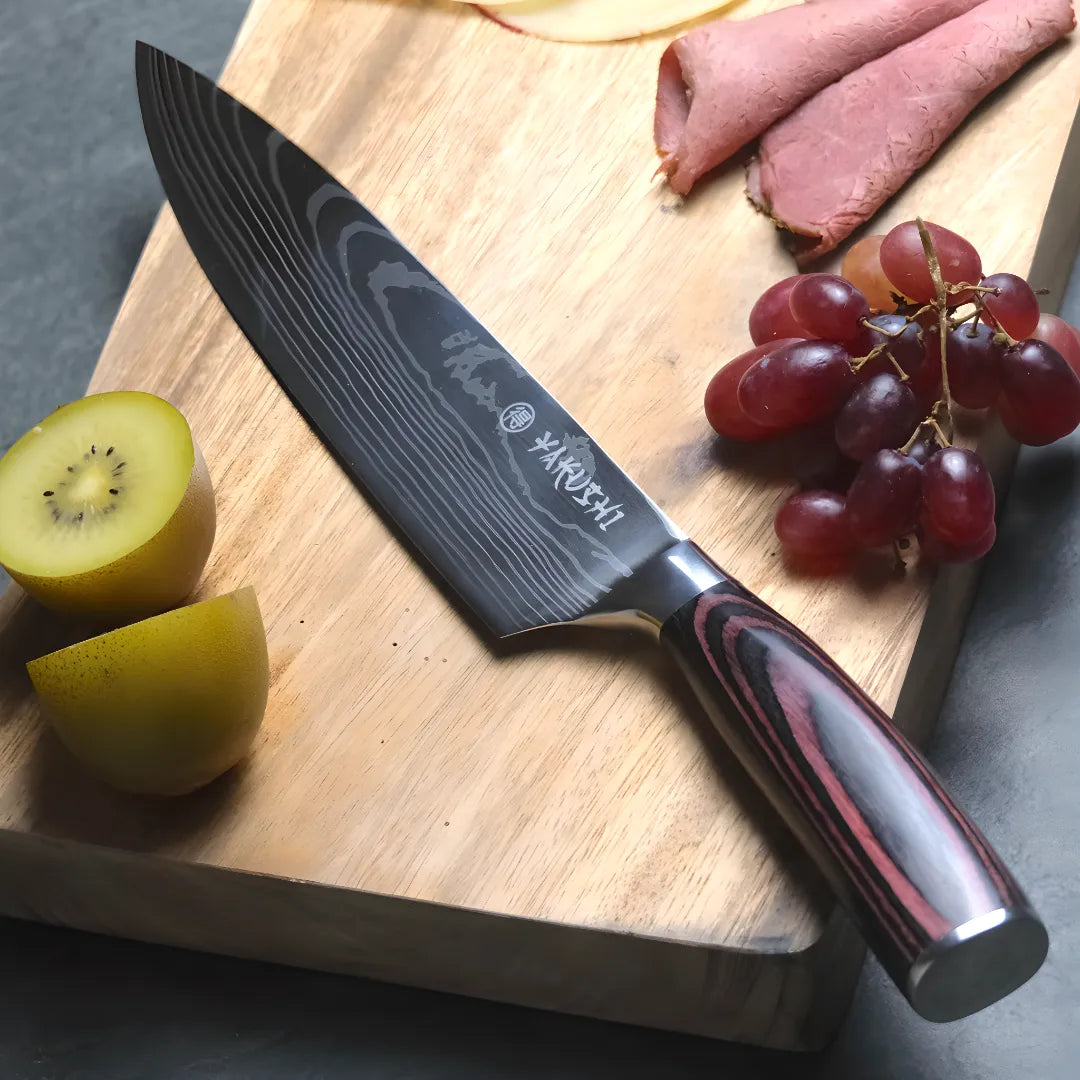
A 192g, full-tang chef knife with a curved all-purpose profile, high-carbon stainless-steel blade, double-bevel edge, and Pakka wood handle.
View the Classic chef knifeSharp performance, clearly specified
Compare high-carbon stainless and VG-10 core knives across chef, Nakiri, steak, and knife-set formats—organized by the jobs they perform and the materials each product page actually verifies.
This is a stainless-focused collection—not a collection of traditional reactive carbon-steel knives. Compare the exact named steel, construction, hardness claims, and cutting role below rather than assuming every blade shares the same metallurgy.
Filters
6 products


Choose the profile before the pattern
Start with the food and cutting motion you use most. A chef knife offers broad everyday versatility, a Nakiri specializes in vegetable preparation, coordinated sets add task-specific profiles, and steak knives belong at the table.
Six accurately described choices
The descriptions below follow the current individual product pages. Broad material labels, named core steels, finish descriptions, layer counts, and hardness ratings are kept separate so one product's specification is never applied to another.
A 192g, full-tang chef knife with a curved all-purpose profile, high-carbon stainless-steel blade, double-bevel edge, and Pakka wood handle.
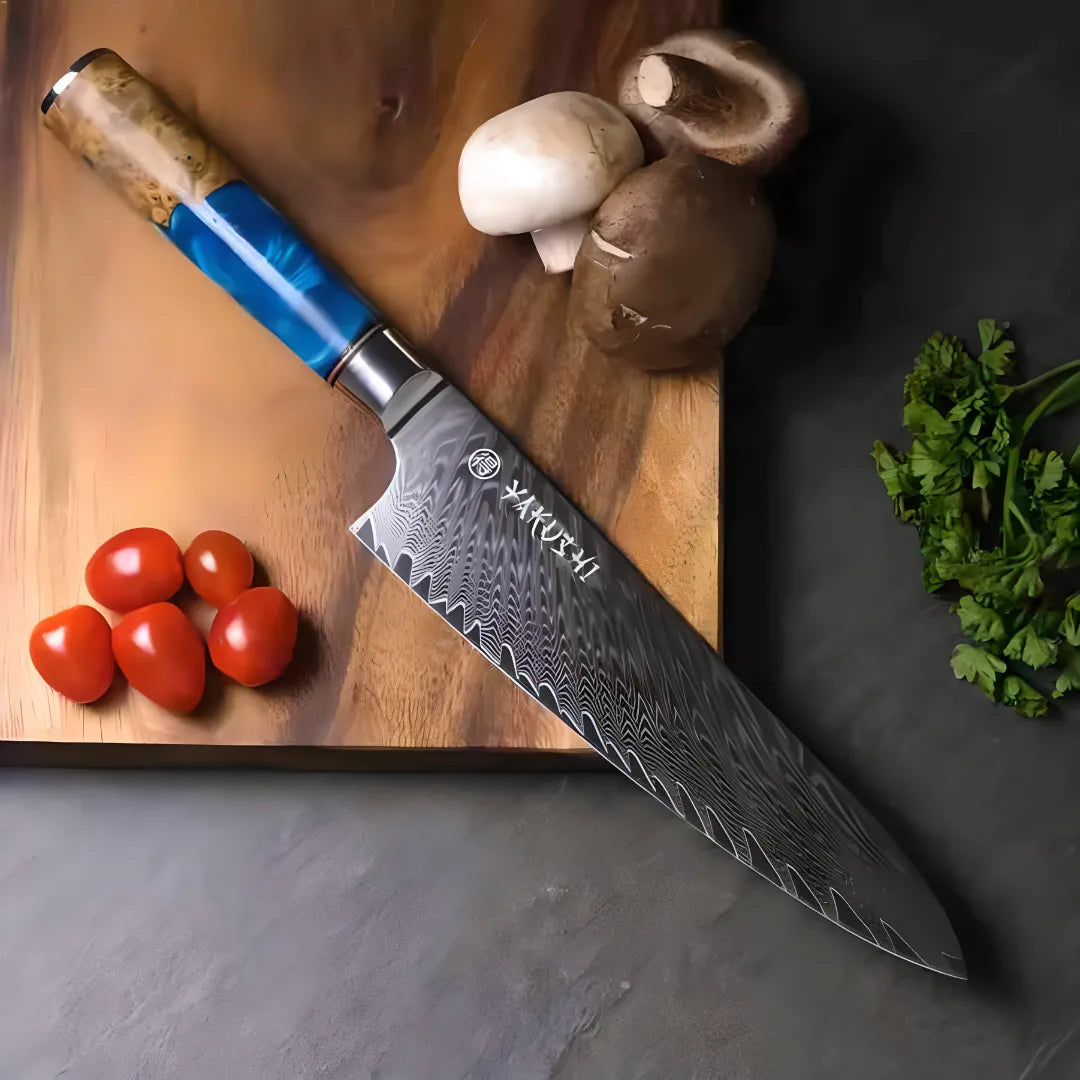
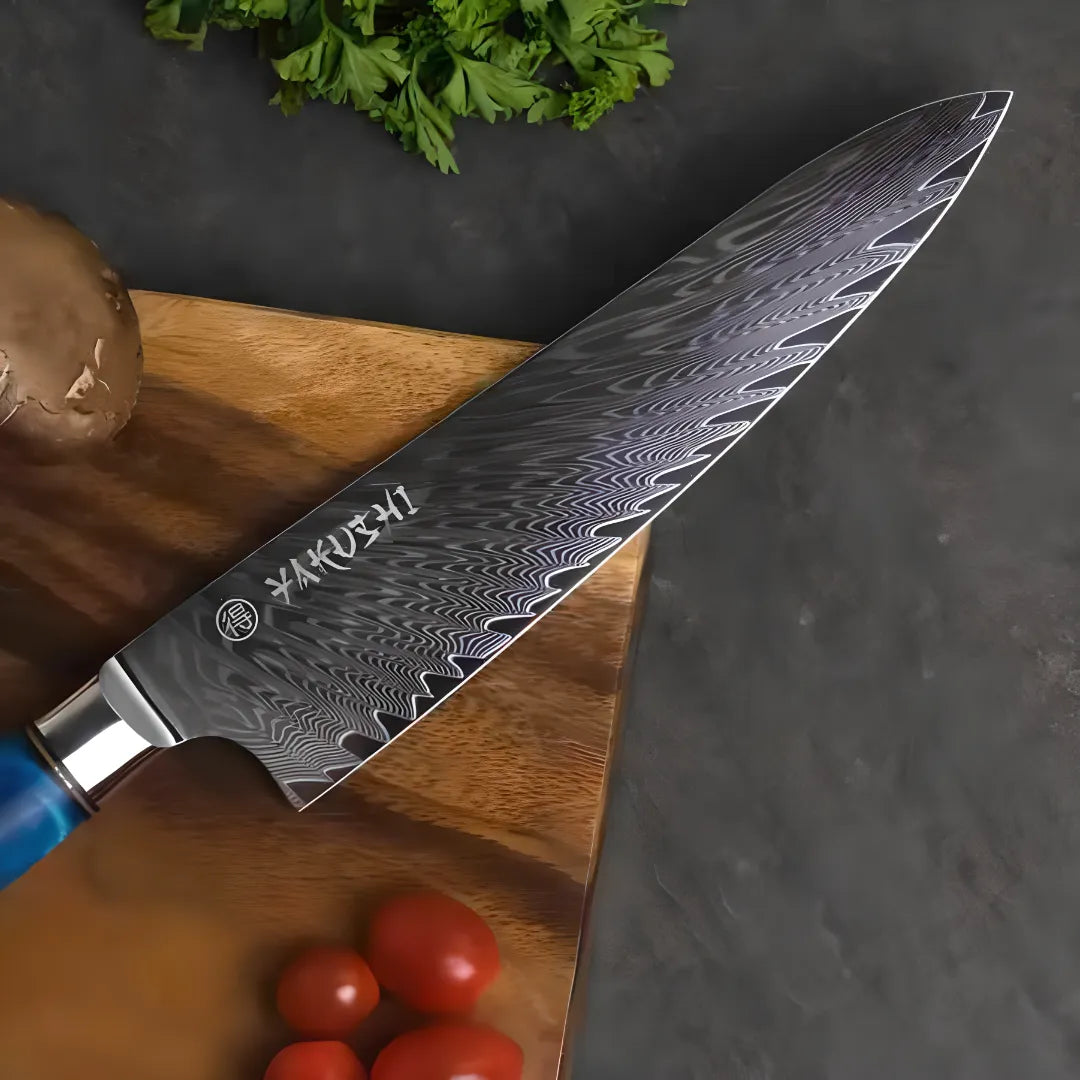
View the Classic chef knifeAn 8-inch, 198g chef knife with a VG-10 stainless-steel cutting core, full-tang build, double-bevel edge, and solidified wood-and-blue-resin handle.
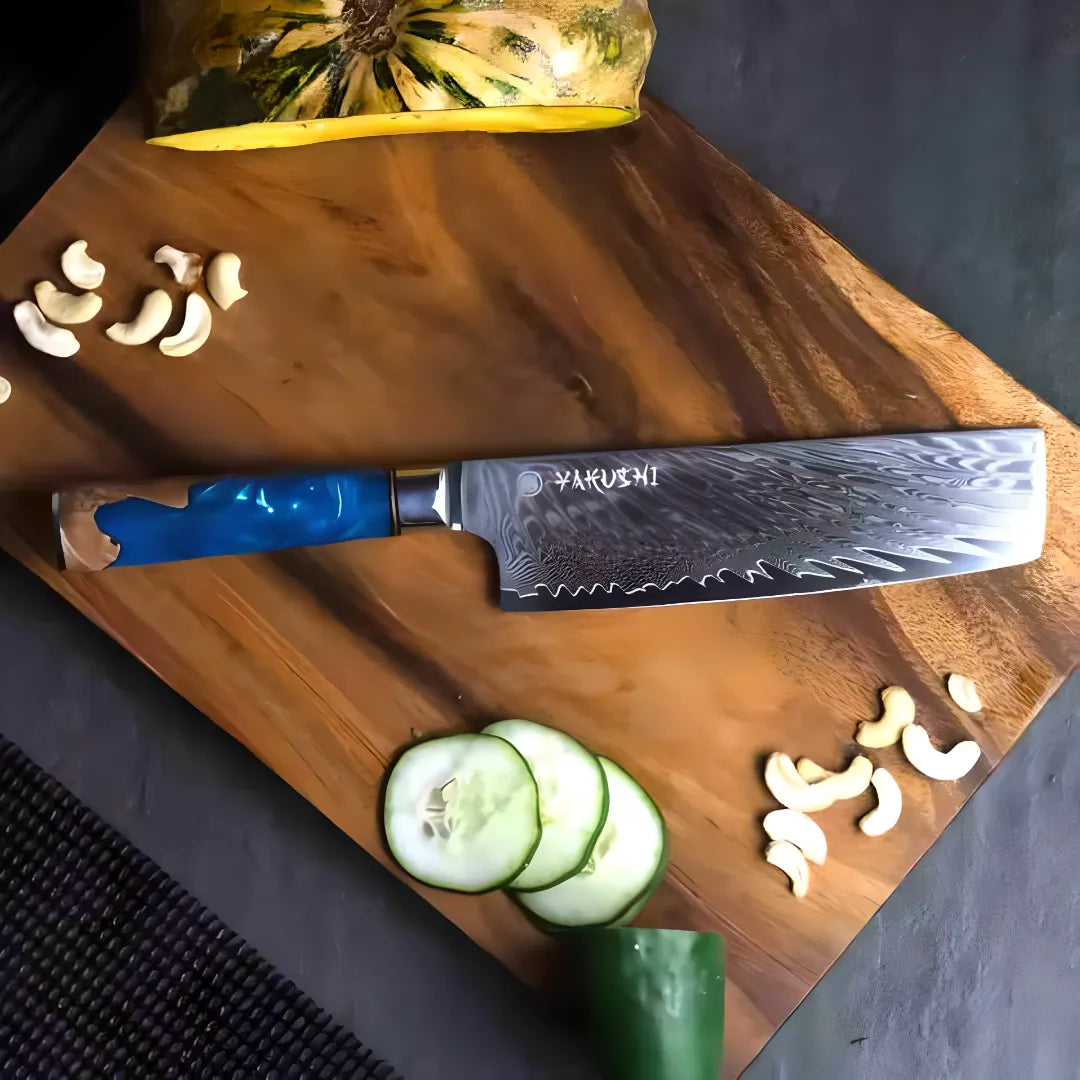
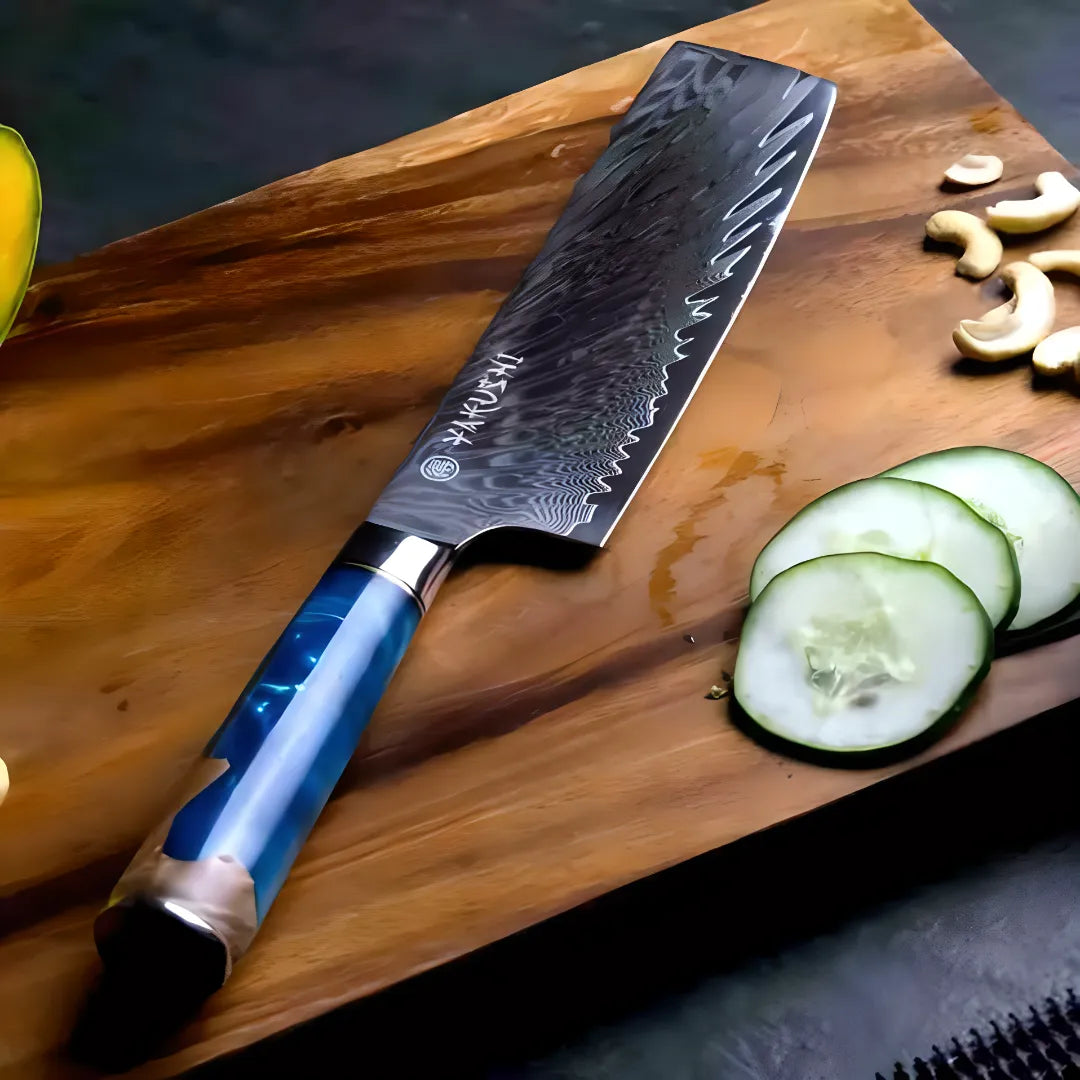
View the VG-10 chef knifeA 240g, full-tang vegetable knife with a straight double-bevel edge, VG-10 core, 67-layer Japanese Damascus construction, and HRC 60+ rating.
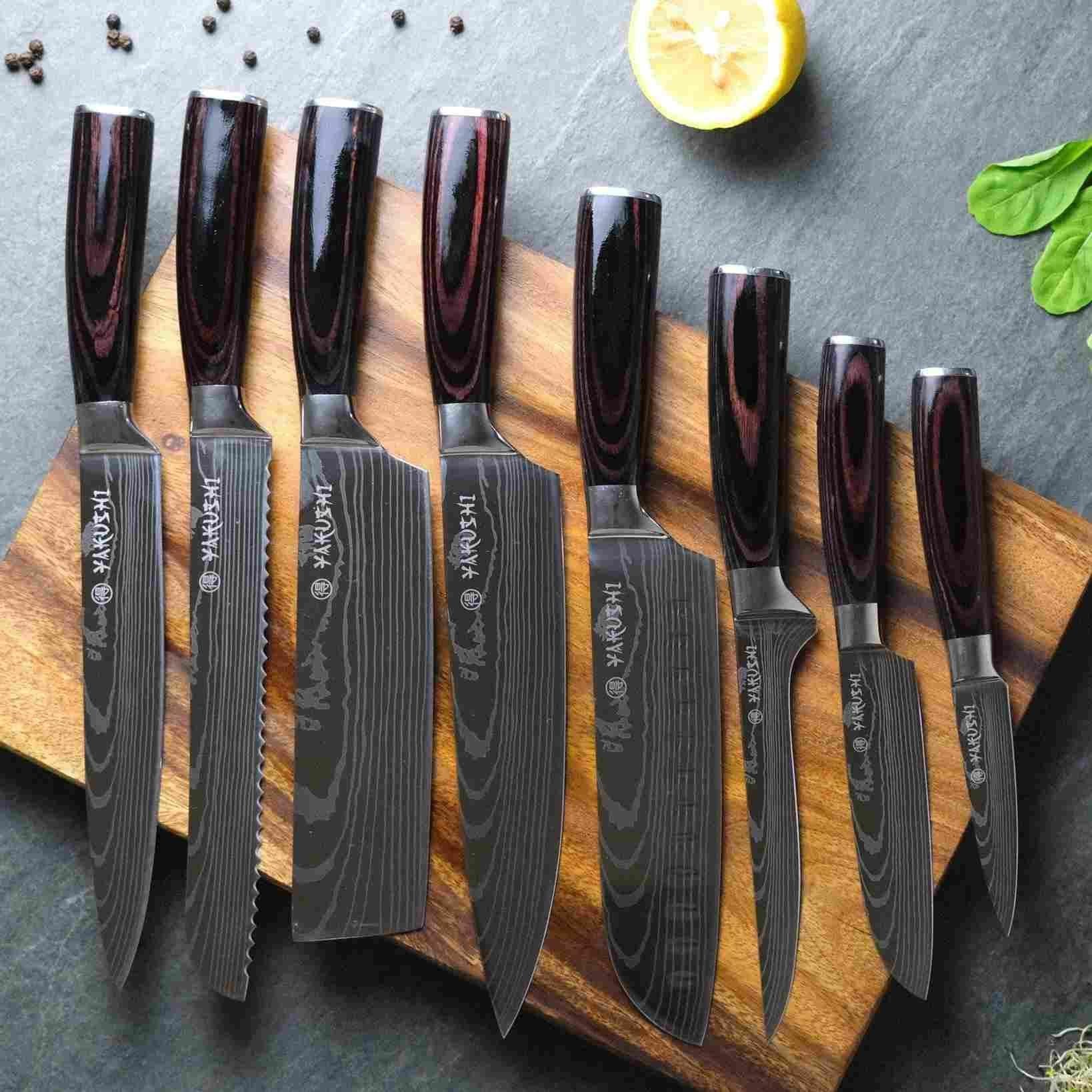
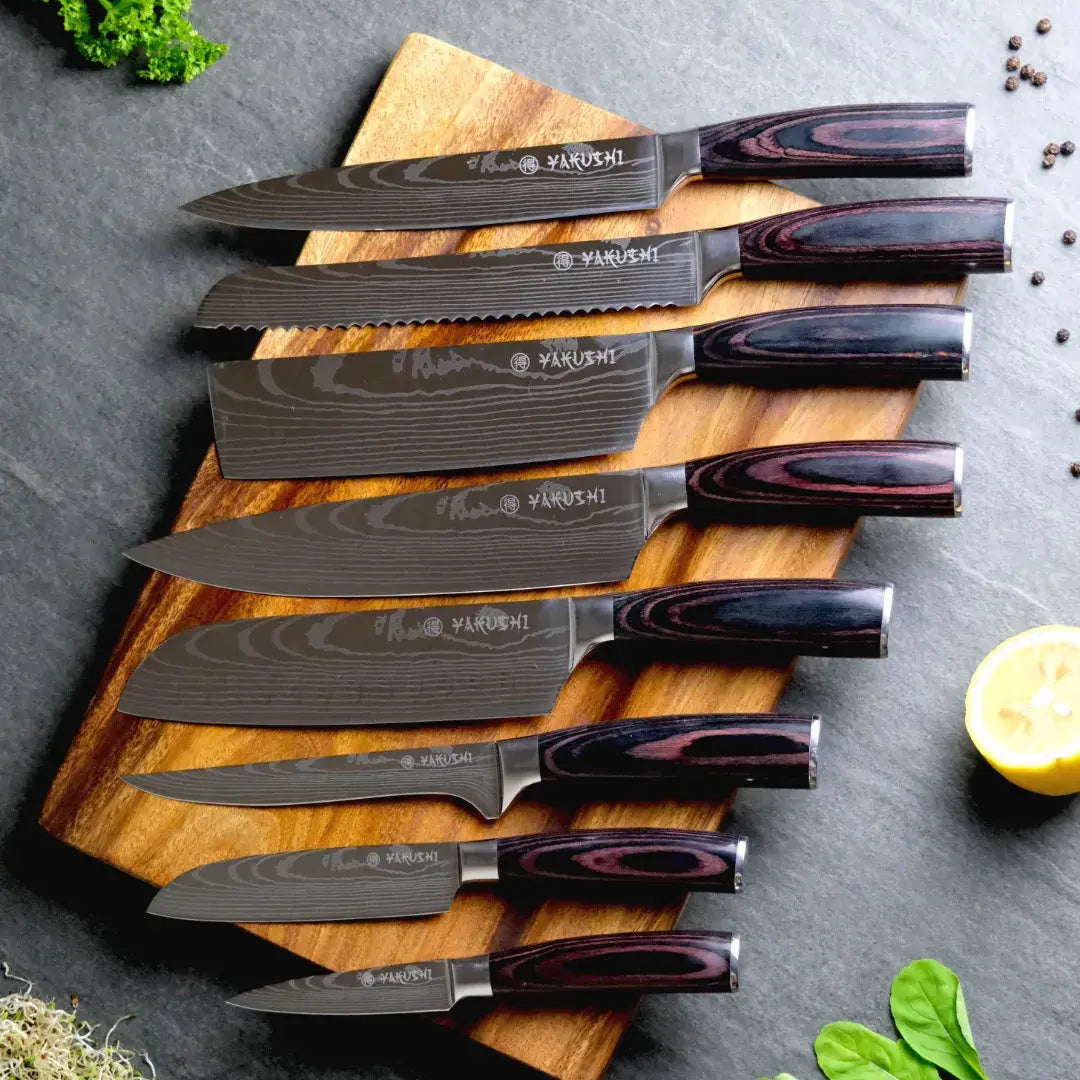
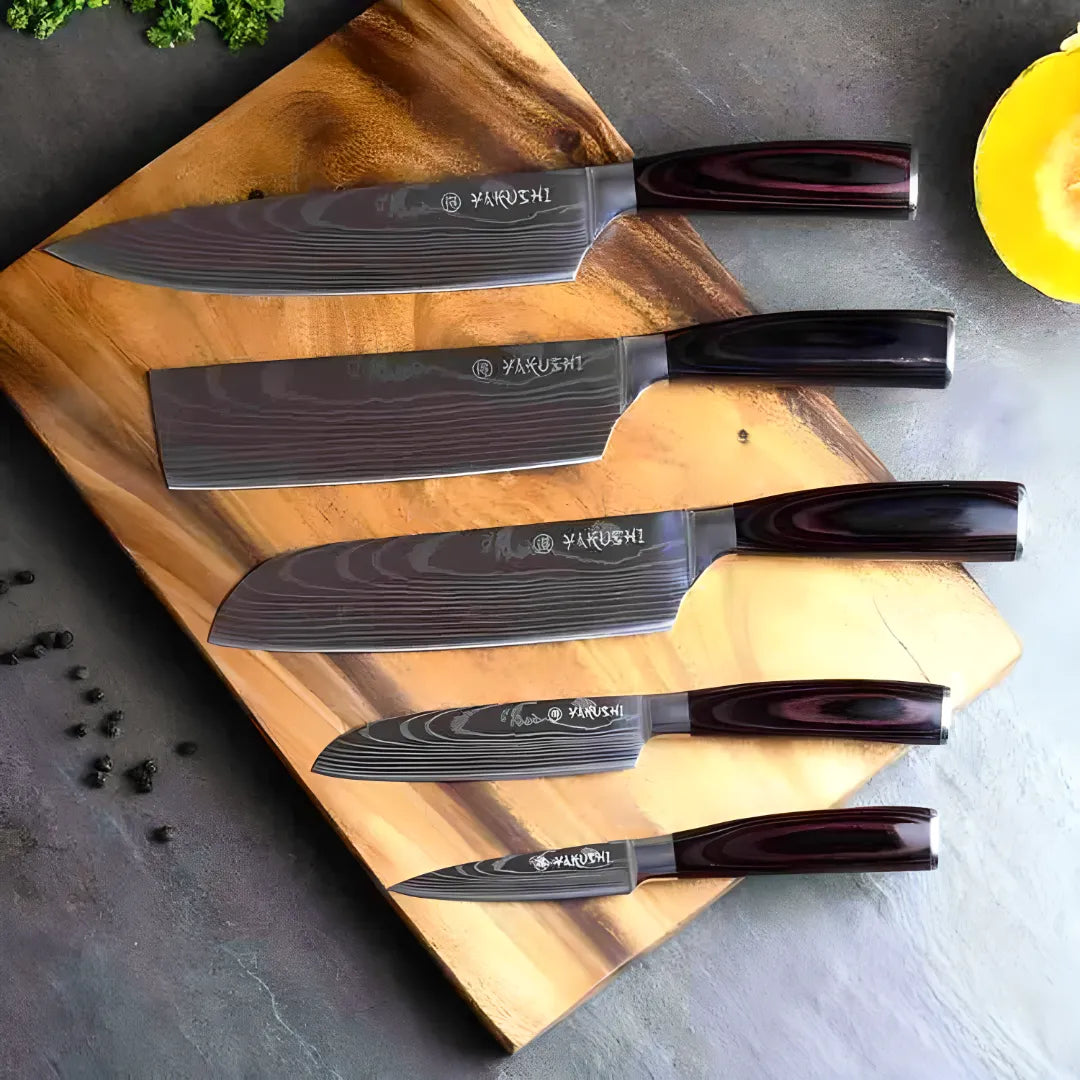
View the Nakiri knifeFive double-bevel knives in Damascus-clad high-carbon stainless steel: chef, 7-inch Santoku, cleaver, 5-inch Santoku, and paring profiles.
View the 5-piece setHigh-carbon stainless-steel knives with a Damascus-style patterned finish, adding bread, slicing, and boning profiles to the everyday preparation core.
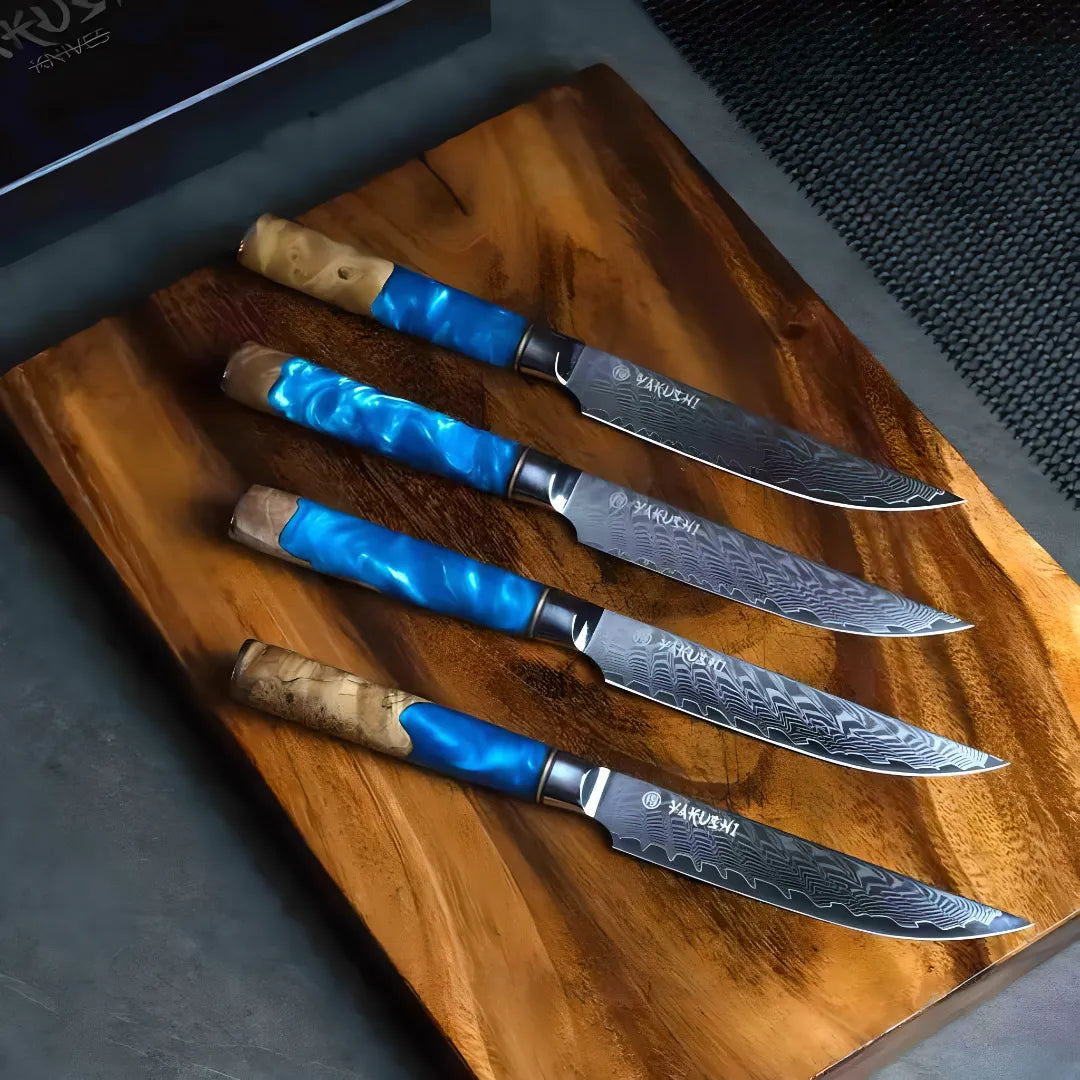
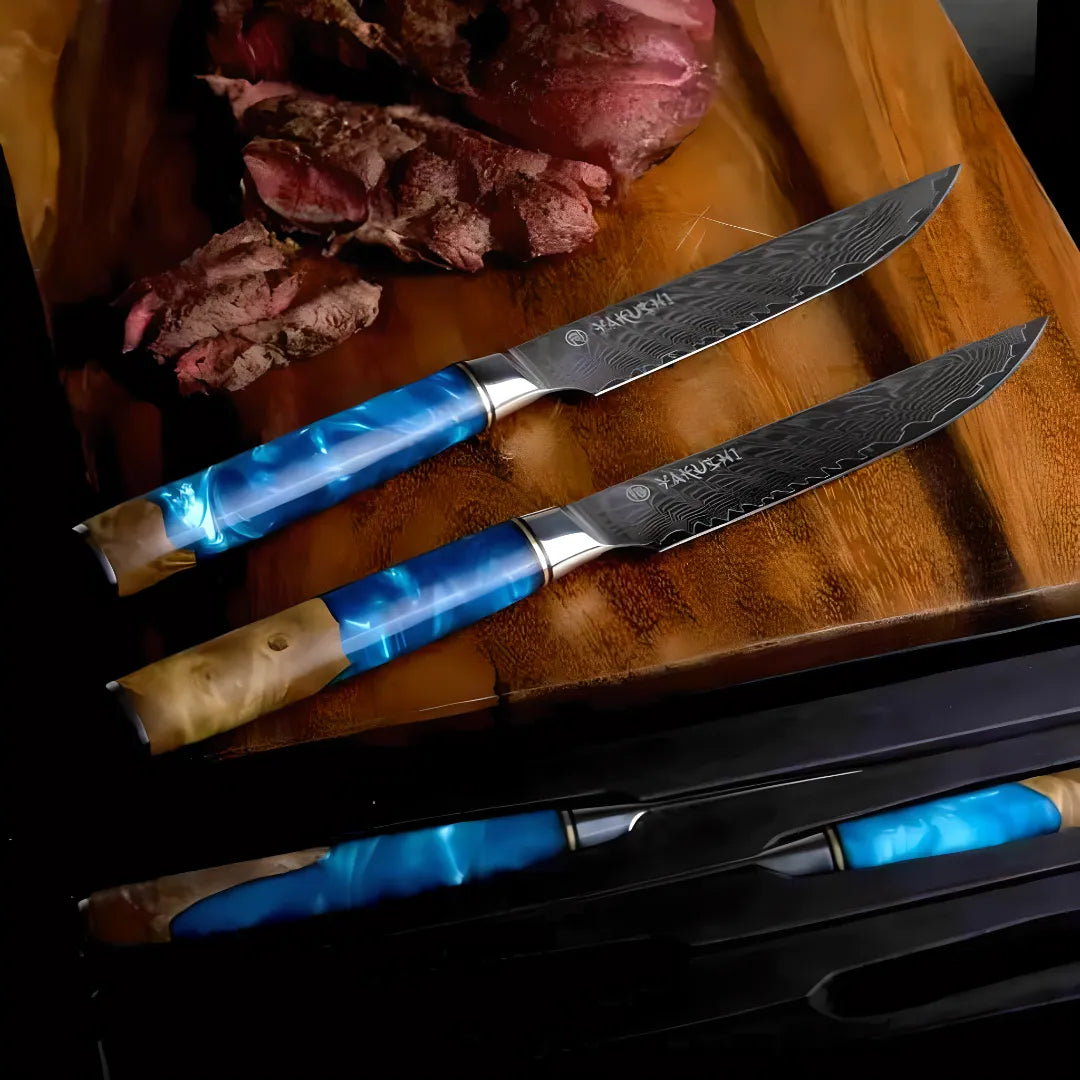
View the 8-piece setChoose 4, 8, or 12 matching 5.5-inch steak knives with VG-10 cores, 67-layer Japanese Damascus steel, straight double-bevel edges, and HRC 60+ hardness.
View the steak knife sets| Product | Verified steel description | Profile or configuration | Best fit |
|---|---|---|---|
| Classic chef knife | High-carbon stainless steel | 8-inch curved chef profile; 192g | Chopping, slicing, dicing, mincing, gentle rocking, and daily prep |
| VG-10 chef knife | VG-10 stainless-steel core with Damascus-style flowing pattern | 8-inch all-purpose chef profile; 198g; sets of 1, 2, or 3 identical knives | Everyday preparation with a distinctive patterned finish |
| VG-10 Nakiri | VG-10 core, 67-layer Japanese Damascus steel, HRC 60+ | 7-inch straight-edged vegetable profile; 240g | Full-contact chopping, slicing, dicing, and mincing of produce |
| 5-piece set | Damascus-clad high-carbon stainless steel | Chef, two Santokus, cleaver, and paring knife | Frequent meal prep, dense produce, boneless proteins, and detail work |
| 8-piece set | High-carbon stainless steel with Damascus-style patterned finish | Five-piece coverage plus bread, slicing, and boning knives | Complete kitchen coverage, bread, carving, and controlled trimming |
| VG-10 steak set | VG-10 core, 67-layer Japanese Damascus steel, HRC 60+ | 5.5-inch straight-edge knives; sets of 4, 8, or 12 | Cooked steaks, chops, and other table-side proteins |
Understand what the label means
Every verified knife in this collection uses stainless steel. None of the current product pages identifies a fully reactive carbon-steel blade that should be expected to form a traditional patina.
This phrase describes the Classic chef knife and 8-piece set directly, and forms part of the published construction description for the 5-piece set. It does not identify one exact alloy across all three products.
The patterned chef knife, Nakiri, and steak knives specify VG-10 cutting cores. Treat that named core as a product-specific detail—not a universal claim for every knife on the page.
“Damascus-clad,” “67-layer Japanese Damascus,” and “Damascus-style patterned finish” are separate descriptions. The comparison table preserves the exact distinction.
The Rockwell C scale is used to measure the hardness of steel; the National Institute of Standards and Technology maintains reference standards for HRC measurement. Here, HRC 60+ is published for the Nakiri and steak knives only. No hardness figure should be added to the other products unless it is independently documented.
Match the edge to your workflow
Pick the Classic or VG-10 chef knife when you want one primary blade for vegetables, fruit, herbs, aromatics, boneless proteins, and controlled rocking or draw cuts.
Its tall rectangular shape and straighter edge suit up-and-down chopping and push cutting through vegetables, herbs, and fruit with consistent board contact.
The 5-piece set covers the daily core plus broad-blade work. The 8-piece set adds dedicated bread, slicing, and boning knives for cooks who use those profiles.
Select 4, 8, or 12 matching straight-edge knives when the goal is clean slicing through cooked steaks, chops, and other proteins at the table.
The Classic chef knife and both kitchen sets use Pakka wood handles and a coordinated darker visual style across everyday preparation profiles.
The VG-10 chef knife, Nakiri, and steak knives pair their patterned blades with solidified wood-and-blue-resin handles for a coordinated look.
Good technique protects the edge
Simple care, better longevity
Stainless steel offers practical corrosion resistance, but it is not maintenance-free. Prompt cleaning, suitable cutting surfaces, protected storage, and controlled sharpening matter more than complicated rituals.
Use mild dish soap and warm water, then dry the blade and handle immediately. Do not soak the knife or put it in a dishwasher.
Use wood or a suitable synthetic board. Store clean, dry knives in a stable block, sheath, guard, or magnetic holder that prevents edge contact.
Maintain each double-bevel edge with a suitable whetstone or trusted professional service. Do not assign one sharpening angle to every product without measuring the existing bevel.
Continue with Yakushi's focused collections and practical guides to choose a blade by construction, shape, and daily use.
Straight answers
This collection contains stainless-steel kitchen knives. Some product pages use the broad description high-carbon stainless steel, while others identify a specific VG-10 stainless-steel cutting core. The exact specification is listed separately for each product above.
No current product page in the verified collection identifies a fully reactive carbon-steel blade. Do not expect or deliberately force the patina associated with traditional non-stainless carbon steel.
No. The collection includes broadly specified high-carbon stainless-steel blades, Damascus-clad high-carbon stainless steel, and named VG-10 stainless-steel cores. Finish, cladding, layer count, and core steel should be compared as separate specifications.
For most home cooks, either 8-inch chef knife is the most versatile starting point. Choose the Classic for a Pakka wood handle and curved high-carbon stainless profile, or the VG-10 option for a solidified wood-and-blue-resin handle and patterned finish.
The 7-inch Nakiri is the dedicated vegetable specialist. Its tall rectangular profile and straight double-bevel edge support controlled up-and-down chopping and push cuts through vegetables, herbs, and fruit.
Choose the 5-piece set for chef, Santoku, cleaver, and paring coverage. Choose the 8-piece set when you will also use dedicated bread, slicing, and boning knives regularly.
No. The current Nakiri and steak knife product pages list HRC 60+. The other verified products do not publish a hardness rating, so the same number should not be applied to the entire collection.
Yes. The verified products use double-beveled edges, making them suitable for right-handed and left-handed cooks without specialized single-bevel technique.
No. Hand-wash each knife with mild dish soap and dry it immediately. Dishwasher heat, aggressive detergent, movement, and prolonged moisture can damage the edge, finish, and handle.
No. Avoid bones, joints, frozen food, hard pits, shells, twisting, prying, and high-impact work. Even the set's cleaver is intended for dense produce and thicker boneless cuts—not bones.
Start with an all-purpose chef knife, select the Nakiri for focused vegetable work, expand into a coordinated kitchen set, or equip the table with matching VG-10 steak knives.