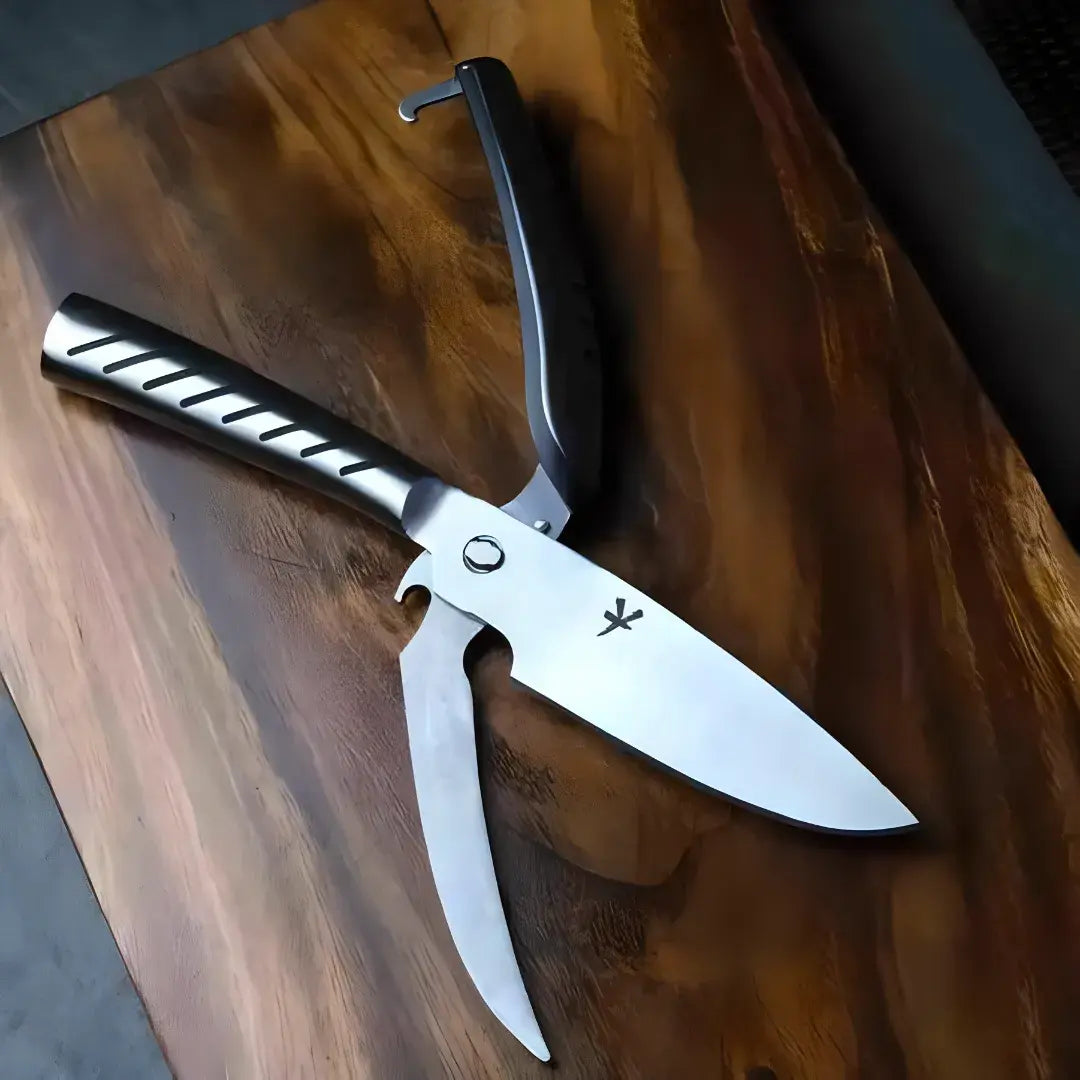
Yakushi kitchen scissors are detachable stainless steel kitchen shears built for serious home cooking. Use them to cut poultry, trim herbs, open packaging, slice parchment, cut twine, and handle everyday prep without reaching for a knife. Designed with a spring mechanism, non-slip grip, and take-apart construction, they are easy to clean and built for daily kitchen use.
Filters
1 product
Best for:
Yakushi kitchen scissors are best for home cooks who want one versatile pair of detachable kitchen shears for cutting poultry, trimming herbs, opening food packaging, slicing parchment, cutting twine, and reducing cleanup.
Not best for:
They are not intended for frozen food, metal, glass, or use as a pry tool.
Your page already mentions avoiding frozen items, glass, metal, and misuse, which is good. Bring that higher and make it clearer.
What are the Best Kitchen Scissors for Home Cooks?
The best kitchen scissors for home cooks are sharp, stainless steel, easy to clean, comfortable to grip, and strong enough for everyday tasks like cutting poultry, herbs, parchment, twine, and packaging. Yakushi detachable kitchen scissors combine stainless steel blades, a spring mechanism, non-slip handles, and a take-apart design for thorough cleaning.
Detachable Kitchen Scissors for Everyday Cooking
A reliable pair of multipurpose kitchen scissors is the ultimate shortcut to faster, safer meal prep. Instead of dragging out a bulky cutting board and dulling your favorite chef knife, a quick snip lets you portion ingredients directly into your pan, bowl, or salad plate.
Yakushi detachable kitchen scissors combine centuries of Japanese blade-making influence with modern culinary utility. Engineered for home cooks who demand professional performance, these shears tackle everything from delicate meal prep to rugged kitchen tasks with effortless precision.
Why Choose Yakushi Kitchen Scissors?
Most kitchen scissors sold today are simply basic utility scissors repackaged in a different color. They dull quickly, rust after a few washes, and trap dangerous food bacteria in their pivot joints.
Yakushi kitchen shears are built differently. We focus exclusively on structural integrity, edge retention, and kitchen hygiene:
- Direct-to-Consumer Value: By eliminating traditional retail markups, we deliver premium, professional-grade steel directly to your kitchen at a fair price.
- Japanese Craftsmanship Standards: Our blade geometries are influenced by elite Japanese knife-making traditions, ensuring an incredibly sharp edge that lasts.
- Hygiene-First Engineering: The fully separable blades ensure you can clean every single millimeter of the tool, leaving zero room for cross-contamination.
What Can You Use Kitchen Scissors For?
A sharp pair of stainless steel shears is arguably the most versatile tool in your kitchen drawer. Beyond basic packaging tasks, a premium pair handles everyday cooking workflows with ease:
- Slicing and Dicing: Cut fresh pizza wedges, trim thick pastry dough, or slice flatbreads without dragging cheese and toppings off the crust.
- Fresh Herb Prep: Snip delicate herbs like basil, cilantro, chives, and green onions straight into your dishes without bruising or tearing the tender leaves.
- Prepping Vegetables: Trim woody ends off asparagus, snap green beans, or slice sun-dried tomatoes directly into sauces.
- Utility Tasks: Cleanly cut kitchen twine, open vacuum-sealed meal kits, or slice through stubborn plastic packaging without damaging your fine knife edges.
Kitchen Scissors vs Kitchen Shears
Scissors vs. Shears: The Structural Difference
While many people use these terms interchangeably, there is a major structural difference that impacts how they perform in your kitchen:
| Feature | Kitchen Shears (Yakushi) | Kitchen Scissors |
|---|---|---|
| Handle Design | Asymmetrical (one small loop, one elongated loop) | Symmetrical, identical finger loops |
| Leverage & Power |
Maximized for high-pressure, heavy-duty cuts
✓ High Leverage Mechanics
|
Balanced for light, everyday cutting tasks |
| Finger Loops | Elongated loop accommodates 3–4 fingers for maximum grip | Fits one finger per loop |
| Primary Use | Breaking down whole poultry, cutting bone and cartilage | Snipping herbs, opening plastic packaging |
💡 Note: Yakushi utilizes a true kitchen shear architecture, giving you the necessary mechanical leverage to cut through dense materials safely.
The Mechanical Advantage: Why Premium Kitchen Shears Matter
It is easy to assume that any pair of scissors can handle kitchen tasks, but standard household shears lack the structural integrity required for heavy food prep. Premium Japanese culinary shears are engineered specifically to handle high-stress applications that would instantly break cheap plastic handles.
1. High-Carbon Stainless Steel Integrity
Standard scissors are stamped from soft, low-grade metal that rusts and dulls almost instantly when exposed to acidic food juices or prolonged moisture. Our culinary shears utilize high-carbon stainless steel alloys, ensuring the blades stay razor-sharp to snip cleanly through slippery poultry skin and tough herb stems without tearing or crushing the ingredient.
2. Multi-Functional Tool Integration
A true kitchen shear is designed to be a complete multi-tool, dramatically speeding up meal prep. Beyond basic snipping, a heavy-duty pivot point and reinforced spine allow you to:
- Spatchcock Poultry: Effortlessly break through chicken bones, cartilage, and heavy rib cages.
- Scale Fish: The specialized micro-serrations on the outer blade edge quickly remove scales.
- Crack Nuts & Shells: A built-in, serrated central grip cavity effortlessly cracks walnuts or tough lobster and crab shells.
- Open Bottles: An integrated hook acts as a robust bottle opener.
3. The Sanitation Factor (Take-Apart Design)
The most critical difference between office scissors and culinary shears is hygiene. Raw meat juices easily seep into the central pivot point of standard scissors, creating a breeding ground for bacteria. Premium kitchen shears feature a specialized, interlocking pivot joint that allows the two blades to completely separate. This "take-apart" design ensures you can scrub every single millimeter of the steel, guaranteeing 100% food-safe sanitation after processing raw poultry.
Detachable vs Non-Detachable Kitchen Scissors
When choosing kitchen cutlery, hygiene is just as critical as sharpness.
- Non-Detachable Scissors: Standard, fixed-rivet scissors trap water, grease, and raw meat juices inside the pivot screw. Over time, this hidden moisture leads to rust, friction, and dangerous bacterial growth that contaminates your fresh food.
- Detachable Kitchen Shears: Yakushi shears feature a precision take-apart slip joint. By opening the handles past a specific angle, the two blades separate completely. This allows you to easily wash away raw poultry bacteria, dry the blades thoroughly, and quickly reassemble them for immediate use.
How to Choose the Best Kitchen Scissors
To find the perfect pair of shears for your culinary style, look for these three core benchmarks:
- Material Quality: Insist on premium stainless steel. Lower-grade steels rust almost immediately when exposed to acidic foods like tomatoes or citrus juices.
- Blade Design: Look for a pair that features a micro-serrated edge. These tiny teeth grip slick surfaces—like slippery chicken skin—so the blades slice cleanly instead of sliding off.
- Ease of Maintenance: If the blades do not separate, cleaning them safely after handling raw proteins is nearly impossible. Prioritize a take-apart design.
Stainless Steel Kitchen Scissors: What to Look For
The quality of the steel determines how long your shears stay sharp and how well they resist corrosion. Yakushi shears utilize premium stainless steel optimized to a hardness range of 50-54 HRC (Rockwell Hardness Scale).
This structural sweet spot ensures the blades are incredibly tough and retain their razor-sharp edge through heavy daily use, yet remain resilient enough to cut through tough joints without chipping or cracking like brittle, high-carbon alternatives.
How to Clean Kitchen Scissors
To maintain optimal performance and extend the lifespan of your kitchen shears, follow this quick care routine:
- Separate the Blades: Open the shears fully to disconnect the take-apart mechanism.
- Hand Wash Recommended: Wash both blades with warm, soapy water and a soft sponge. Avoid abrasive metal scouring pads that can scratch the protective stainless finish.
- Dry Immediately: Wipe the separated blades thoroughly with a dry towel before reassembling them. Storing cutlery while damp is the leading cause of cosmetic spotting.
- Optional Maintenance: Once or twice a year, place a single drop of food-safe mineral oil onto the pivot joint to keep the cutting action incredibly smooth.
Heavy-Duty Kitchen Scissors for Poultry and Meat Prep
If you regularly cook fresh meat, a heavy-duty pair of shears will completely transform your prep time. Working with raw chicken breasts, slick pork fat, or whole fish can be dangerous with a chef knife if your hands get slippery.
Yakushi shears are engineered to effortlessly slice through dense cartilage, trim thick fat caps, and spatchcock whole chickens by cutting clean through the backbone. Using shears keeps your hands clear of the cutting line, giving you significantly better control and speed when portioning raw proteins.
Kitchen Scissors Safety and Ergonomics
Repetitive cutting through dense ingredients can quickly cause hand strain, cramping, and fatigue. Yakushi kitchen shears are designed with user ergonomics as a top priority:
- Built-In Spring Mechanism: The automatic internal rebound spring gently pushes the handles open after every squeeze, taking the physical strain off your hand muscles during long prep sessions.
- Non-Slip Handles: The ergonomic handle loops are lined with a secure, comfortable grip material that won't slip out of your hands, even when working with oily or wet ingredients.
- Ambidextrous Geometry: The handle architecture is balanced perfectly to offer comfortable leverage and smooth operation for both right and left-handed cooks.
Frequently Asked Questions About Kitchen Scissors
What are kitchen scissors used for?
Kitchen scissors are highly versatile tools used for trimming raw meats, snipping fresh herbs, slicing pizza, and cutting parchment paper. They allow you to safely portion foods directly over a pot or bowl, eliminating the need to dirty a cutting board and saving clean-up time during daily meal prep.
Are kitchen scissors the same as kitchen shears?
No, they feature a key structural difference. Standard kitchen scissors have symmetric, identical finger loops designed for light tasks. True kitchen shears feature an asymmetric handle—one small loop for the thumb and an elongated loop for multiple fingers—which provides the necessary mechanical leverage to cut through dense materials like bone and cartilage.
Can kitchen scissors cut chicken bones?
Heavy-duty kitchen shears can easily cut through small poultry bones, joints, and cartilage, which is ideal for tasks like spatchcocking a chicken. To cut bones safely without damaging the edge, look for heavy-duty shears equipped with a dedicated bone notch near the pivot to prevent slipping.
Are detachable kitchen scissors better?
Yes, take-apart kitchen scissors are vastly superior for kitchen hygiene. Fixed-rivet scissors trap moisture, grease, and microscopic food particles in the pivot joint, leading to rust and bacterial growth. Detachable shears separate completely at the slip joint, allowing you to thoroughly clean and dry every millimeter of the blades.
Why do these kitchen shears come apart, and will they separate while I am cutting?
The "take-apart" design is a crucial safety and sanitation feature. It allows the two blades to completely separate at a specific, wide angle so you can thoroughly wash and scrub the central pivot joint, ensuring no raw meat juices or bacteria get trapped inside. They will never come apart while you are actively cutting. The interlocking mechanism is engineered to separate only when the shears are intentionally opened fully past their normal cutting range for cleaning.
Can kitchen scissors go in the dishwasher?
While some stainless steel shears are labeled as dishwasher-safe, hand washing is highly recommended. The harsh detergents, intense heat, and prolonged moisture of a dishwasher cycle can dull the razor-sharp edge prematurely and cause cosmetic spotting on even premium stainless steel.
How do you clean kitchen scissors after cutting raw chicken?
To prevent cross-contamination, separate your detachable shears completely immediately after use. Wash both blades thoroughly using warm water, antibacterial dish soap, and a non-abrasive sponge. Dry the blades completely with a clean towel before reassembling them to prevent any moisture entrapment.
Can I use these shears to cut through heavy chicken or turkey bones?
Yes, our heavy-duty culinary shears are specifically engineered to spatchcock poultry and cut through chicken ribs, cartilage, and small joints. The reinforced high-carbon stainless steel blades and high-leverage pivot point handle these tasks effortlessly. However, you should avoid trying to force them through massive, thick beef or pork leg bones, which require a heavy-duty meat cleaver or a bone saw.
What are the best kitchen scissors for home cooks?
The best kitchen scissors for home cooks feature a high-quality stainless steel construction, a detachable take-apart design for easy cleaning, and an ergonomic grip. A built-in spring mechanism is also highly recommended to reduce hand fatigue during intensive meat or vegetable prep.
What should I look for when buying kitchen scissors?
When purchasing kitchen shears, prioritize three core features: premium stainless steel blades (ideally in the 50-54 HRC hardness range), a micro-serrated blade edge to grip slippery foods, and a fully separable slip joint for proper kitchen sanitation.
Are stainless steel kitchen scissors better?
Yes, stainless steel is the industry standard for kitchen cutlery because it offers excellent corrosion resistance. It actively resists rusting when exposed to water, dish soap, and acidic food juices (like tomatoes or citrus), while maintaining a durable, sharp cutting edge.
How long do kitchen scissors last?
A premium pair of stainless steel kitchen shears can easily last anywhere from 5 to 10+ years, or even a lifetime, if maintained correctly. Lifespan depends entirely on structural quality, hand-washing habits, and avoiding cutting hard materials like thick metal wires that can chip the blades.
Can you sharpen kitchen scissors?
Yes, and sharpening is incredibly easy if you use detachable shears. Because the blades separate completely, you can sharpen the single beveled edge on a standard whetstone or ceramic pull-through sharpener exactly like a kitchen knife. Never grind the perfectly flat back side of the scissor blades.
Are these kitchen shears suitable for left-handed cooks?
Yakushi kitchen shears feature a contoured, symmetric ambidextrous handle geometry. This ensures that both left-handed and right-handed cooks can maintain a secure, ergonomic grip and exert maximum cutting pressure without experiencing painful pinch points.