
Japanese Knife Sets

5,000+ Customers Yearly

3 Month Warranty

Free USA Shipping
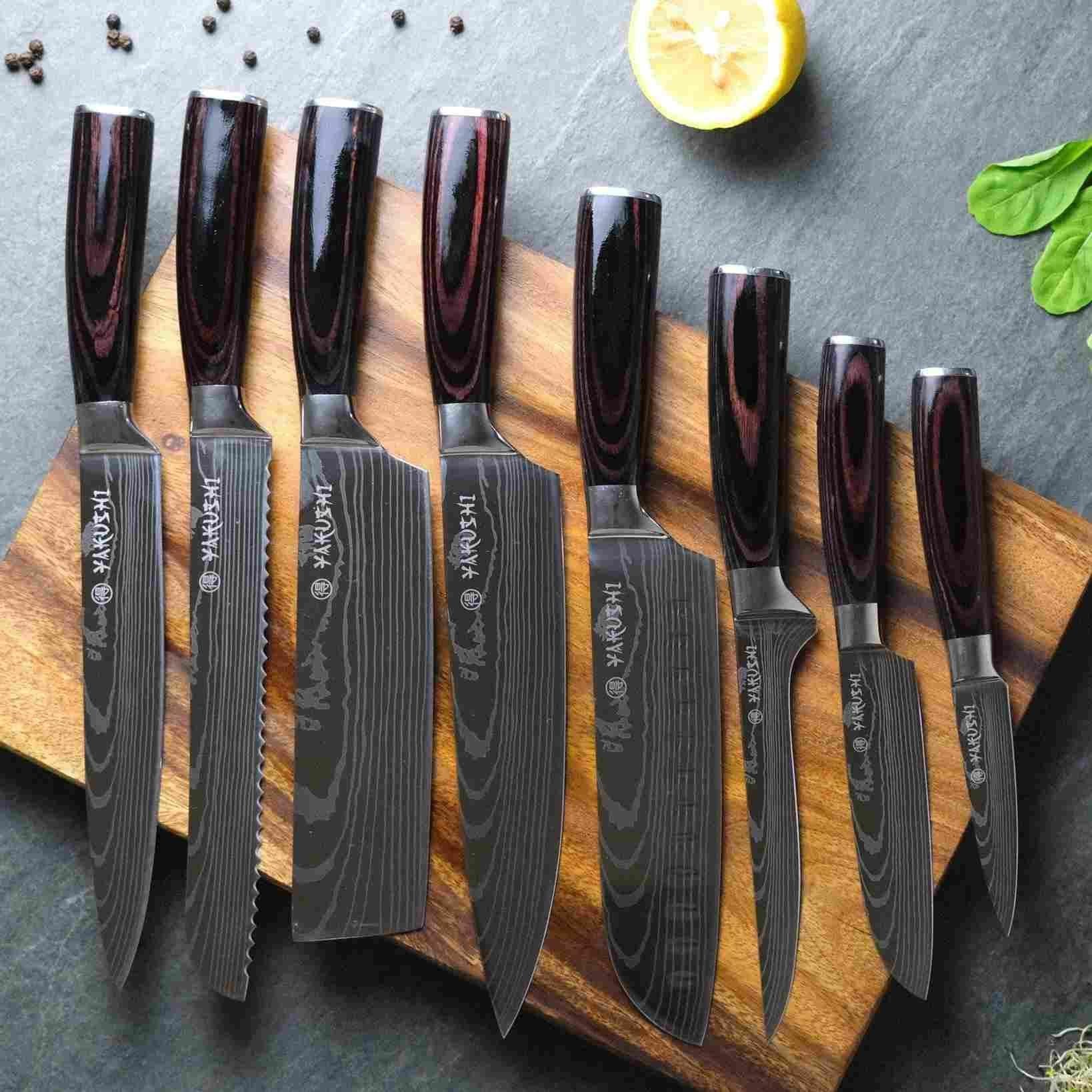
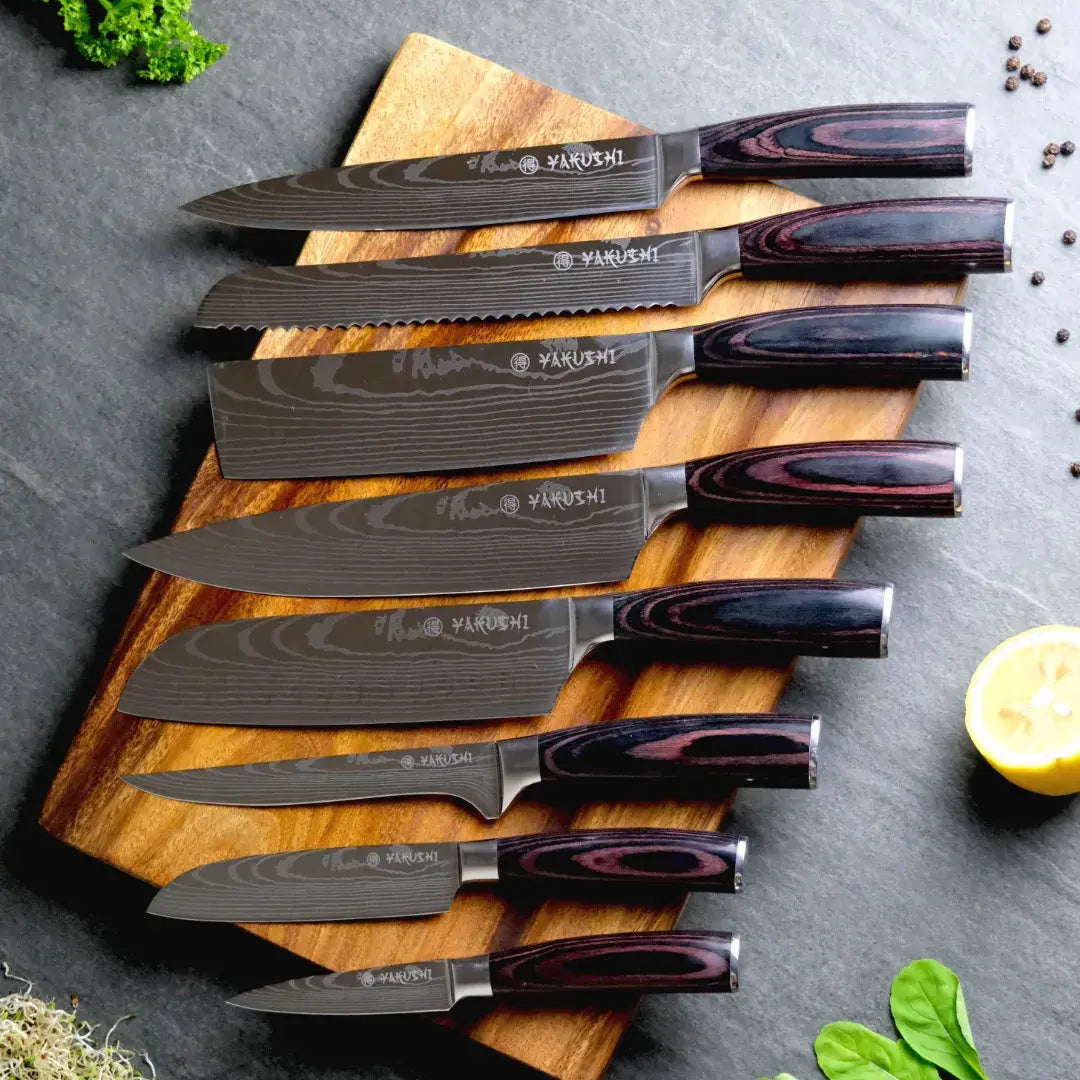
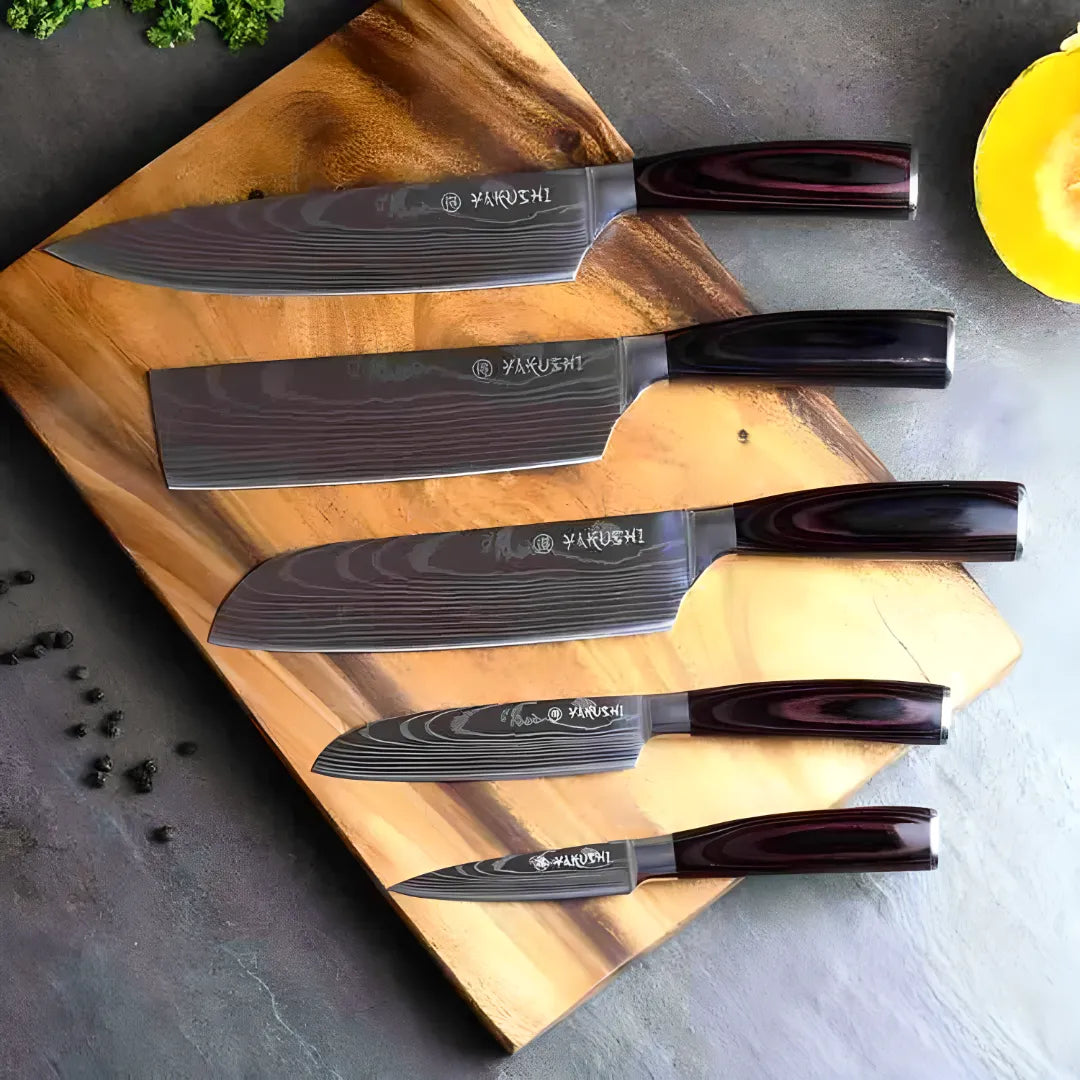
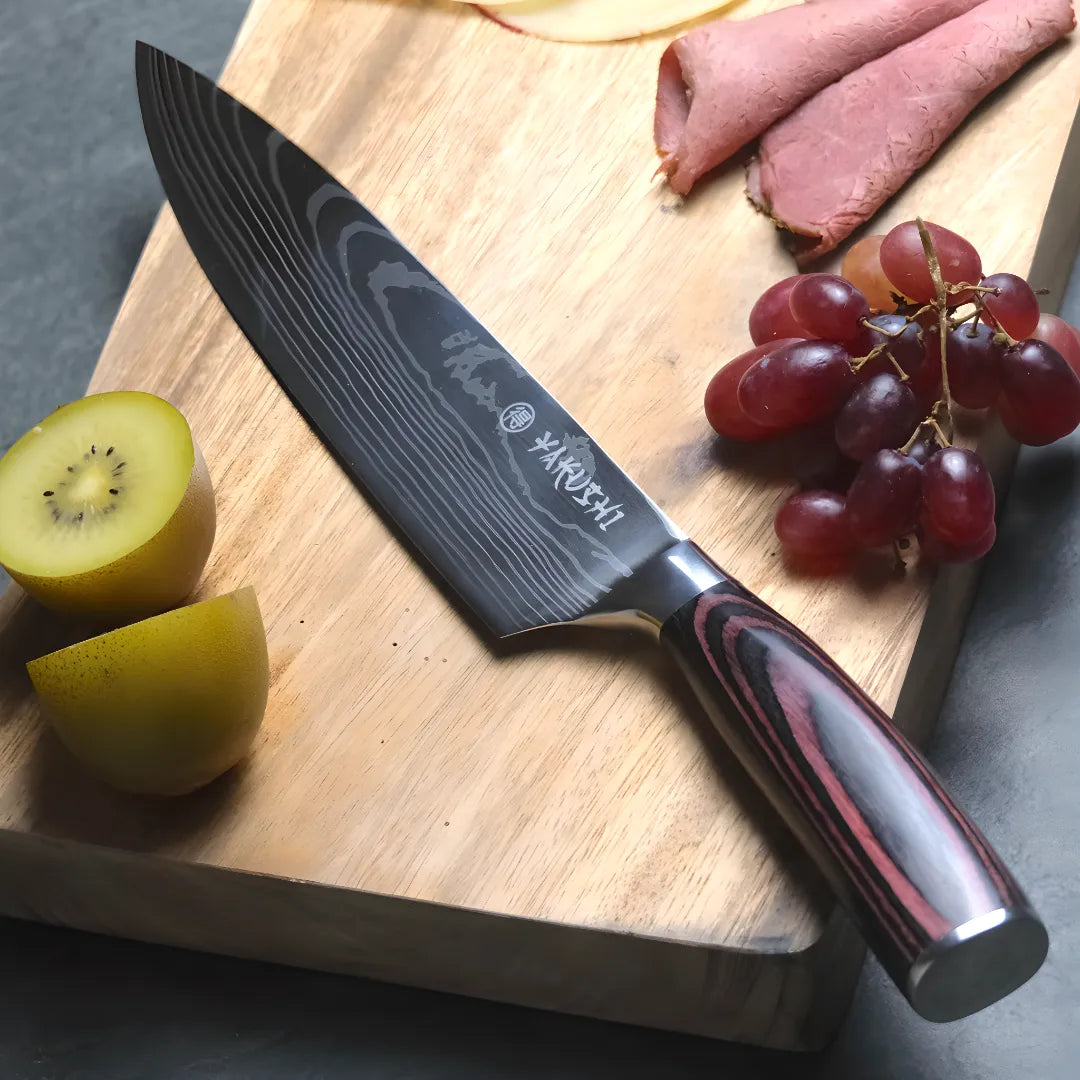
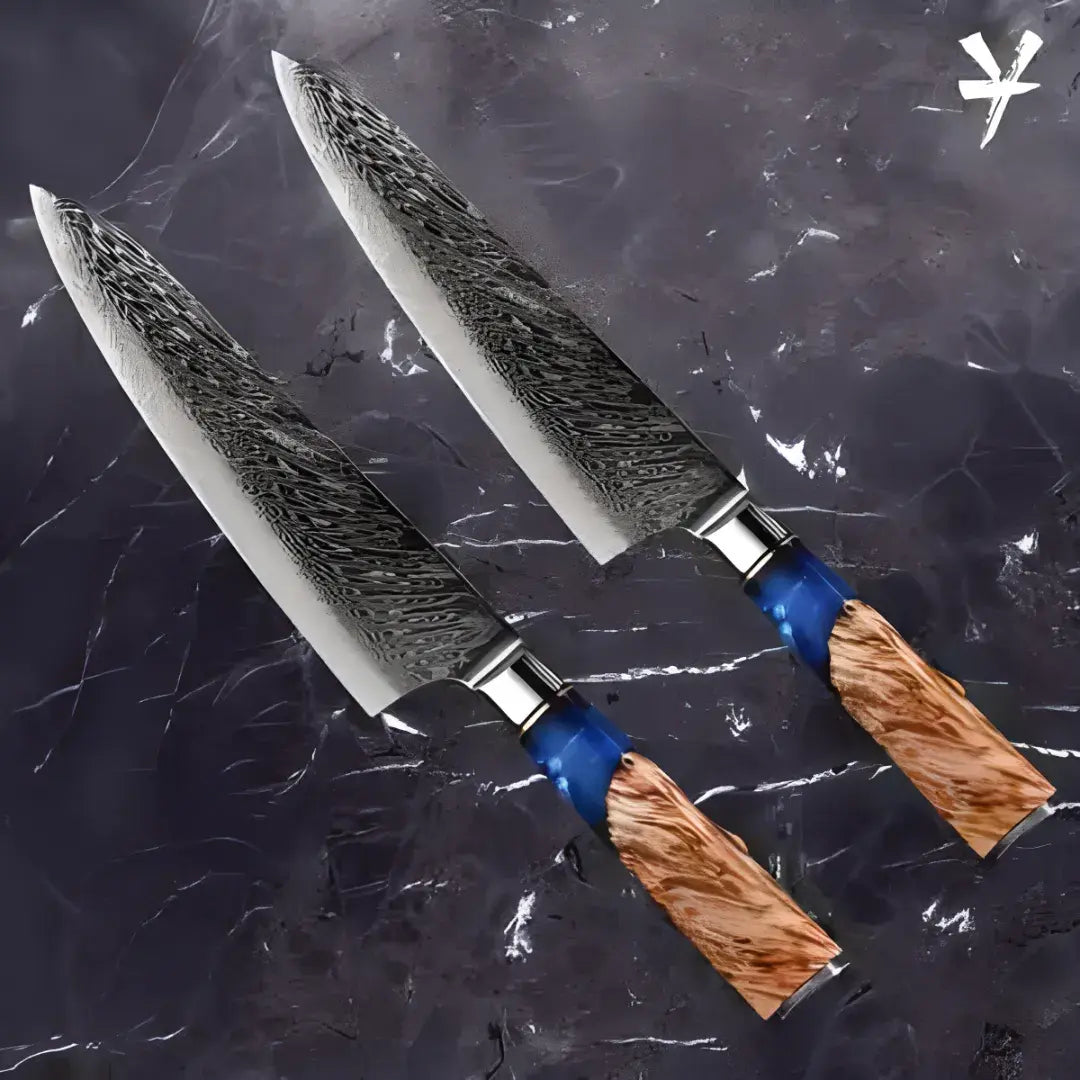
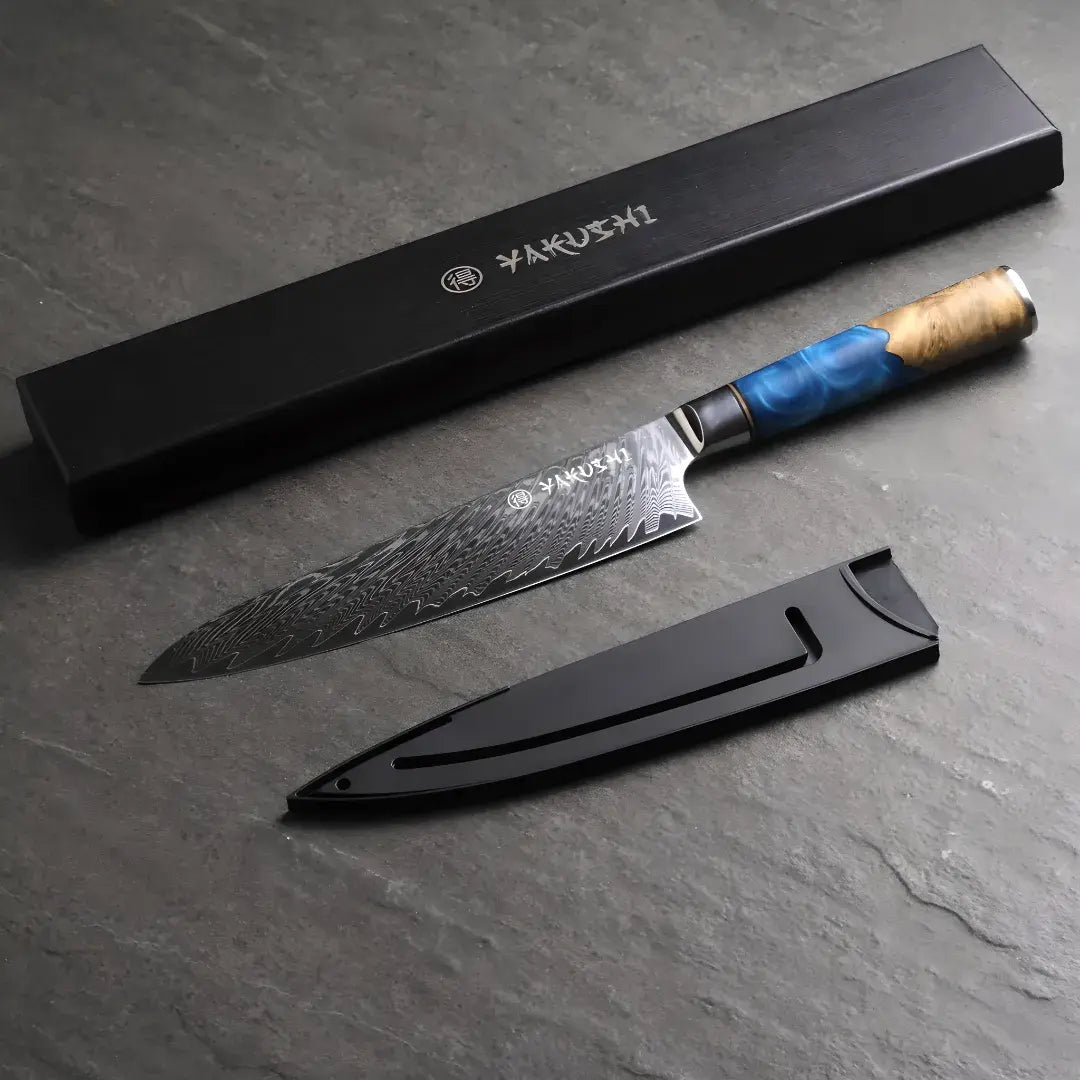
Upgrade your kitchen with Japanese-style knife sets built for sharp, precise everyday prep. Yakushi Japanese kitchen knife sets include essential blade profiles such as chef knives, santoku knives, paring knives, bread knives, slicing knives, cleavers, and boning knives, with high-carbon stainless steel blades, Pakka wood handles, and double-beveled edges for easy right- or left-handed use.
- Complete set options: 3-piece, 5-piece, and 8-piece configurations.
- Blade material: High-carbon stainless steel.
- Handles: Premium Pakka wood.
- Edge: Double-beveled for easier everyday use.
- Best for: Chopping, slicing, dicing, bread cutting, meat trimming, vegetables, and gift-ready kitchen upgrades.
Filters
7 products


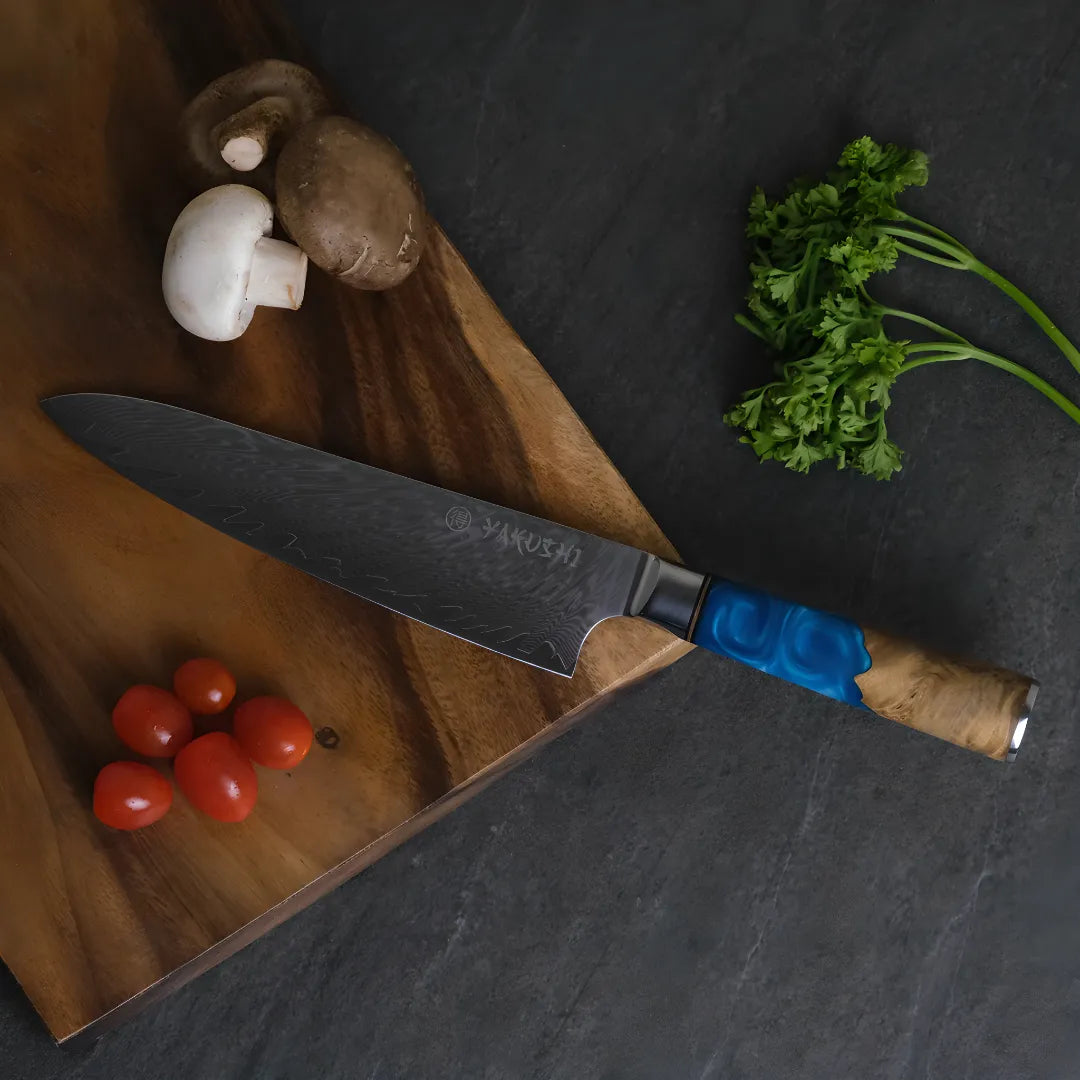
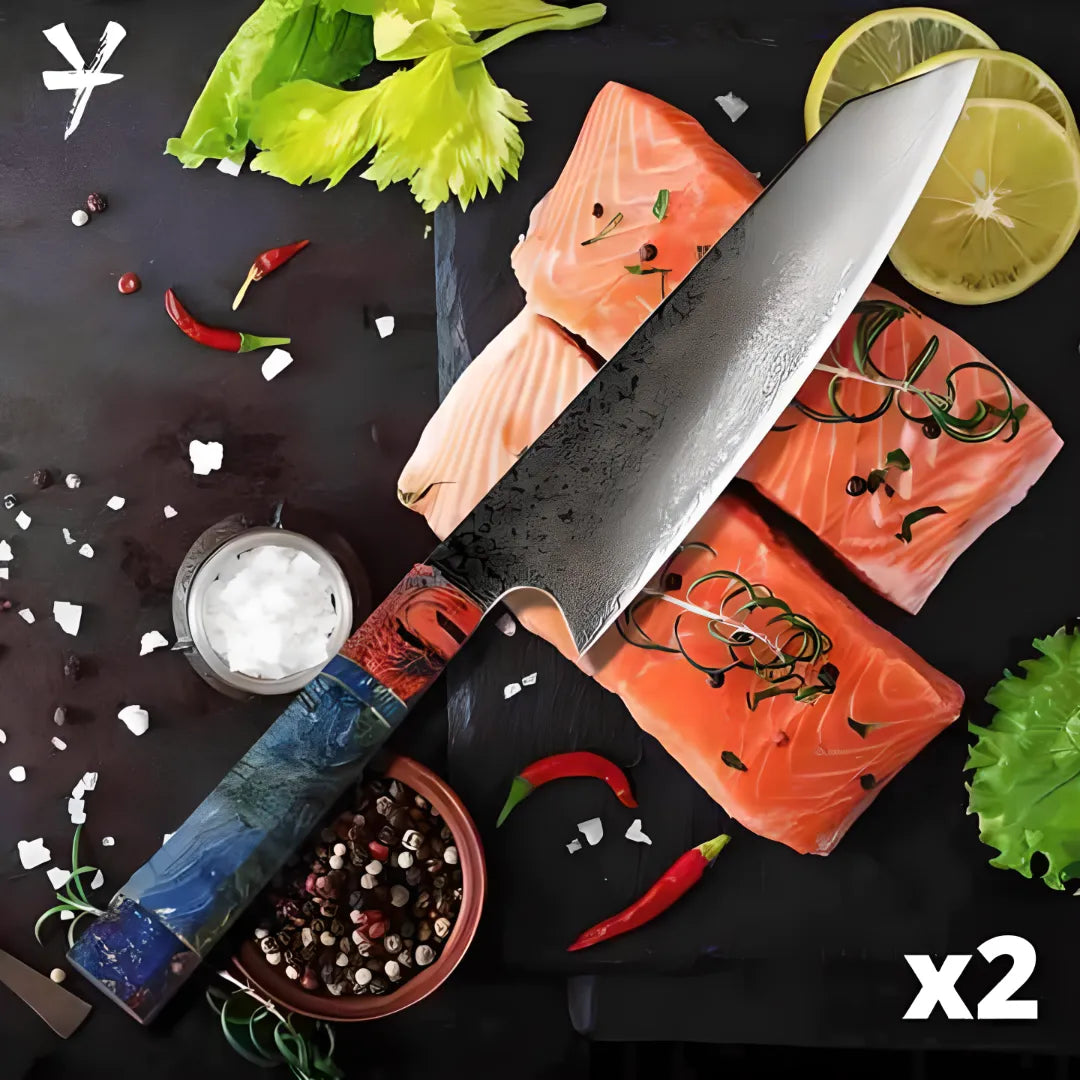
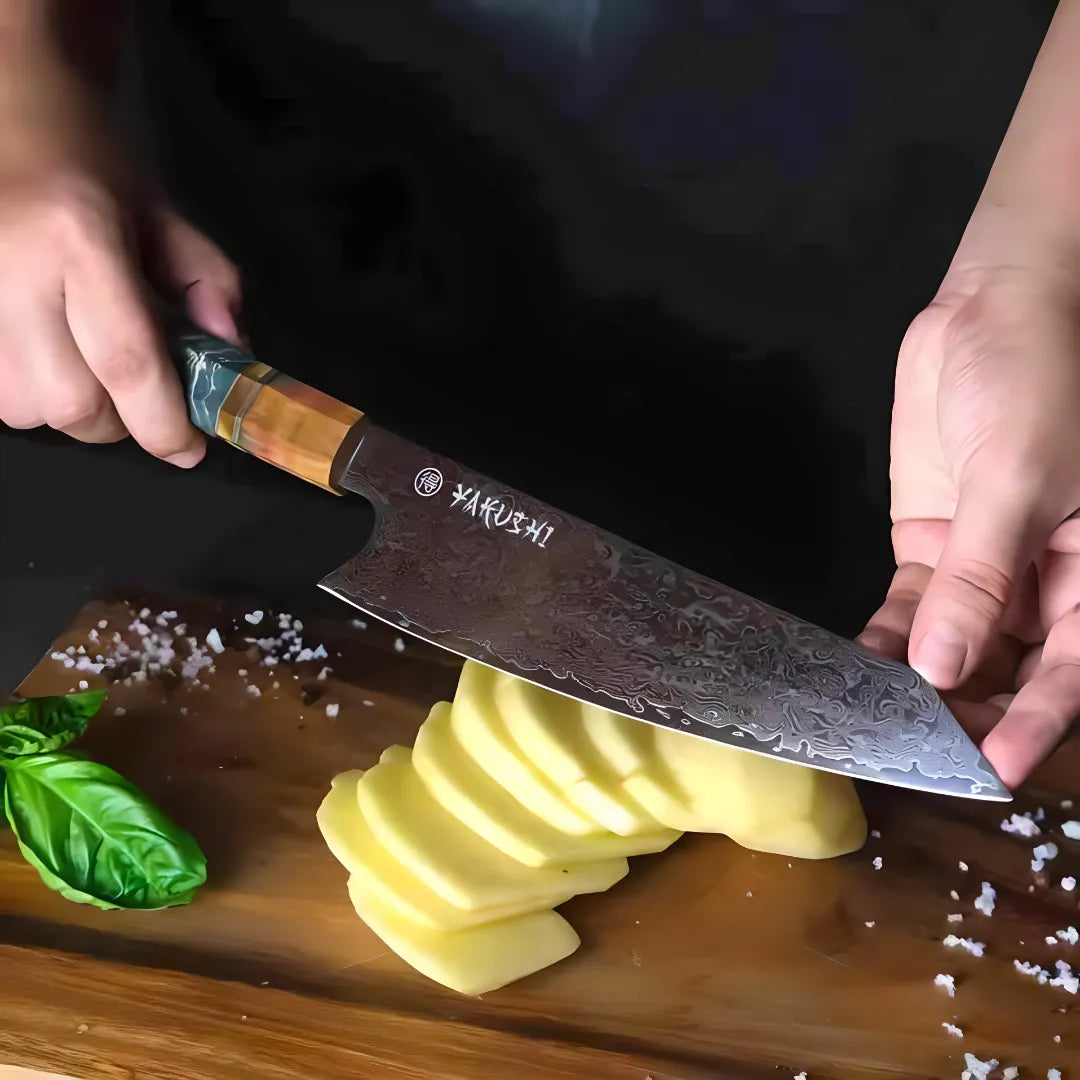

Best Japanese Knife Set for Most Home Cooks
Knife Set Configurations Compared
Finding the best Japanese kitchen knife set means balancing professional-grade performance with everyday durability. Below is a quick breakdown of our top-rated configurations designed to elevate your culinary precision.
| Set Configuration | Best For | Core Blades Included | Hardness (HRC) |
|---|---|---|---|
| Yakushi 3-Piece Starter Set | Essential Daily Prep | Gyuto (Chef), Santoku, Petty | 60 ± 2 |
| Yakushi 5-Piece Classic Set | Serious Home Cooks | Gyuto, Santoku, Nakiri, Slicing, Petty | 60 ± 2 |
|
Yakushi 8-Piece Executive Set
★ Flagship Collection
|
Complete Culinary Mastery | Full collection + specialized blades & block | 60 ± 2 |
What Is a Japanese Knife Set?
A Japanese knife set is a curated collection of kitchen knives built around the principles of Japanese bladesmithing—extreme sharpness, lightweight balance, and precise edge geometry. While traditional Japanese knives often feature a single-bevel edge requiring specialized technique, modern Japanese kitchen knife sets are engineered with a practical double-bevel edge (sharpened symmetrically on both sides). This allows home cooks to experience the legendary food-release and laser-like slicing performance of Japanese steel without a steep learning curve.
Yakushi 3-Piece vs 5-Piece vs 8-Piece Japanese Knife Sets
Choosing the right Japanese cutlery set depends on your cooking style and kitchen real estate. We have optimized our sets to eliminate redundancy so every blade serves a distinct purpose.
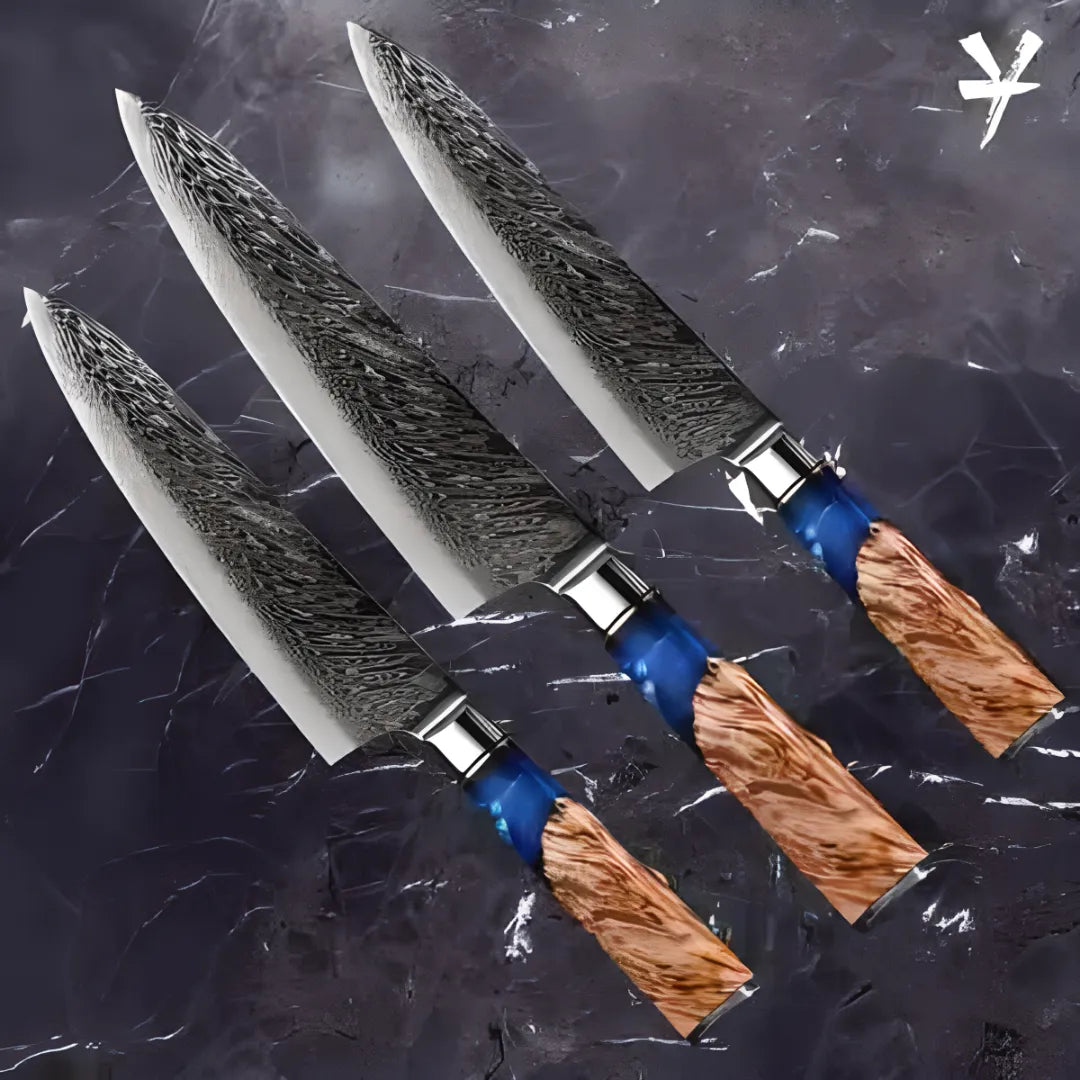
- The 3-Piece Starter Set: The ultimate foundation. It centers around the all-purpose Gyuto and Santoku for heavy vegetable and protein prep, paired with a nimble Petty knife for intricate paring tasks.
- The 5-Piece Classic Set: Our most popular choice. It adds a dedicated Nakiri (vegetable cleaver) for clean, flat-contact chopping and a Slicing knife for flawless cuts of roasted meats and raw fish.
- The 8-Piece Executive Set: The definitive kitchen upgrade. This comprehensive set includes highly specialized prep blades, kitchen shears, and an elegant, counter-worthy storage solution to keep your edges protected.
What Should a Japanese Kitchen Knife Set Include?
A complete, professional-grade culinary toolkit should feature specialized blade profiles rather than a collection of identical utility knives. A premium set should include:
- Gyuto / Chef’s Knife: The essential, curved workhorse for rocking cuts and heavy slicing.
- Santoku: The "three virtues" knife, perfect for precise slicing, dicing, and mincing.
- Petty / Paring Knife: A compact blade for peeling, coring, and off-board detail work.
- Nakiri: A square-profile vegetable cleaver designed for rapid up-and-down chopping.
- Slicing / Sujihiki: A long, narrow blade to pull clean, single-stroke slices through large proteins.
- Boning / Honesuki: A stiff, triangular blade engineered to safely navigate poultry joints and trim silverwood.
Pre-Bundled Value: Why Investing in a Complete Japanese Knife Set Makes Sense
When upgrading your kitchen cutlery, you are faced with a choice: purchase individual specialty blades over time, or invest in a cohesive, pre-curated knife block set. While individual blades allow for highly specific customization, choosing a complete Japanese knife set offers three distinct advantages for serious home cooks and professionals alike.
1. Exponential Cost Savings
The most immediate benefit of purchasing a culinary set is the massive value built into the bundle. Forging premium high-carbon or Damascus steel knives involves intricate heat-treatment and hand-polishing phases. When these blades are packed as a unified collection, we pass the material and logistical efficiency straight down to you—allowing you to acquire a full array of essential kitchen workhorses (like a Gyuto, Santoku, and Petty knife) at a fraction of what they would cost if purchased individually.
2. A Fluid, Uniform Culinary Workflow
Different knife brands utilize completely unique handle ergonomics, blade weights, and balancing points. Jumping between a heavy Western-handled chef knife and a featherlight Japanese vegetable knife disrupts your muscle memory and increases hand fatigue. A matching Japanese knife set ensures that every single blade—from your massive 8-inch chef knife to your nimble paring blade—features identical handle ergonomics and consistent steel performance, creating a seamless, intuitive rhythm during heavy meal prep.
3. Eliminated Guesswork (Perfect Curation)
Building a knife set from scratch often leads to a drawer full of overlapping profiles. Our sets are meticulously curated by experienced bladesmiths to ensure zero redundant steel. Each collection is engineered to cover the complete culinary spectrum: an authoritative blade for heavy slicing, a flat-edged specialist for rapid vegetable prep, and a compact utility knife for intricate, off-board detail work.
Japanese Knife Set vs Western Knife Set
The differences between traditional Western cutlery and a premium Japanese cutlery set come down to metallurgy and geometry:
- Steel Hardness: Western knives use softer steel (typically 56-58 HRC), meaning they roll rather than chip but lose their edge quickly. Japanese steel is significantly harder (60+ HRC), allowing it to hold a razor-sharp edge for months of heavy use.
- Blade Edge Geometry: Western blades are typically ground to a thick 20 degree angle per side. Japanese kitchen knives feature a steep, ultra-thin 15 degree apex angle, allowing them to glide through food rather than wedging or crushing delicate cells.
- Weight & Balance: Japanese knives are noticeably lighter and balanced forward toward the bolster, reducing hand fatigue during long prep sessions.
What is the Best Steel for a Japanese Cutlery Set?
The performance of any kitchen knife is dictated by its composition. When sourcing a Japanese kitchen knife set, the ideal steel must balance keen edge retention with practical stain resistance.
At Yakushi, we specialize in high-carbon stainless steel formulations and authentic Damascus cladding. Pure high-carbon steel can achieve terrifying sharpness but requires strict maintenance to prevent rust and patina. By utilizing a high-performance carbon core protected by layers of stainless Damascus steel, our knives achieve a Rockwell Hardness of 60 +/- HRC. This gives you the best of both worlds: a microscopic edge that stays sharp significantly longer than standard kitchen knives, paired with excellent corrosion resistance.
How to Choose the Best Japanese Kitchen Knife Set
When investing in a premium set, look past the aesthetic appeal and evaluate these core metrics:
- Blade Material: Ensure the steel composition is explicitly stated (look for high-carbon stainless or VG10 equivalents) with a verified hardness rating.
- Handle Comfort & Ergonomics: A handle should feel like an extension of your hand. Look for durable materials like Pakkawood, G10, or stabilized timbers that won’t absorb moisture or split over time.
- Set Composition: Avoid sets padded with cheap steak knives. Ensure your budget is going toward high-utility prep blades.
- Warranty & Support: Reputable craftsmen stand behind their work. Look for brands offering transparent trial windows and solid manufacturer warranties.
How to Care for a Japanese Knife Set
Because premium Japanese steel is harder and ground thinner than Western knives, it requires mindful maintenance to keep it performing like new:
- Hand Wash Only: Never, under any circumstances, put your knives in the dishwasher. The intense heat, harsh detergents, and movement will destroy the handle and chip the edge.
- Dry Immediately: Wash your blades with warm, soapy water and dry them completely with a soft towel right after use.
- Use Proper Cutting Surfaces: Cut exclusively on wood, end-grain bamboo, or soft rubber boards. Avoid stone, glass, composite resin, or metal countertops.
- Sharpen with Care: Maintain your edges using premium whetstones ($3000 / 8000 \text{ grit}$). Avoid mechanical pull-through sharpeners, which use coarse wheels that can rip or fracture the hard steel apex.
Why Culinary Professionals Trust Yakushi Cutlery
We bridge the gap between ancient forging traditions and modern culinary demands. Our kitchen knives are forged by passionate craftsmen who treat every blade as a functional work of art.
We know that purchasing premium cutlery online requires confidence. That’s why we take the risk off your shoulders by providing an ironclad 3-Month Warranty on our craftsmanship alongside a 15-Day Test Run. If our knives don’t completely redefine your kitchen prep experience, you can return them to us, no questions asked.
Frequently Asked Questions About
Knife Sets for Pro Level Chefs
Are Japanese kitchen knife sets double-beveled or single-beveled?
Our sets feature a symmetrical double-bevel edge. This ensures they are incredibly intuitive for both left- and right-handed home cooks, requiring no specialized single-bevel cutting techniques.
What are the essential knives that should be included in a starter Japanese knife set?
A foundational Japanese knife set should eliminate redundant steel and focus entirely on the core pillars of kitchen prep. A versatile starter set needs three essential profiles:
- The Multi-Tool: An 8-inch Gyuto (Japanese Chef Knife) or a 7-inch Santoku for general protein and large vegetable breakdown.
- The Vegetable Specialist: A Nakiri or a flat-edged Santoku for rapid, clean, vertical push-cuts through greens and herbs.
- The Detail Specialist: A 5-inch Petty (Utility Knife) for intricate, off-board tasks like peeling, coring fruits, and precise trim work.
Can you cut through bone with a Japanese knife set?
No. High-carbon Japanese blades are finely tuned instruments meant for precision slicing, dicing, and chopping. Attempting to cut through frozen food, bone, or dense cartilage can chip the ultra-hard edge. Use a dedicated bone cleaver for those tasks.
How often do I need to sharpen a Yakushi knife set?
Thanks to our 60 +/- 2 HRC steel core, our knives retain their edge significantly longer than standard Western knives. For the average home cook, a light maintenance touch-up on a fine-grit whetstone every 3 to 6 months is all it takes to keep them razor-sharp.
Is a Japanese knife set better than a German knife set?
It depends on your culinary style. German knife sets are thick, heavy, and made of softer steel, making them great for heavy-duty tasks like hacking through bone or dense squash. A Japanese knife set is superior if you prioritize laser-like precision, clean slicing, and effortless food release. Japanese steel holds a razor-sharp edge significantly longer, making it the preferred choice for delicate prep work, fine dicing, and clean cuts of protein.
Is a Japanese knife set more difficult to maintain than standard Western sets?
Not necessarily, but it does require a change in kitchen habits. Standard Western knife sets are made from softer steel that rolls easily, requiring you to constantly hone them on a steel rod. Japanese sets use much harder premium steels (60+ HRC) that hold their razor sharpness up to three to four times longer, meaning you sharpen them far less often. The only added maintenance is behavioral: you must hand-wash and dry them immediately after use, and avoid cutting through bones, frozen food, or hard surfaces like glass boards.
Why are Japanese knife sets lighter and thinner than Western blocks?
Traditional Western knife sets rely on heavy, thick monolithic steel and massive bolsters to wedge and force their way through food using physical weight. Japanese knife engineering, rooted in samurai sword-smithing, prioritizes geometric precision and surgical sharpness over mass. By utilizing ultra-hard high-carbon cores wrapped in protective stainless cladding, these blades can be ground to a radically thinner, more acute 15-degree angle. This featherlight weight gives you absolute control and completely eliminates wrist fatigue during long prep sessions.
What is the difference between a Japanese knife set and a Japanese cutlery set?
In the modern kitchen, the terms are used interchangeably. "Japanese knife set" typically refers specifically to the core preparation blades (like the Gyuto, Santoku, and Petty). "Japanese cutlery set" is a broader term that can include the entire processing toolkit, including culinary kitchen shears, storage blocks, or traditional carrying rolls. Both terms denote premium, high-carbon Japanese steel craftsmanship.
Are Japanese knife sets good for beginners?
Yes, provided they feature a double-bevel edge geometry. Traditional Japanese single-bevel knives require a specific steering technique and are difficult for beginners to maintain. Yakushi sets are forged with a symmetrical 50/50 double-bevel edge, meaning they handle exactly like a standard Western knife but offer the extreme sharpness and lightweight balance of premium Japanese steel.
Do Japanese knife sets rust?
Pure high-carbon steel sets will rust if left wet. However, Yakushi knife sets utilize a high-performance carbon steel core clad in layers of protective stainless Damascus steel. This architecture gives you the exceptional edge retention of carbon steel while drastically increasing corrosion and rust resistance, making them highly practical for home kitchens.
Are Japanese knife sets good gifts?
A premium Japanese kitchen knife set is considered one of the finest gifts for weddings, housewarmings, culinary graduates, or home chefs. In Japanese culture, gifting a blade is symbolic of "cutting a new path to good fortune" and clearing away bad luck. Our sets arrive beautifully packaged, making an unforgettable impression right out of the box.
What knives are included in the Yakushi 8-piece Japanese knife set?
The Yakushi 8-Piece Executive Set is our most comprehensive collection, designed to handle every kitchen task without redundancy. It includes our flagship 8-inch Gyuto (Chef's Knife), a precision Santoku, a traditional Nakiri (Vegetable Cleaver), a long Slicing/Sujihiki knife, a nimble Bread knife, a Utility knife, a dedicated Petty/Paring knife, and heavy-duty detachable kitchen shears.