
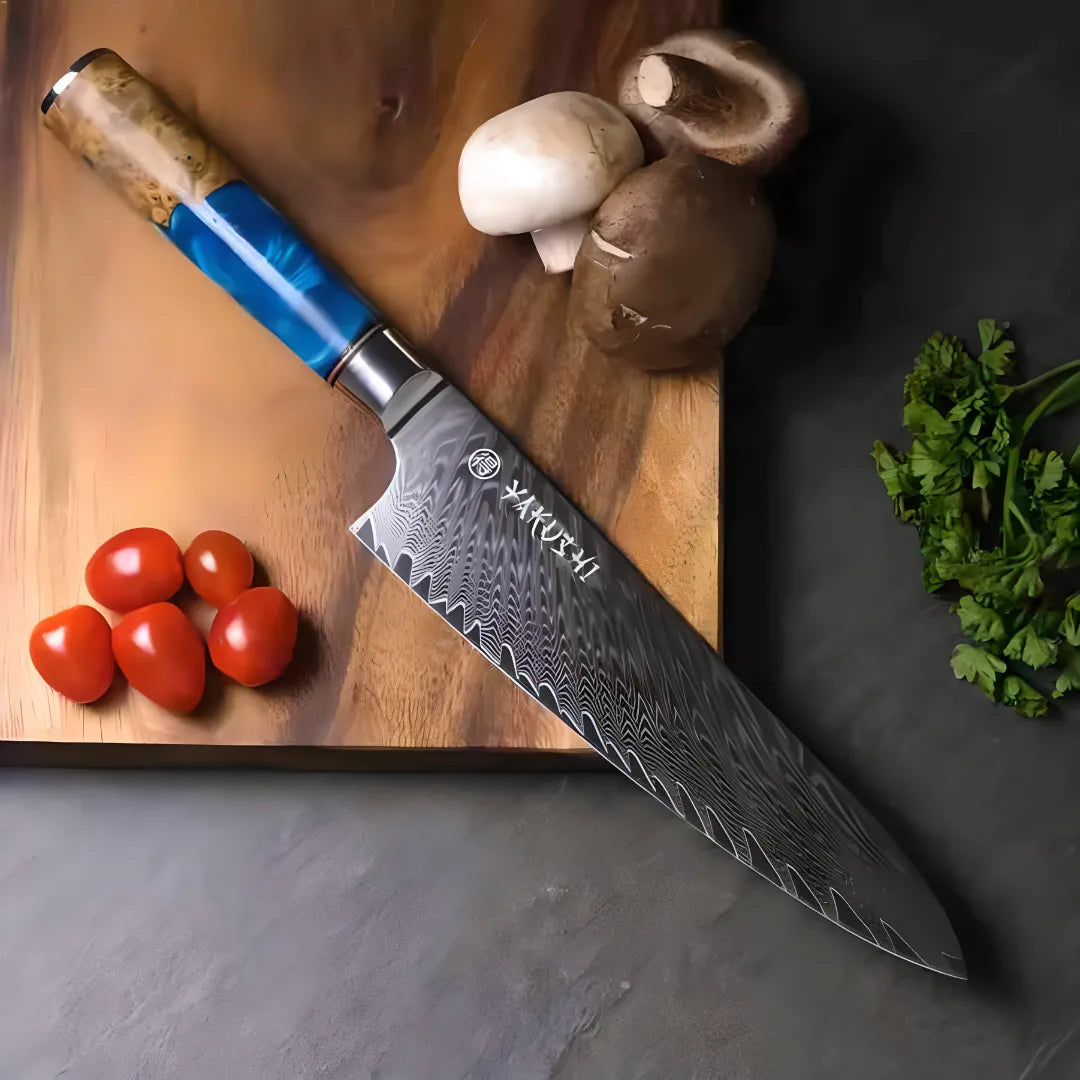
8-Inch Damascus Steel Chef Knife
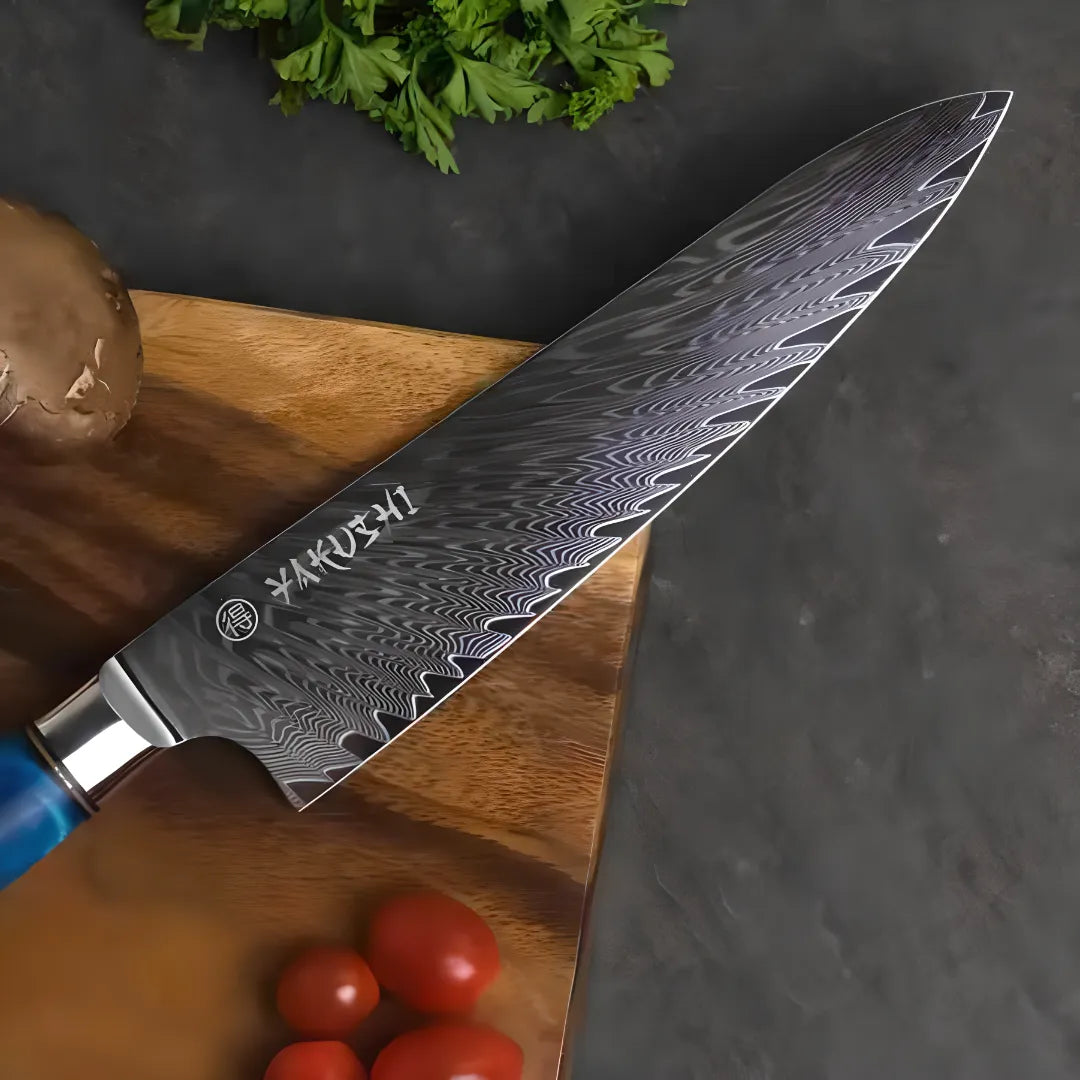
An all-purpose, full-tang kitchen knife with a VG-10 stainless-steel cutting core, double-bevel edge, Damascus-style flowing pattern, and solidified wood-and-blue-resin handle.
View the chef knifeSteel choice, explained clearly
Compare Yakushi's verified VG-10 options: an 8-inch chef knife for everyday preparation and straight-edge Damascus steak knives for clean table slicing. Choose by the job, then protect the edge with a simple care routine.
VG-10 identifies the cutting core, while the visible blade pattern and layered construction are separate specifications. Shop the verified products below, then use the comparison guide to choose the right profile and understand exactly what each product page confirms.
Filters
3 products
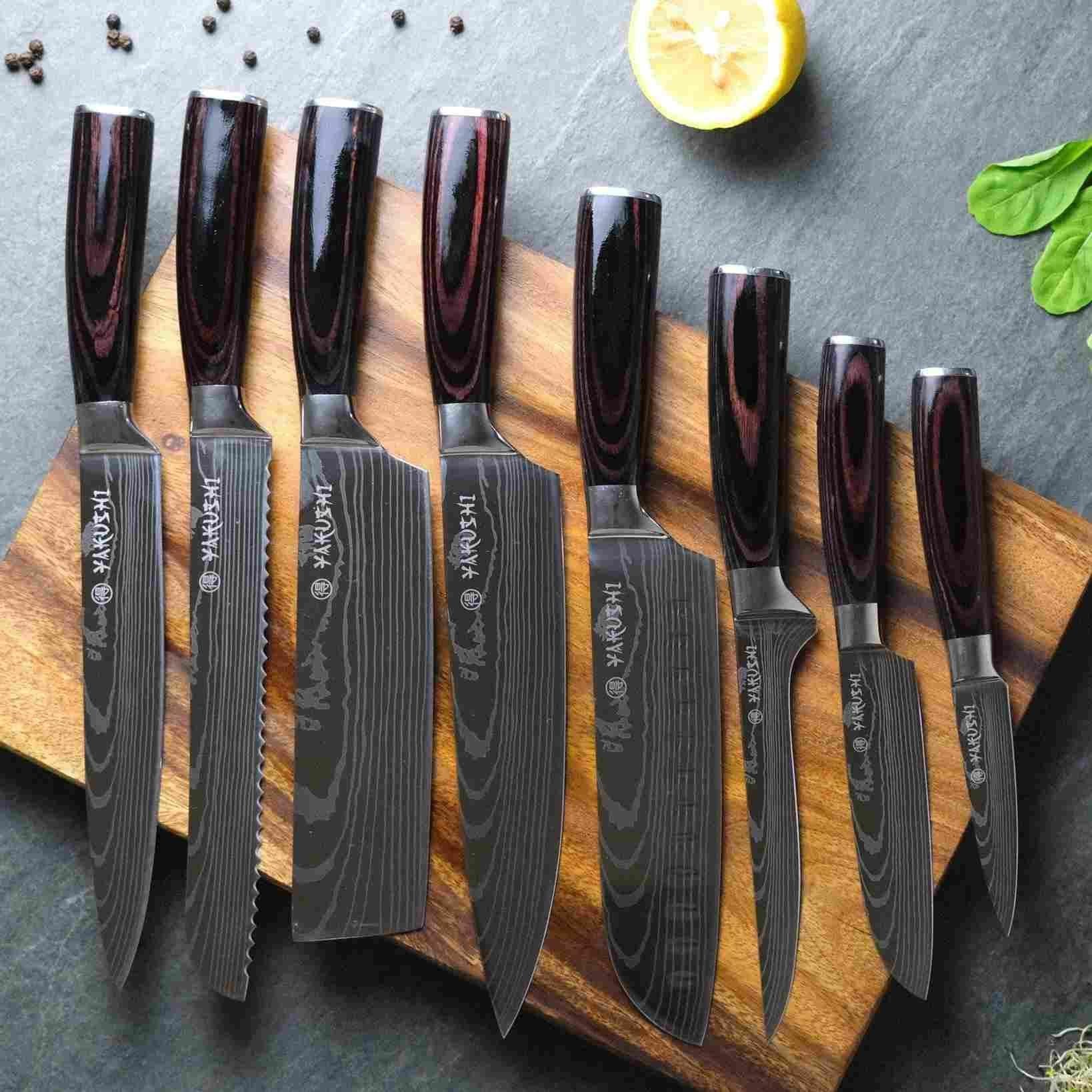
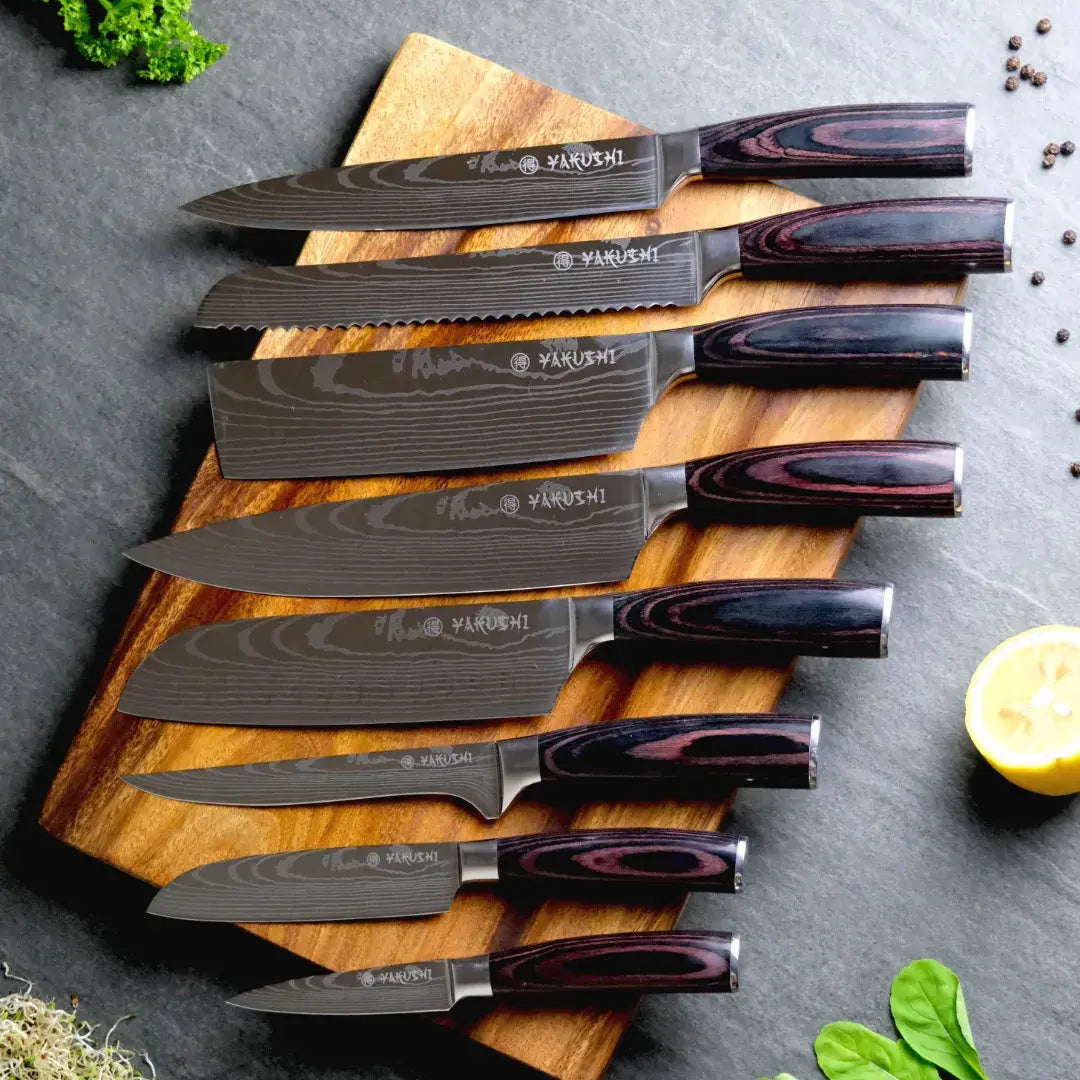
Start with the cutting job
Choose the chef knife when you need one versatile preparation blade. Choose the steak set when you need coordinated straight-edge knives for serving and slicing cooked proteins at the table. The shared core steel does not make the two profiles interchangeable.
Two profiles, two clear roles
The specifications below follow the current Yakushi product pages. Where a hardness rating, layer count, or construction detail is not stated for a product, it is not assumed.
An all-purpose, full-tang kitchen knife with a VG-10 stainless-steel cutting core, double-bevel edge, Damascus-style flowing pattern, and solidified wood-and-blue-resin handle.
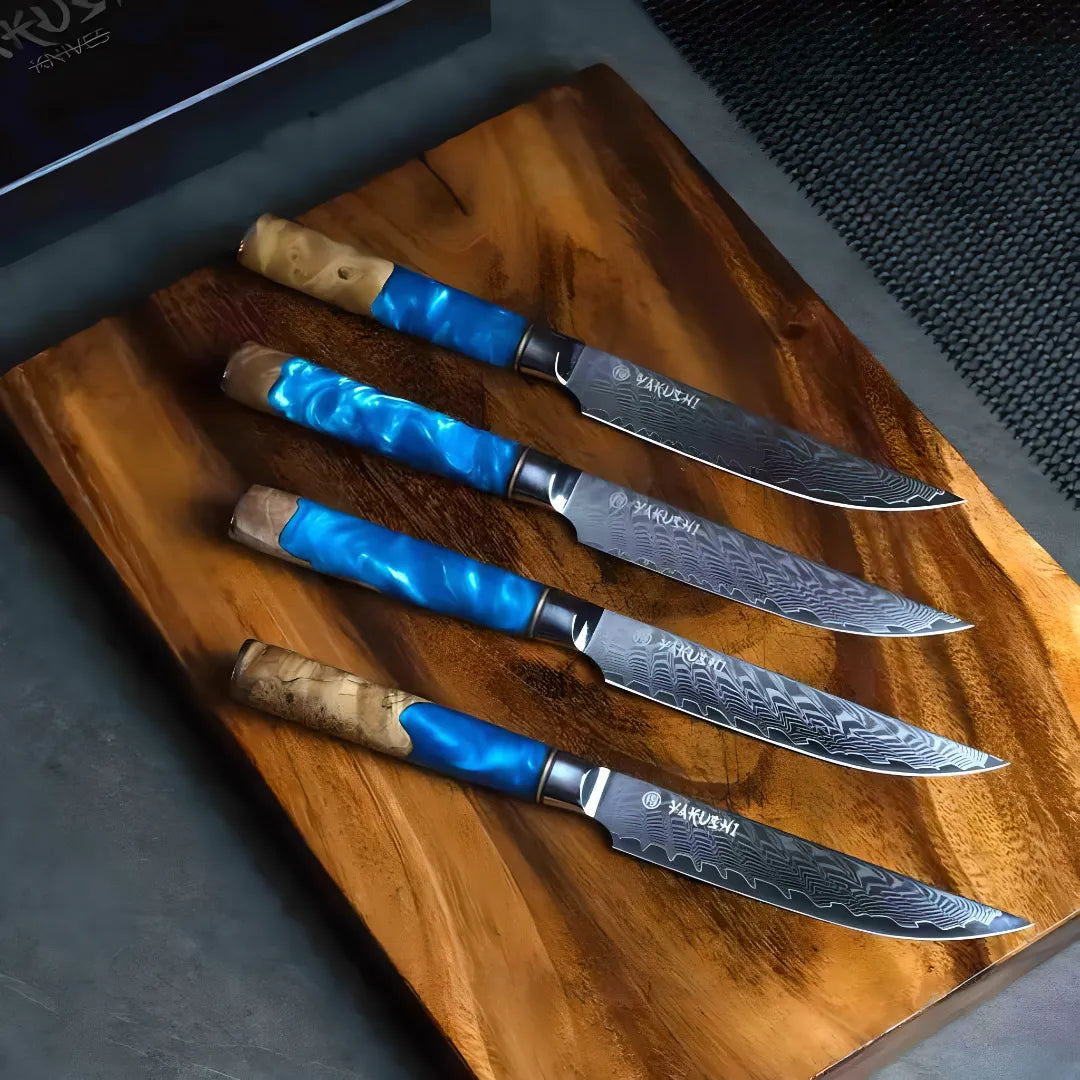
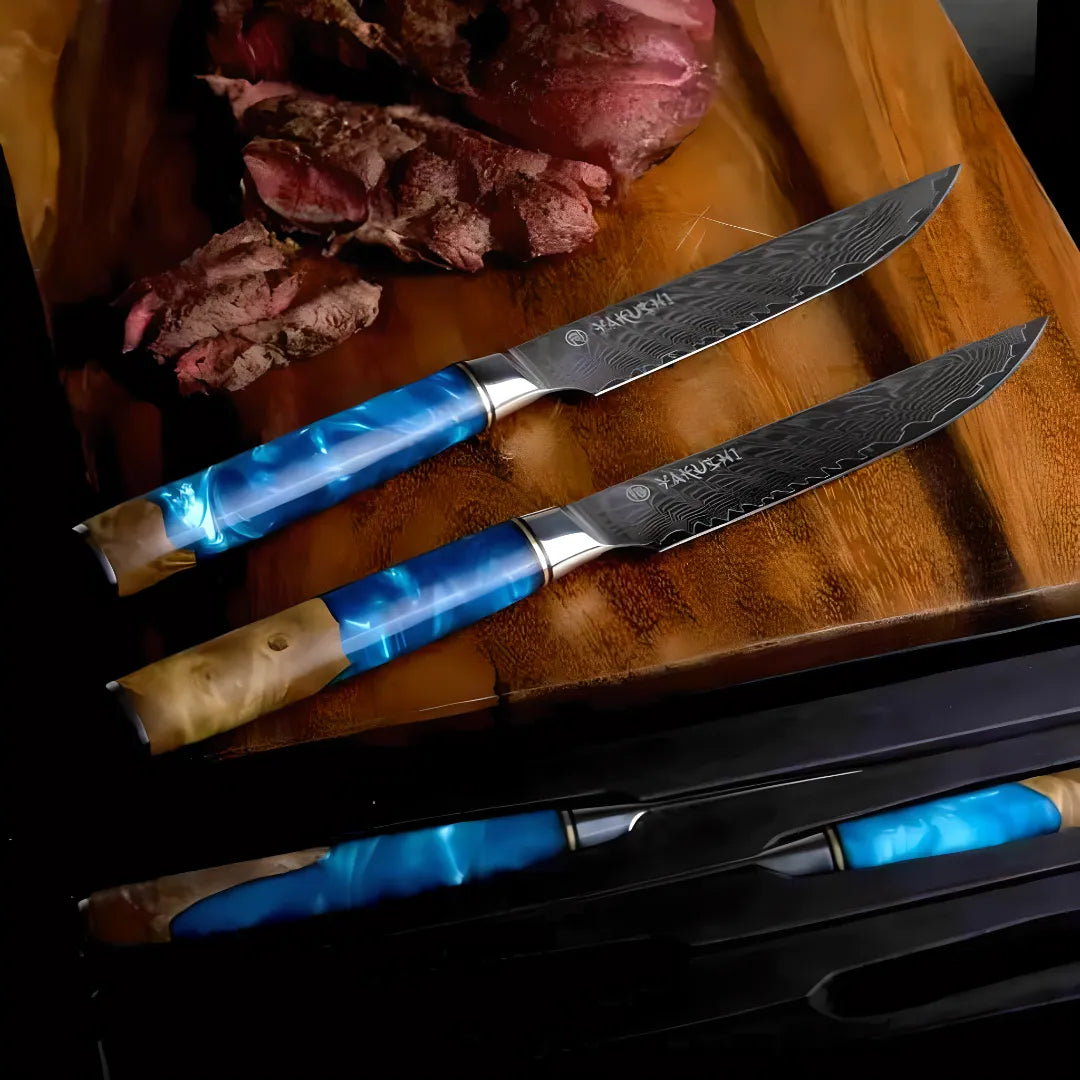
View the chef knifeMatching 5.5-inch steak knives with VG-10 cutting cores, 67-layer Japanese Damascus construction, straight double-bevel edges, HRC 60+ hardness, and solidified wood-and-blue-resin handles.
View the steak knife sets| Feature | 8-inch chef knife | Damascus steak knife set |
|---|---|---|
| Primary job | Chopping, slicing, dicing, mincing, and everyday kitchen preparation | Slicing steaks, chops, and other cooked proteins at the table |
| Blade length | 8 inches / 20.32 cm | 5.5 inches each; 10-inch overall length |
| Weight | 198 g | 79 g per knife |
| Verified construction | VG-10 stainless-steel core with a Damascus-style flowing pattern | VG-10 core with 67-layer Japanese Damascus steel |
| Hardness listed | Not specified on the current product page | HRC 60+ |
| Edge | Double bevel; suited to right- and left-handed cooks | Straight double bevel |
| Configuration | One knife, or sets of 2 or 3 identical chef knives | Sets of 4, 8, or 12 matching steak knives |
| Best fit | Home cooks who want a versatile daily workhorse | Dining, entertaining, and coordinated table settings |
Materials without the marketing fog
Read steel, finish, and construction claims separately. They describe different parts of the blade and should not be treated as interchangeable terms.
The exposed cutting edge is formed from the VG-10 core. Edge geometry, heat treatment, sharpening, and daily use all affect how that core performs in practice.
The chef knife is described with a Damascus-style flowing pattern. That wording describes its visible finish and should not be rewritten as a specific layer count.
The steak knife product page expressly lists 67-layer Japanese Damascus steel. That layer count belongs to the steak set and is not automatically shared by every VG-10 knife.
Protect a fine edge
A practical ownership routine
VG-10 is stainless steel, but stainless does not mean maintenance-free. Clean handling, prompt drying, protected storage, and appropriate sharpening preserve the edge and finish.
Use mild dish soap and warm water. Rinse, wipe, and dry immediately after use. Do not soak the knife or place it in a dishwasher.
Use wood or a suitable synthetic board, then store the clean, dry blade in a stable block, holder, sheath, or guard that prevents edge contact.
Sharpen only when performance begins to decline. Maintain the knife's existing double-bevel geometry with a suitable whetstone or a trusted professional service.
Wash knives, boards, hands, and work surfaces between raw proteins and ready-to-eat foods. The FDA's guidance centers on four practical steps: clean, separate, cook, and chill.
Explore adjacent Yakushi collections and practical guides without losing sight of the knife's actual job.
Straight answers
VG-10 is the steel used for the cutting core in the verified knives on this collection page. The cutting edge exposes that core; the blade's visible pattern or outer layers are separate construction details.
Choose the 8-inch chef knife for general kitchen preparation. Its length and profile cover vegetables, fruit, herbs, aromatics, boneless proteins, cooked foods, and fish fillets with chopping, slicing, dicing, mincing, and controlled rocking or draw cuts.
It is a coordinated dining set for slicing steaks, chops, and other cooked proteins at the table. Choose four, eight, or twelve matching straight-edge knives according to the number of place settings you need.
No. VG-10 identifies the cutting-core steel in these products. “Damascus-style pattern” describes the chef knife's visible finish, while the steak knife page specifically lists 67-layer Japanese Damascus construction.
Yes. Both verified product types use double-bevel edges. The chef knife product page expressly lists right- and left-handed use, and the steak knives use straight double-bevel edges.
Stainless steel is more corrosion-resistant than many non-stainless steels, but it is not maintenance-free. Acids, salt, moisture, soaking, and dishwasher exposure can still damage or stain a blade, so wash by hand and dry immediately.
No. Hand-wash it with mild soap and warm water, then dry it immediately. Dishwasher heat, detergent, movement, and prolonged moisture can damage the edge, blade finish, and handle.
Maintain the existing double-bevel geometry with a suitable whetstone and controlled technique. If you are unsure about angle control or burr removal, use a reputable professional sharpening service rather than an aggressive pull-through sharpener.
No. Avoid bones, joints, frozen food, hard pits, shells, twisting, and prying. These tasks can chip or deform a fine kitchen edge. Use a tool specifically designed for heavy impact work instead.
Pick the 8-inch chef knife for everyday preparation or build a coordinated table with four, eight, or twelve straight-edge steak knives—each centered on a verified VG-10 cutting core.