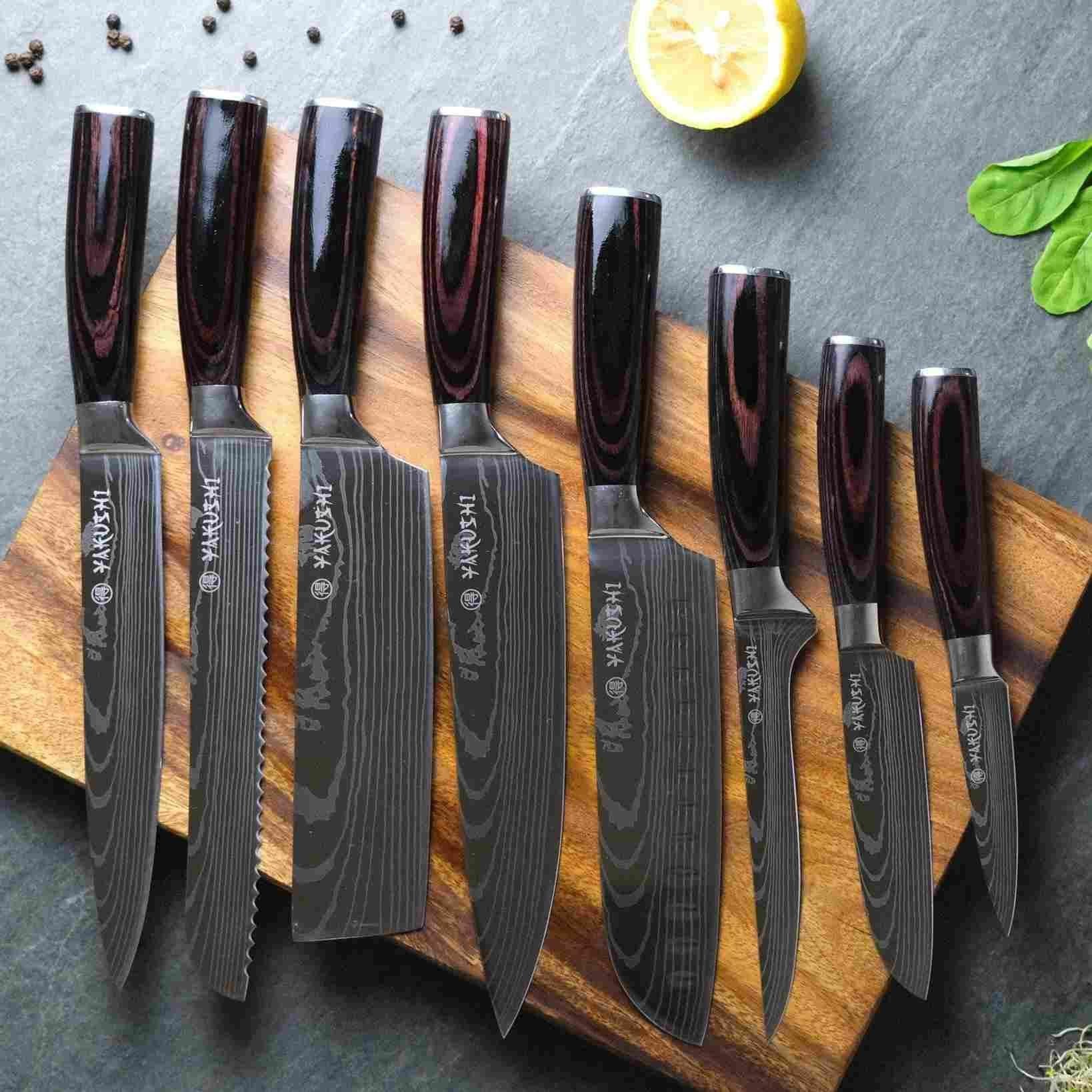
Knuckle clearance and control
The blade height gives the guiding hand useful room above the cutting board and creates a broad surface for moving prepared ingredients with the blade flat.
Built for the cutting board
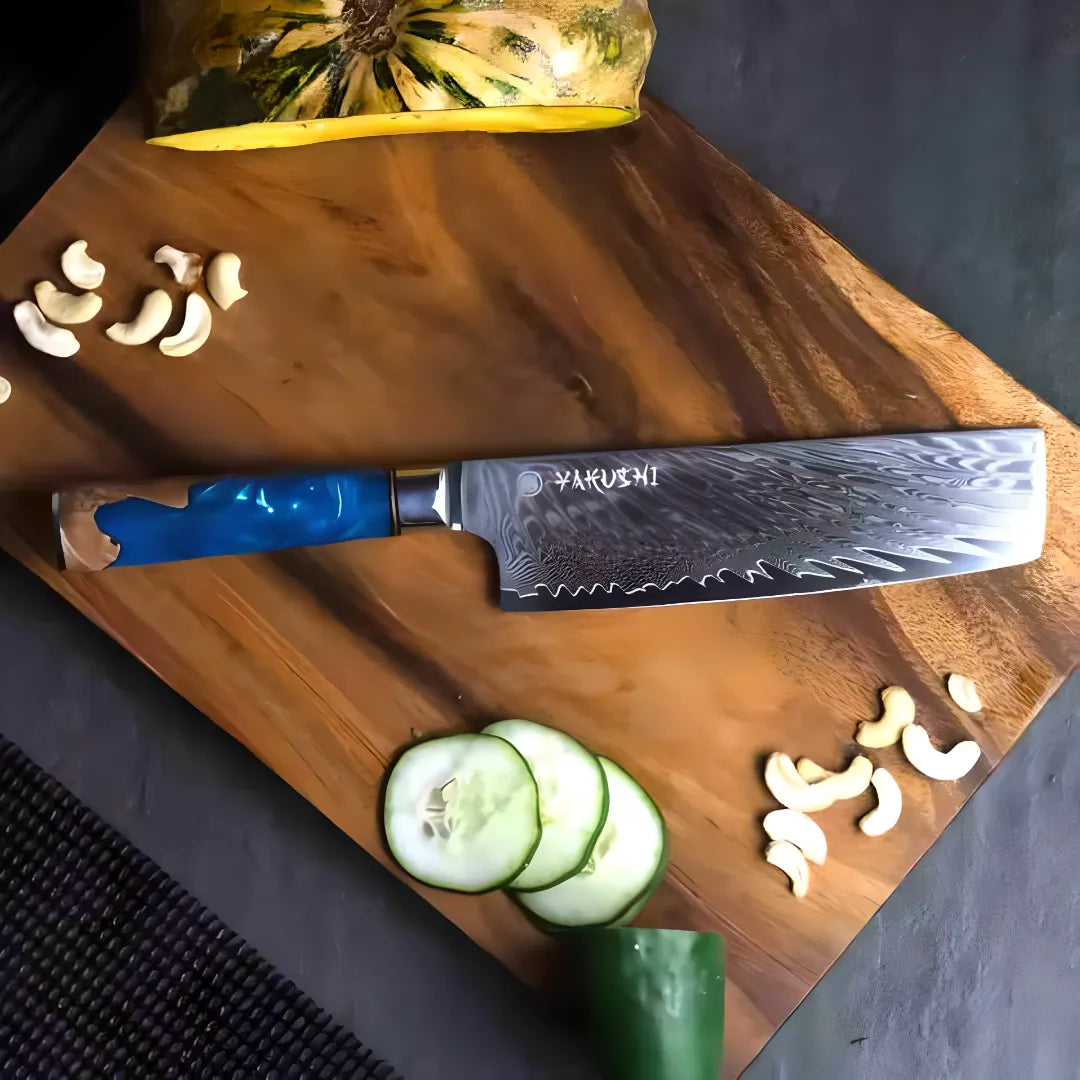
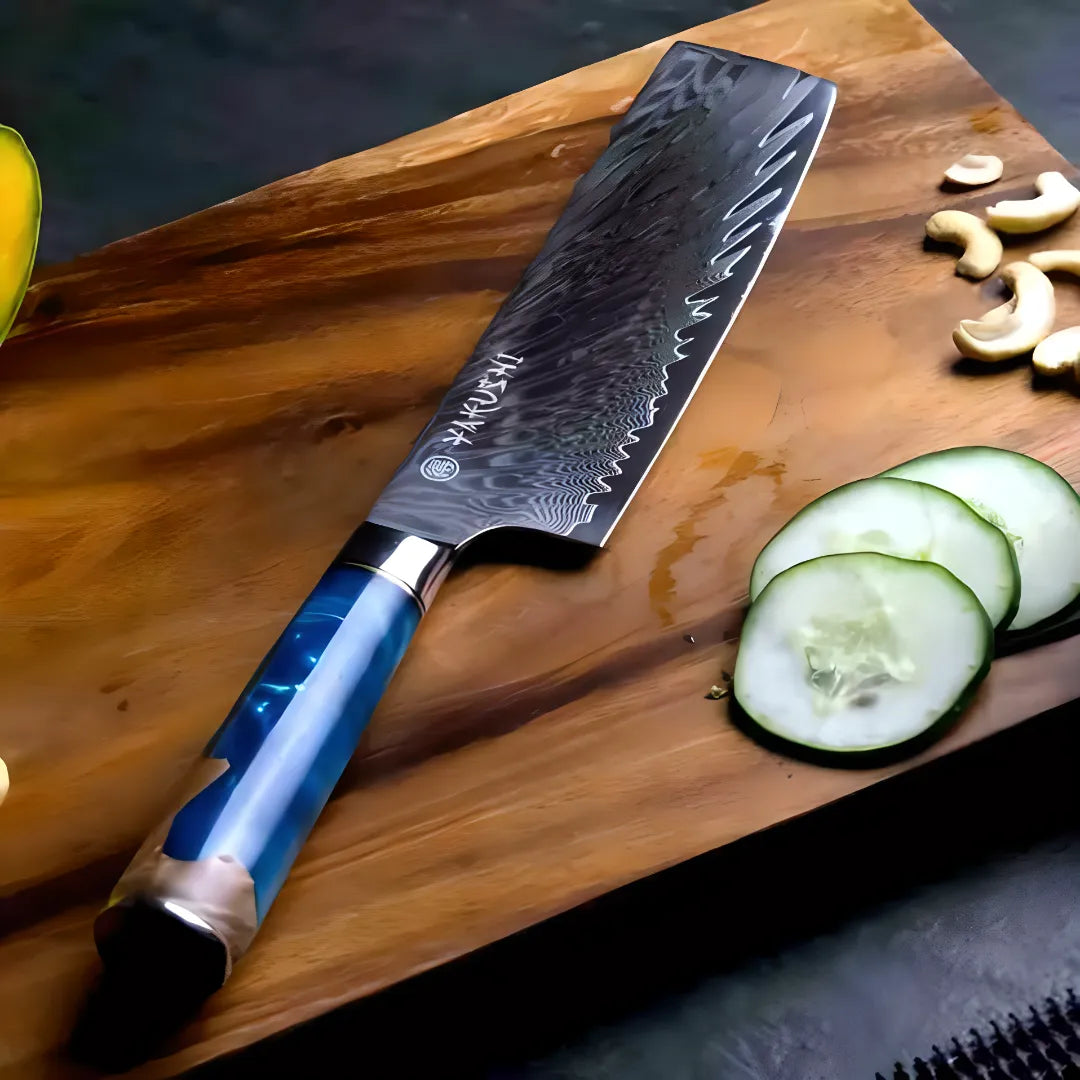
The Yakushi 7-inch Damascus Nakiri combines a straight double-bevel edge, tall rectangular profile, VG-10 core, and full-tang balance for confident chopping, slicing, dicing, and mincing.
A Nakiri is a precision vegetable knife—not a small cleaver. Shop the single available Yakushi model below, then use the guide to understand its exact specifications, best cutting motions, care requirements, and limits.
Filters
1 product
A specialist that earns its space
A Nakiri replaces the pronounced curve and pointed tip of an all-purpose chef knife with a tall rectangular blade and straighter cutting edge. The result is a vegetable-focused profile designed for clean board contact, controlled push cuts, and efficient up-and-down chopping.
Know exactly what you are buying
The collection currently contains one Nakiri product offered in sets of one, two, or three identical knives. These specifications follow the current product page without adding an unsupported edge angle or changing its published weight.
| Feature | Verified specification | Why it matters |
|---|---|---|
| Knife type | Nakiri / Japanese vegetable knife | A specialized rectangular profile built primarily for board-based produce preparation |
| Blade length | 7 inches / 17.6 cm | Enough reach for cabbage, leafy greens, onions, and larger batches without becoming unwieldy |
| Blade construction | VG-10 core with 67-layer Japanese Damascus steel | A named cutting core paired with a layered patterned construction |
| Hardness | HRC 60+ | Supports a fine kitchen edge while still requiring careful, non-impact use |
| Edge | Straight double bevel | Supports full board contact and symmetrical use by right- or left-handed cooks |
| Construction | Full tang | The blade steel extends through the handle for a unified, balanced build |
| Weight | 240g | A substantial feel that rewards controlled technique rather than excessive downward force |
| Handle | Solidified wood and blue resin | A secure handle with the distinctive Yakushi visual finish |
| Set options | One, two, or three identical Nakiri knives | Choose multiples for gifting or separate kitchens—not additional blade types |
Purpose-built geometry
The blade height gives the guiding hand useful room above the cutting board and creates a broad surface for moving prepared ingredients with the blade flat.
The flatter profile makes consistent contact during push cuts and controlled chopping, helping reduce vegetable slices that remain attached at the bottom.
Unlike a traditional single-bevel Usuba, this Nakiri is sharpened on both sides and is suitable for right-handed and left-handed home cooks.
The verified weight gives the knife a present, controlled feel. Guide the blade with good alignment instead of using its mass for heavy cleaver-style impact.
Use the profile as designed
The Nakiri rewards a straight, controlled path through the ingredient. It is less suited to the exaggerated rocking motion commonly used with a deeply curved chef knife.
Place a damp towel beneath a wood or suitable synthetic board if it moves. Organize washed produce so the cutting area remains clear.
Hold the handle securely—using a pinch grip if comfortable—and curl the fingertips of the guiding hand away from the edge.
Use controlled up-and-down chopping or a gentle push cut. Keep the blade aligned and let the sharp edge move through the ingredient without twisting.
Lift ingredients with the broad side or use the spine to gather them. Do not drag the sharpened edge sideways across the board.
Clear limits protect a fine edge
Choose by motion and versatility
| Knife | Typical profile | Preferred motion | Best reason to choose it |
|---|---|---|---|
| Nakiri | Tall rectangular blade, straighter edge, no pointed working tip | Up-and-down chopping and push cutting | Focused vegetable preparation and consistent board contact |
| Santoku | Compact all-purpose shape with a lowered spine toward the tip | Push cuts, chopping, and controlled slicing | More versatility across vegetables, boneless meat, and fish |
| Chef knife or Gyuto | Pointed all-purpose profile with more curve through the edge | Chopping, slicing, draw cuts, and gentle rocking | One primary knife for the widest range of everyday tasks |
| Usuba | Traditional vegetable profile, commonly single bevel | Specialized precision techniques | Experienced users who specifically need single-bevel vegetable work |
A simple ownership routine
Use mild dish soap and warm water after use. Never soak the knife or place it in a dishwasher.
Dry immediately, then use a stable block, sheath, guard, or magnetic holder that prevents contact with other utensils.
Use a suitable whetstone or professional service and follow the existing bevel. Avoid introducing a curve by lifting the blade excessively during each stroke.
The FDA recommends washing fresh produce under running water, starting with clean hands, and keeping produce and its cutting surfaces separate from raw meat, poultry, and seafood. Review the complete produce safety guidance before preparation.
Compare related blade shapes, learn practical cutting techniques, and choose storage and sharpening tools that protect a fine edge.
Straight answers
A Nakiri is designed primarily for chopping, slicing, dicing, and mincing vegetables, herbs, leafy greens, and fruit. Its straighter edge supports clean board contact during up-and-down chopping and push cutting.
Vegetable preparation is its primary role, but the product page also permits carefully prepared boneless meat and boneless fish. Keep the thin edge away from bones, joints, frozen food, and hard stems.
A Nakiri has a tall rectangular shape, straighter edge, and no pointed working tip. A chef knife has a more curved, pointed all-purpose profile that supports a wider range of slicing, trimming, and rocking motions.
A Nakiri is more specialized for vegetables and full board contact. A Santoku is a compact all-purpose knife designed to move between vegetables, boneless meat, and fish more readily.
Yes. The Yakushi Nakiri has a symmetrical double-bevel edge, making it suitable for both right-handed and left-handed cooks.
The current product specification lists a weight of 240g, so it is better described as substantial and controlled rather than unusually lightweight. Use alignment and a sharp edge instead of relying on force.
Its straighter edge is designed mainly for controlled up-and-down chopping and push cutting. Cooks who rely heavily on continuous rocking will usually find a curved chef knife more natural.
No. The Nakiri is a precision vegetable knife, not a bone cleaver. Bones, frozen food, hard stems, twisting, prying, and forceful impacts can chip or damage its fine edge.
No. Hand-wash it with mild dish soap, dry it immediately, and store it where the edge cannot contact other utensils. Dishwasher heat, detergent, movement, and moisture can damage the blade, edge, and handle.
Maintain its existing double-bevel geometry with a suitable whetstone or a trusted professional service. Use controlled strokes along the full edge and avoid lifting excessively at the end, which can gradually curve a straight profile.
Choose one Yakushi Nakiri for your own kitchen or select a set of two or three identical knives for gifting and separate preparation spaces.