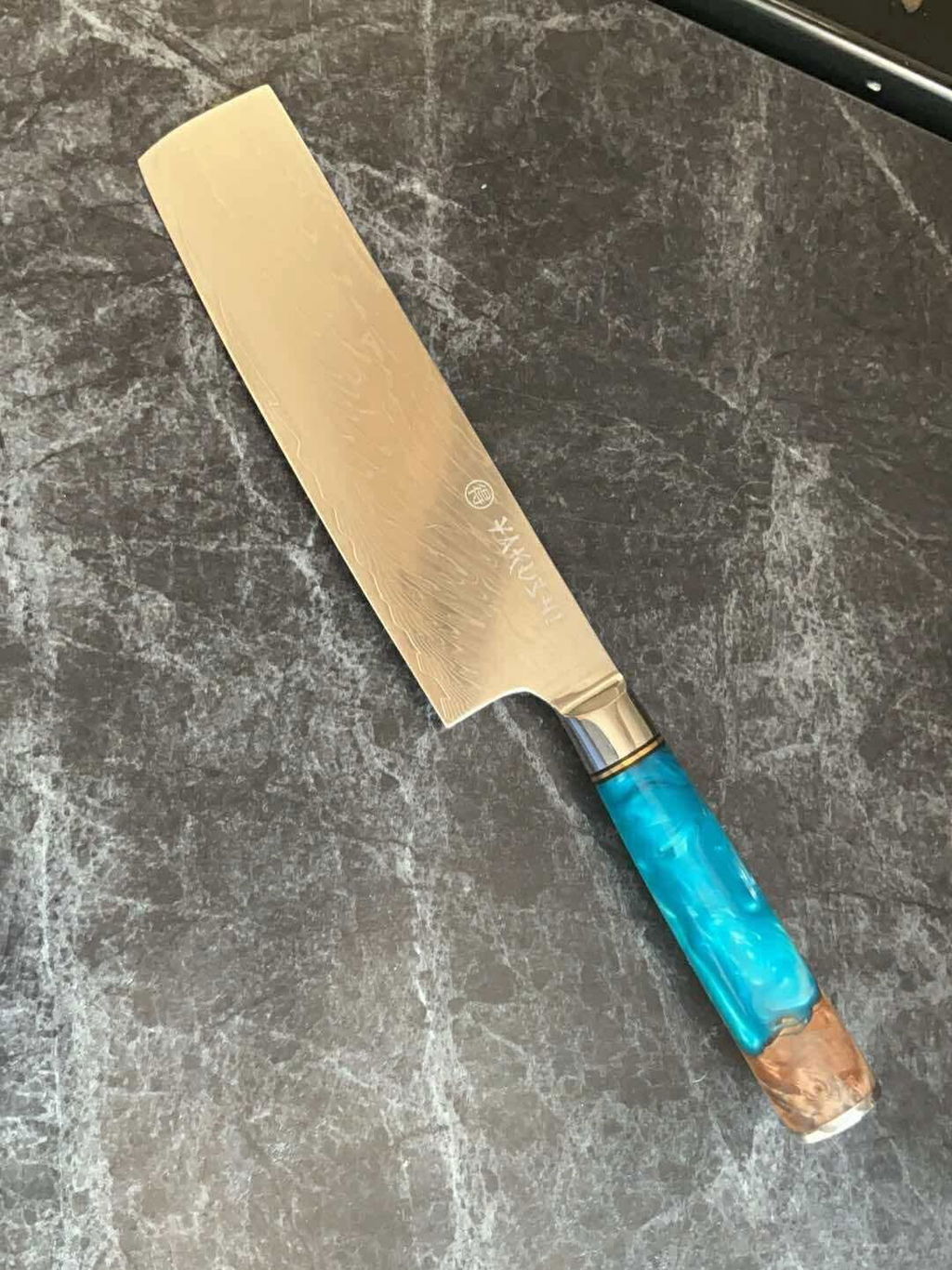
Full, controlled board contact
The flatter profile makes it easier to move straight down and forward through vegetables without depending on a pronounced rocking stroke.
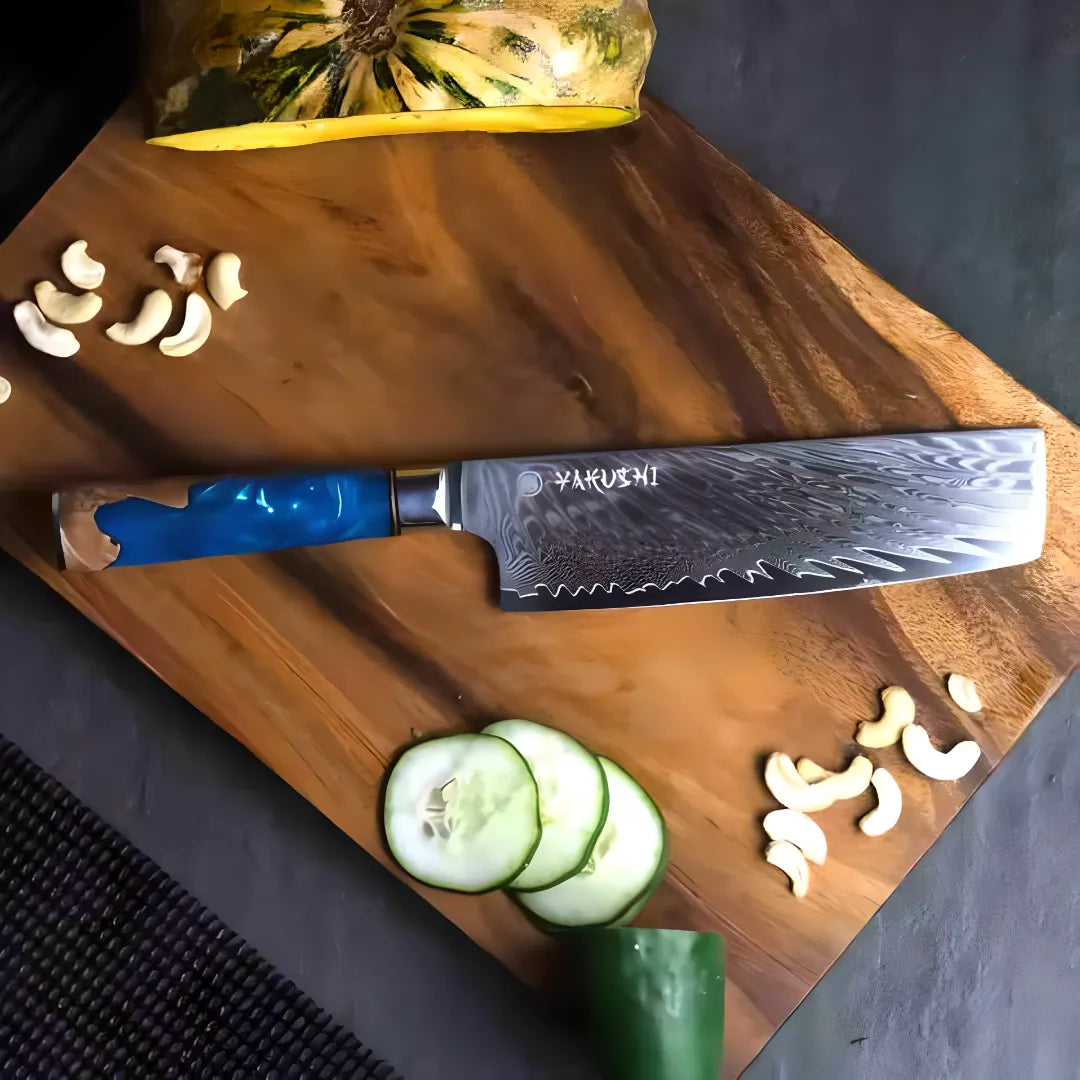
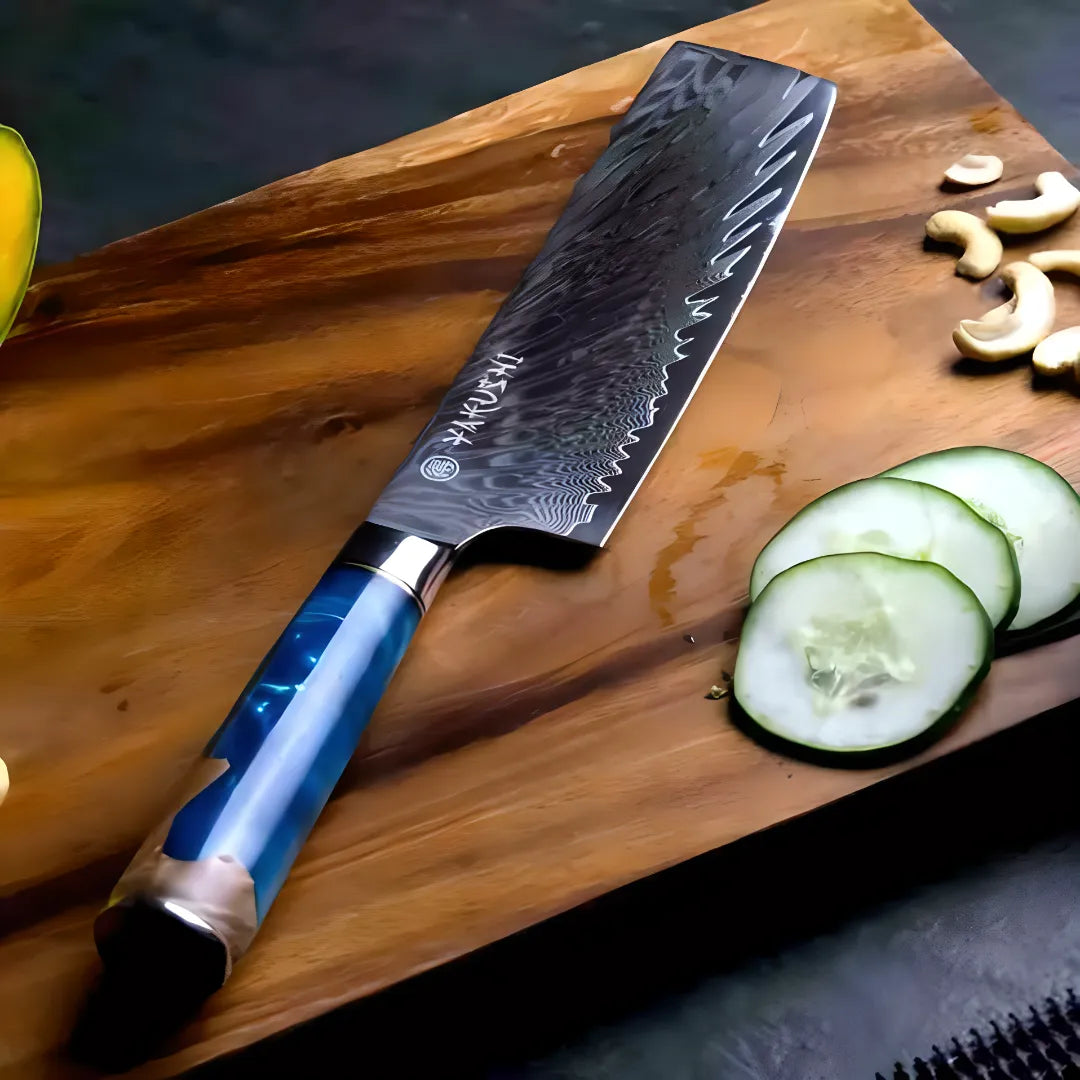
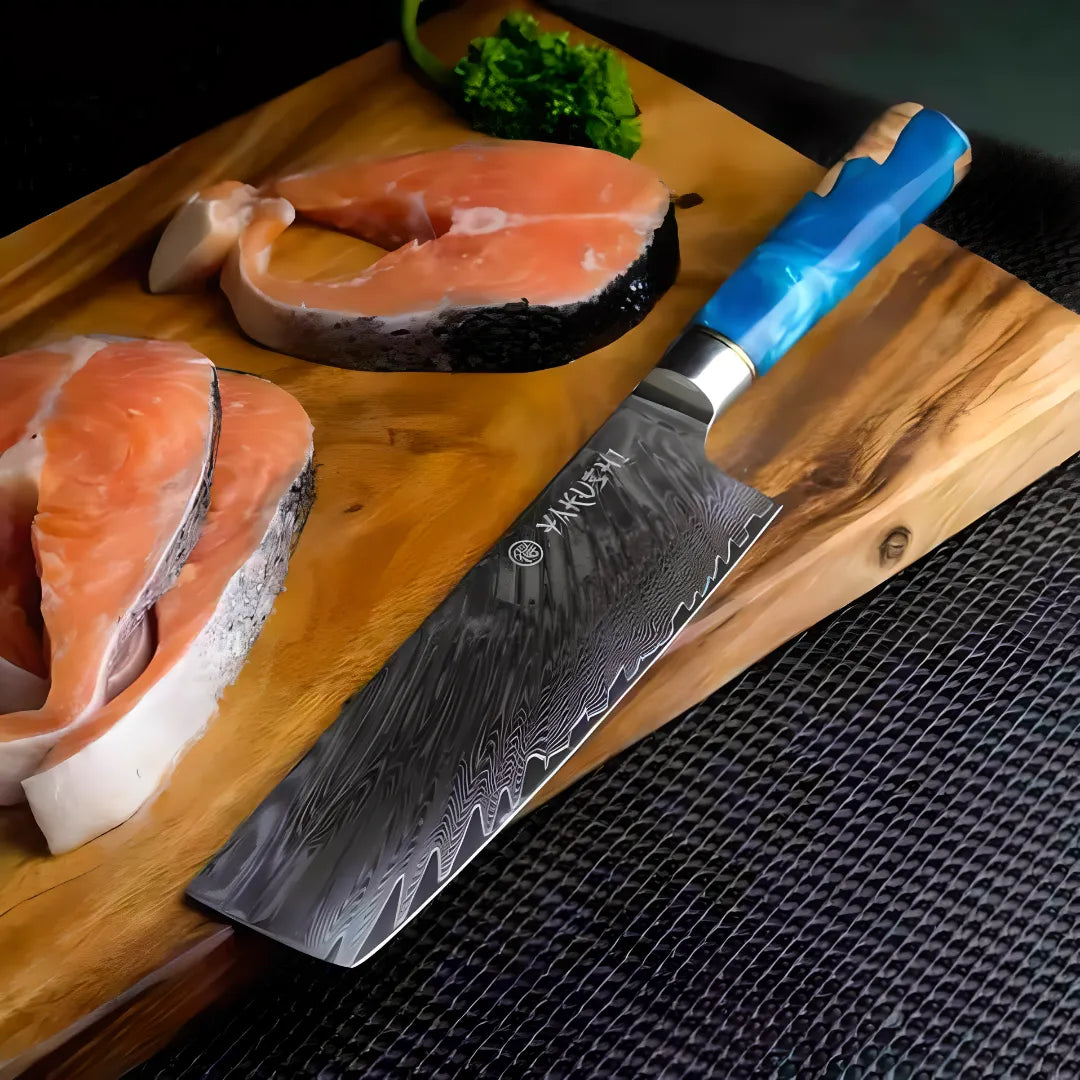
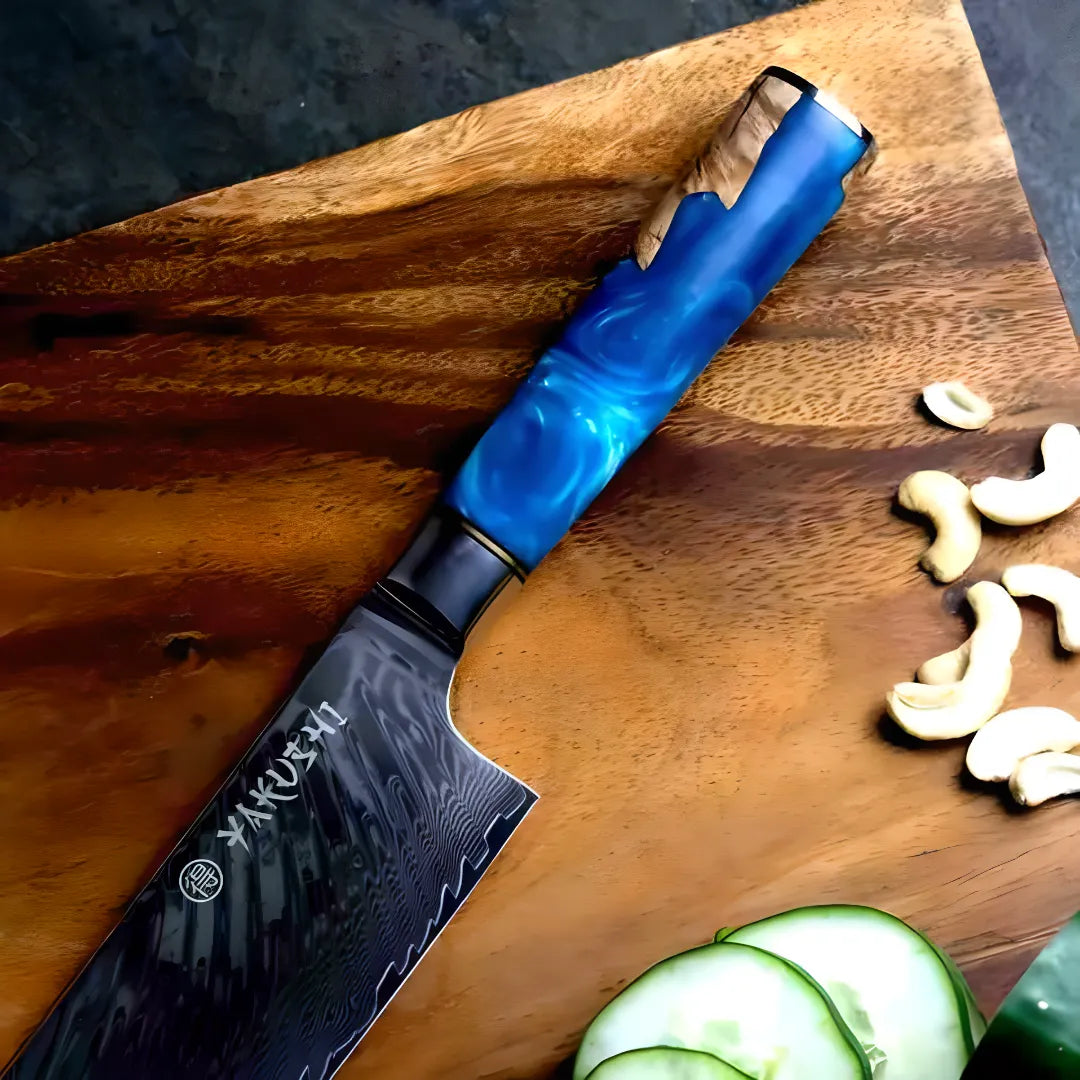
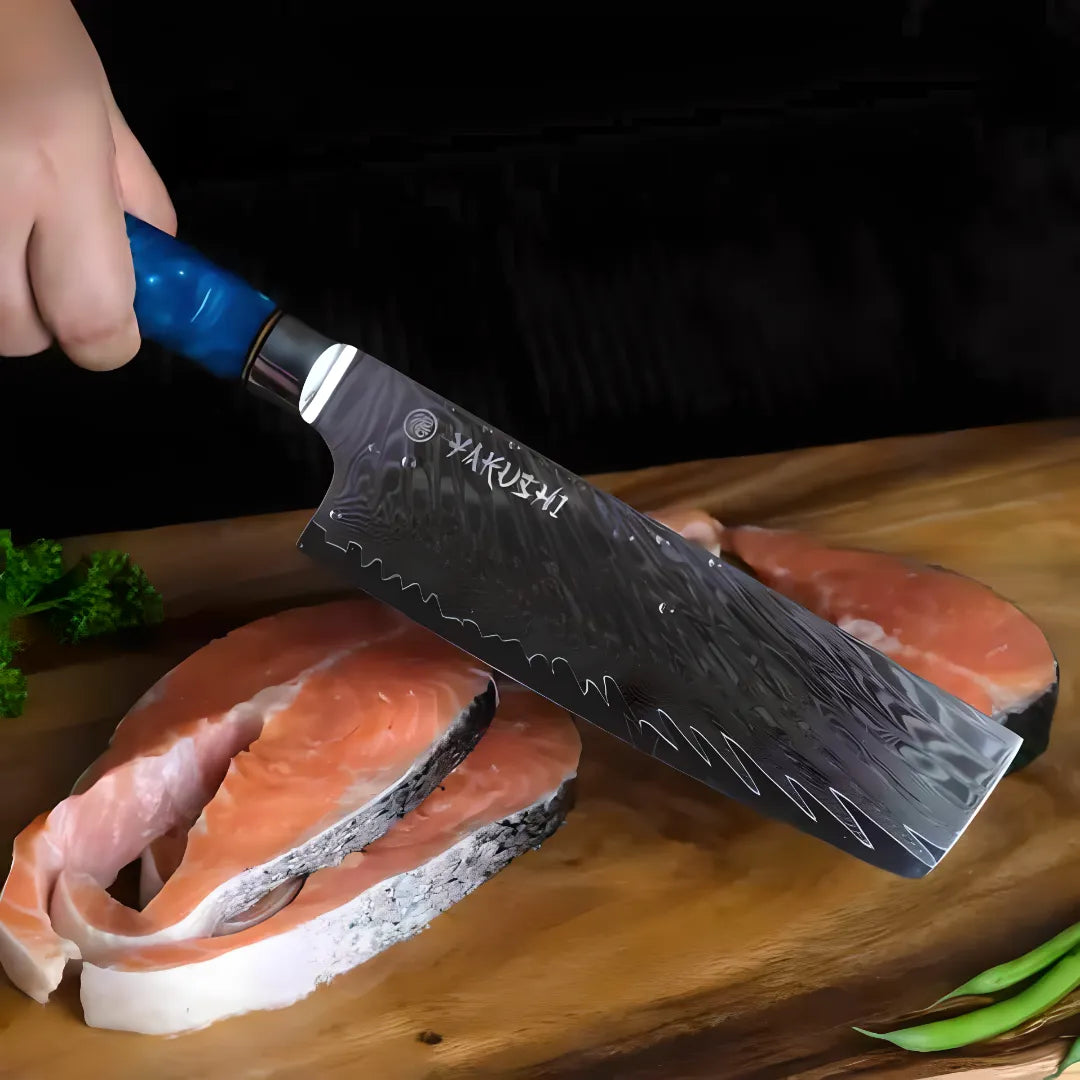
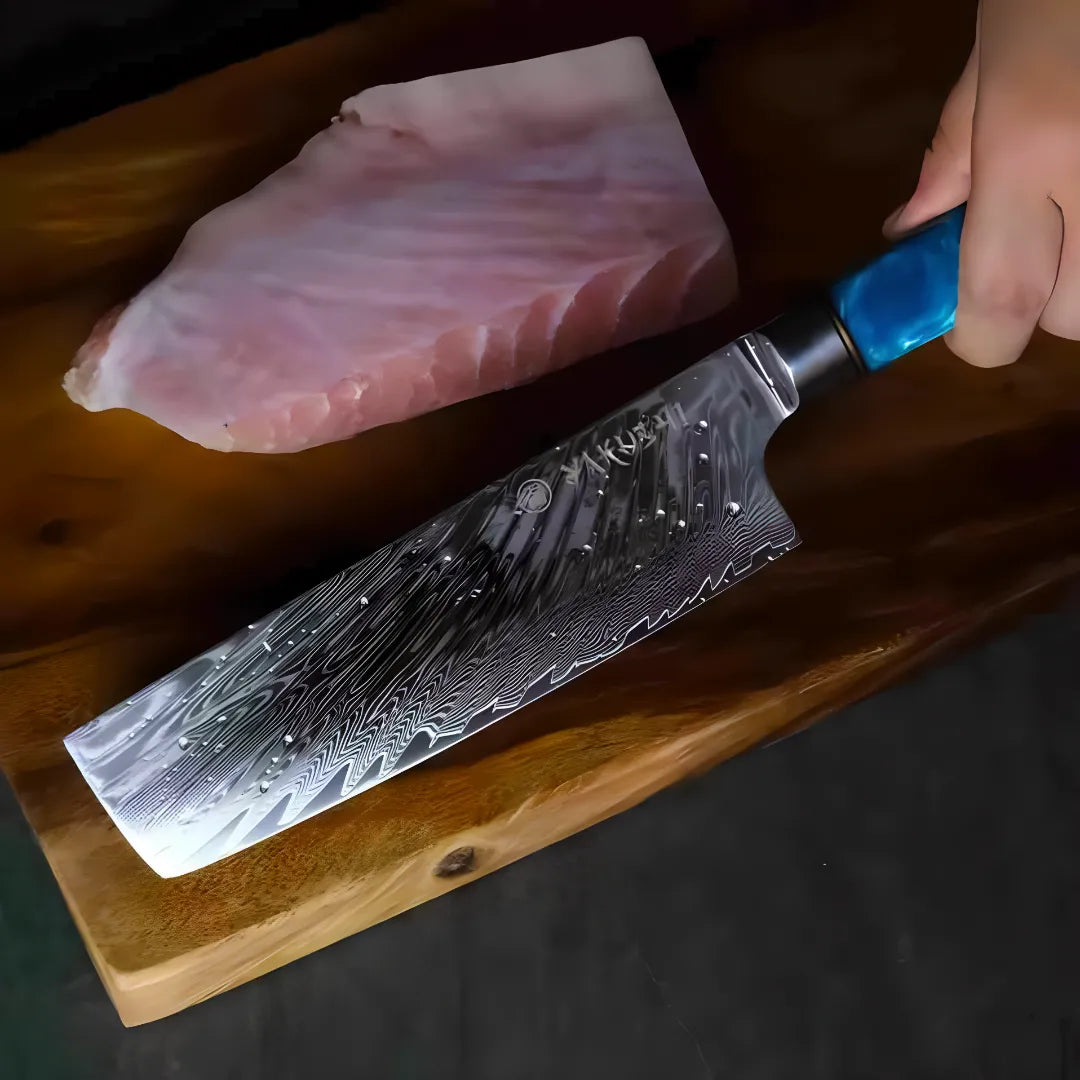
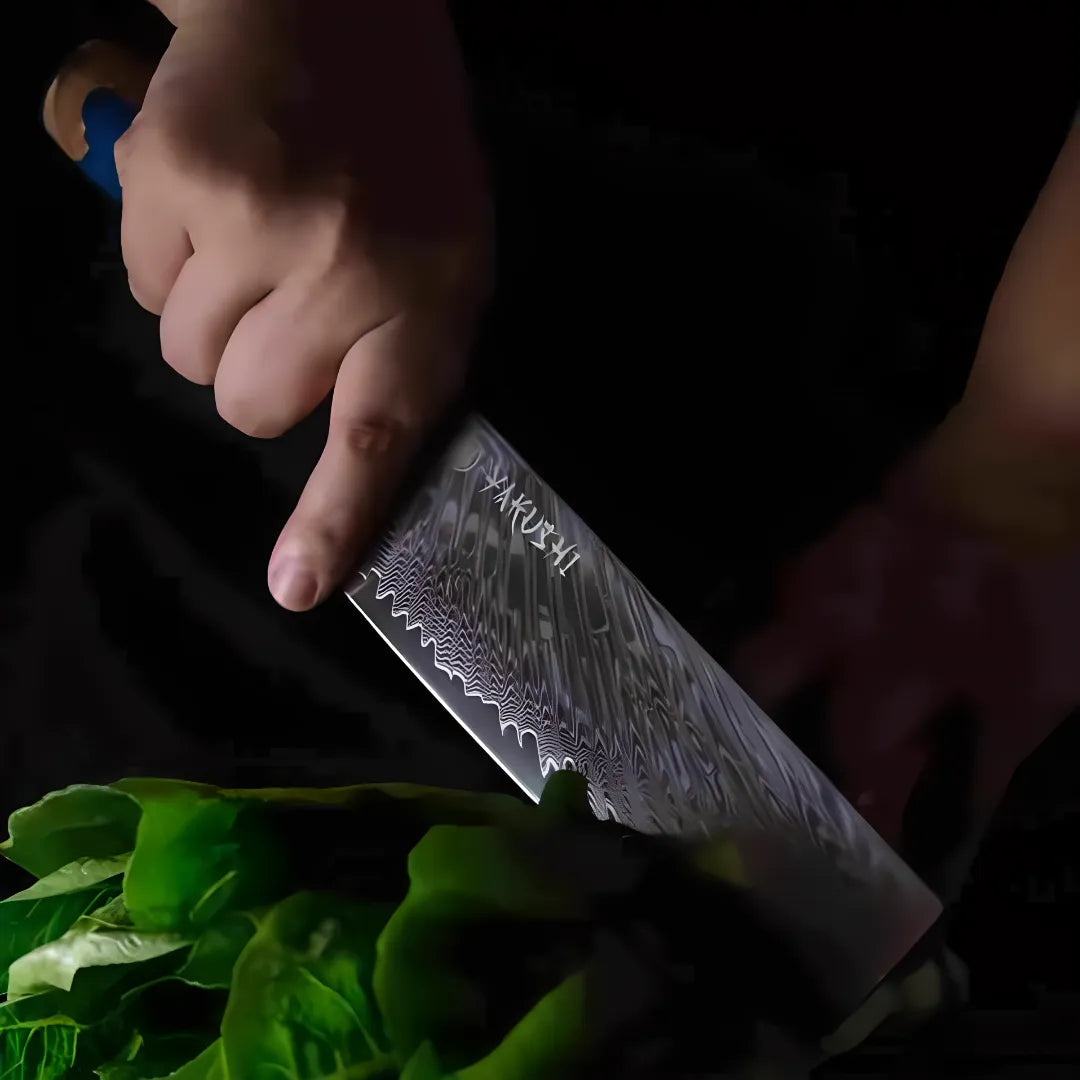
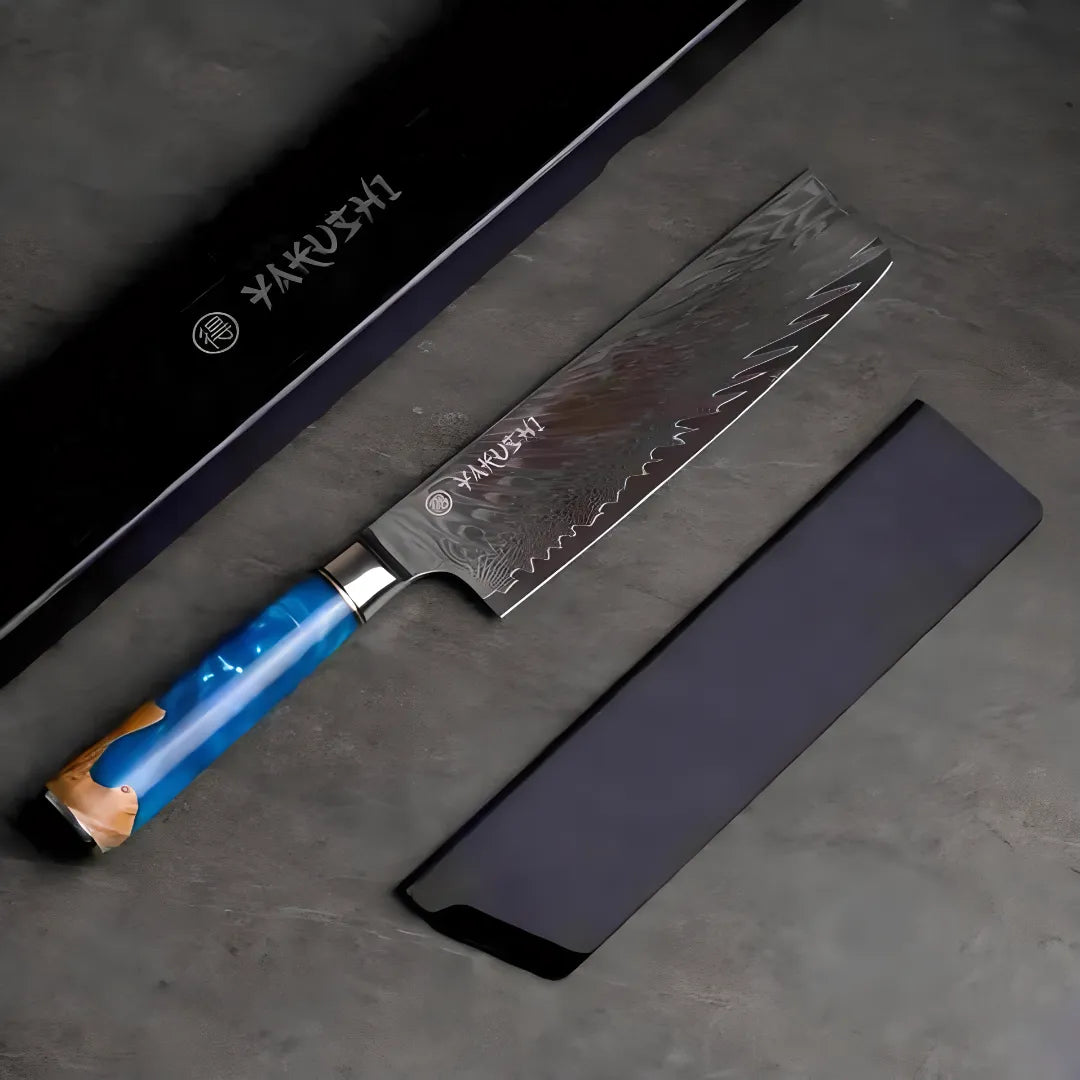
7-inch VG-10 Damascus Nakiri for clean, precise vegetable prep.
Make clean, controlled cuts through vegetables, herbs, and fruit with a balanced full-tang Nakiri built for precise up-and-down chopping.


Orders are processed and shipped within 1–2 business days. Estimated delivery after dispatch:
Tracking details are emailed as soon as your order ships. International shipping charges are shown at checkout. Carrier delays may occasionally occur outside our control.
Try your knife at home with our 15-day satisfaction guarantee. If you’re not completely satisfied, contact us within 15 days of ordering to arrange a return and full refund.
Your knife is also covered by a 3-month warranty. If you experience a workmanship or quality issue, contact us with your order number and photos so we can help.
View our full Return Policy.
Built for vegetable-first prep
The Yakushi™ Damascus Nakiri Knife combines a straight 7-inch double-bevel edge with a tall rectangular blade, VG-10 core, 67-layer Japanese Damascus construction, HRC 60+ hardness, and full-tang build in a knife weighing 240 g. Designed primarily for vegetables, herbs, and fruit, it can also handle controlled preparation of boneless meat and fish.
Shape determines technique
Its tall rectangular blade, straight cutting edge, and double-bevel grind favor vertical chopping and controlled push cuts rather than large rocking motions.
The flatter profile makes it easier to move straight down and forward through vegetables without depending on a pronounced rocking stroke.
The rectangular profile gives your guiding hand comfortable space above the board and provides a broad visual reference for uniform vegetable cuts.
The symmetrical edge geometry suits both right- and left-handed cooks and is easier for many home cooks to maintain than a traditional single-bevel vegetable knife.
Vegetable specialist, not a cleaver
A simple Nakiri rhythm
Use a wooden or suitable synthetic cutting board on a stable counter, and position the ingredient securely before beginning.
Let the straight edge travel through the ingredient with a deliberate vertical chop or push cut rather than forcing a large rocking motion.
When transferring chopped ingredients, use the spine of the knife or a bench scraper instead of dragging the sharpened edge sideways across the board.
Choose by the work you actually do
Choose the Nakiri when produce-heavy board work, a tall rectangular blade, and controlled push cutting are the priority.
Explore Nakiri knivesChoose a Santoku when you want a more compact multipurpose knife for vegetables, fruit, herbs, and suitable boneless proteins.
Read the Santoku guideChoose a chef knife when you want a pointed tip, more curve, and broader flexibility across mixed everyday preparation.
Explore chef knivesSame Nakiri, different quantity
Choose one, two, or three of the same 7-inch Nakiri. The multi-knife options are quantity bundles rather than mixed knife sets.
A straightforward choice when you want one dedicated vegetable knife for your kitchen.
Useful when buying one to keep and one to gift, or when two cooks need the same profile.
A practical option for gifting, multiple kitchens, or workstations that need the same 7-inch vegetable knife.
Protect the straight edge
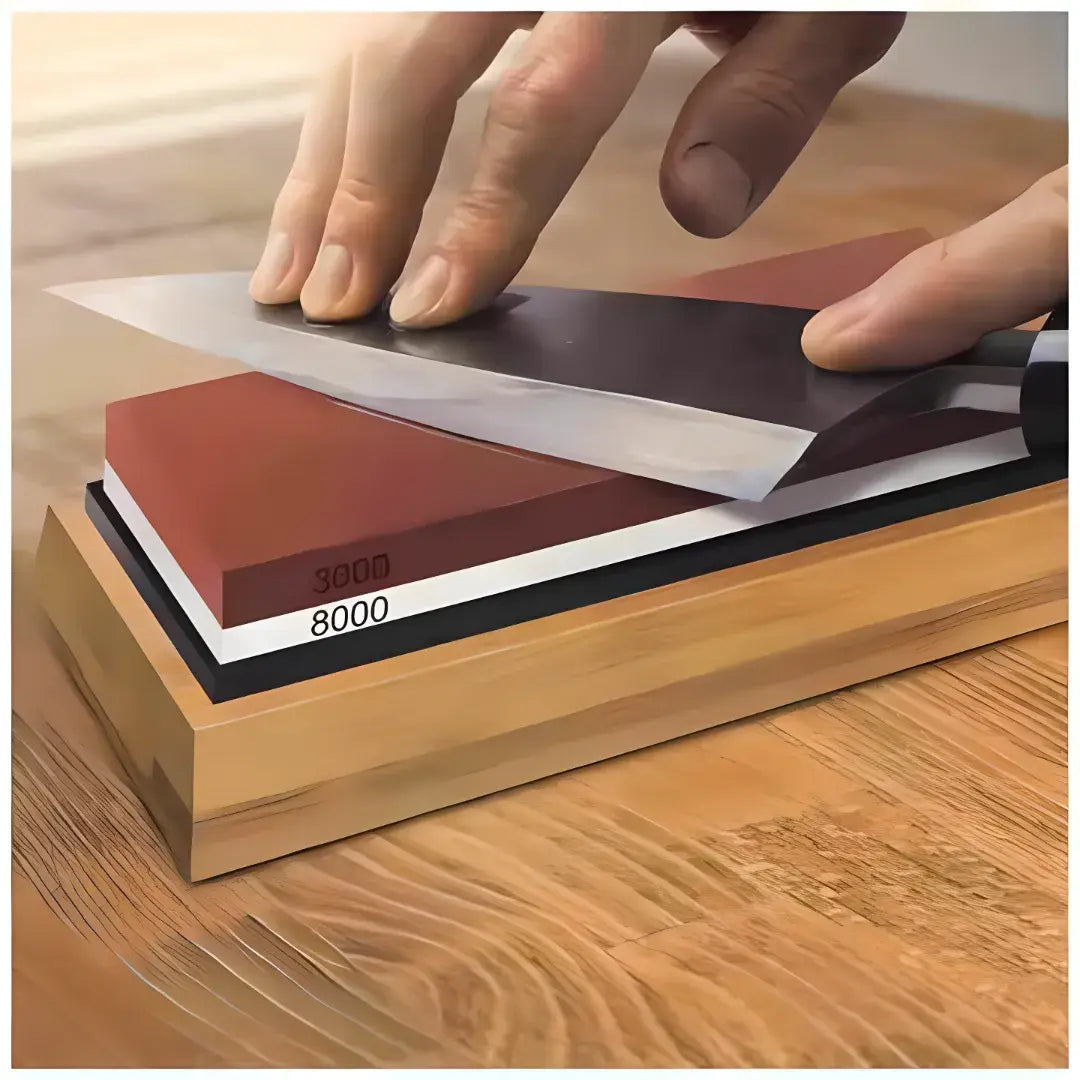
Hand-wash with mild dish soap and dry the knife immediately. Use a wooden or suitable synthetic cutting board, store the edge so it cannot strike other utensils, and preserve its existing double-bevel geometry when sharpening.
Explore coordinating cutting boards, storage, sharpening tools, and expert guides for your Yakushi vegetable-prep setup.
Steel and food-safety references
Quick answers
It is designed primarily for chopping, slicing, dicing, and mincing vegetables, herbs, and fruit. It can also handle controlled cuts of boneless meat or fish, but vegetable prep is its main role.
The knife features a VG-10 core with 67-layer Japanese Damascus steel construction and a hardness rating of HRC 60+.
This model has a straight double-bevel edge, making it suitable for right- and left-handed cooks.
The blade is 7 inches / 17.6 cm long, with a tall rectangular profile designed for controlled board work.
No. Avoid bones, frozen food, hard squash stems, twisting, prying, and heavy cleaver-style chopping.
Neither is universally better. Choose a Nakiri for vegetable-first board work and a tall, flatter profile; choose a Santoku when you want a more compact multipurpose knife for mixed ingredients.
Use a suitable sharpening method that preserves the straight double-bevel profile and follows the knife's existing edge geometry.
Hand-wash with mild dish soap, dry immediately, and store the knife so its edge cannot contact other utensils. Use a wooden or suitable synthetic cutting board during prep.
This 7-inch double-bevel Nakiri gives vegetable-focused cooks a tall, straight-edged blade with a VG-10 core, 67-layer Damascus construction, full-tang build, and substantial 240 g feel.
BUILT FOR THE CUTTING BOARD
Vegetable Prep with Less Effort
The 7-inch straight-edged Nakiri makes full contact with the board for clean, uniform cuts. Its tall profile adds comfortable knuckle clearance, while the full-tang construction and balanced 240g weight keep chopping controlled through onions, cabbage, potatoes, herbs, and more.