
VG-10 stainless steel
The Damascus chef knife publishes a VG-10 stainless cutting core. The Nakiri and steak knives also publish VG-10 cores alongside 67-layer Japanese Damascus steel and HRC 60+ hardness.
Choose the steel and shape that fit your kitchen
Compare seven Yakushi options across verified VG-10, high-carbon stainless, Damascus-clad, and patterned stainless-steel constructions—from versatile chef knives to specialist blades and complete sets.
“Japanese steel” describes a broad shopping category—not one universal alloy or construction. Browse the native product grid below, then use the verified guide to compare each Yakushi knife by its published steel, blade shape, edge geometry, intended tasks, and care requirements.
Filters
7 products


Compare the specification—not just the label
Knife performance depends on the complete build: cutting steel, heat treatment, blade geometry, edge grind, thickness, handle, and intended use. This Yakushi collection includes several verified steel descriptions, so the best choice begins with the individual product specification rather than assuming every patterned or Japanese-style knife is constructed identically.
Seven live products, clearly compared
The table uses the current published product specifications and intentionally avoids applying one steel grade, hardness, layer count, tang, or sharpening angle to the entire collection.
| Product | Verified steel and construction | Primary role | Key specification |
|---|---|---|---|
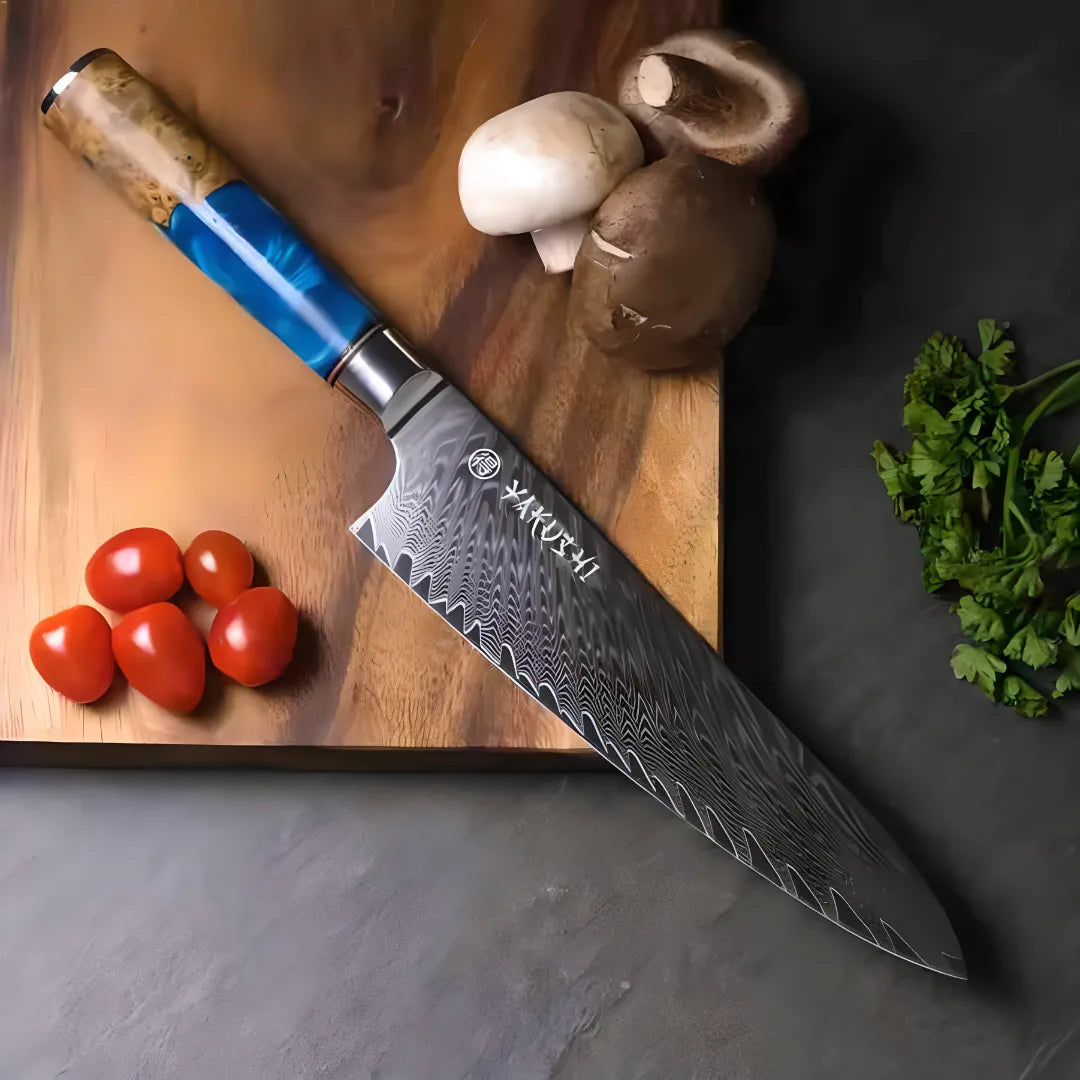
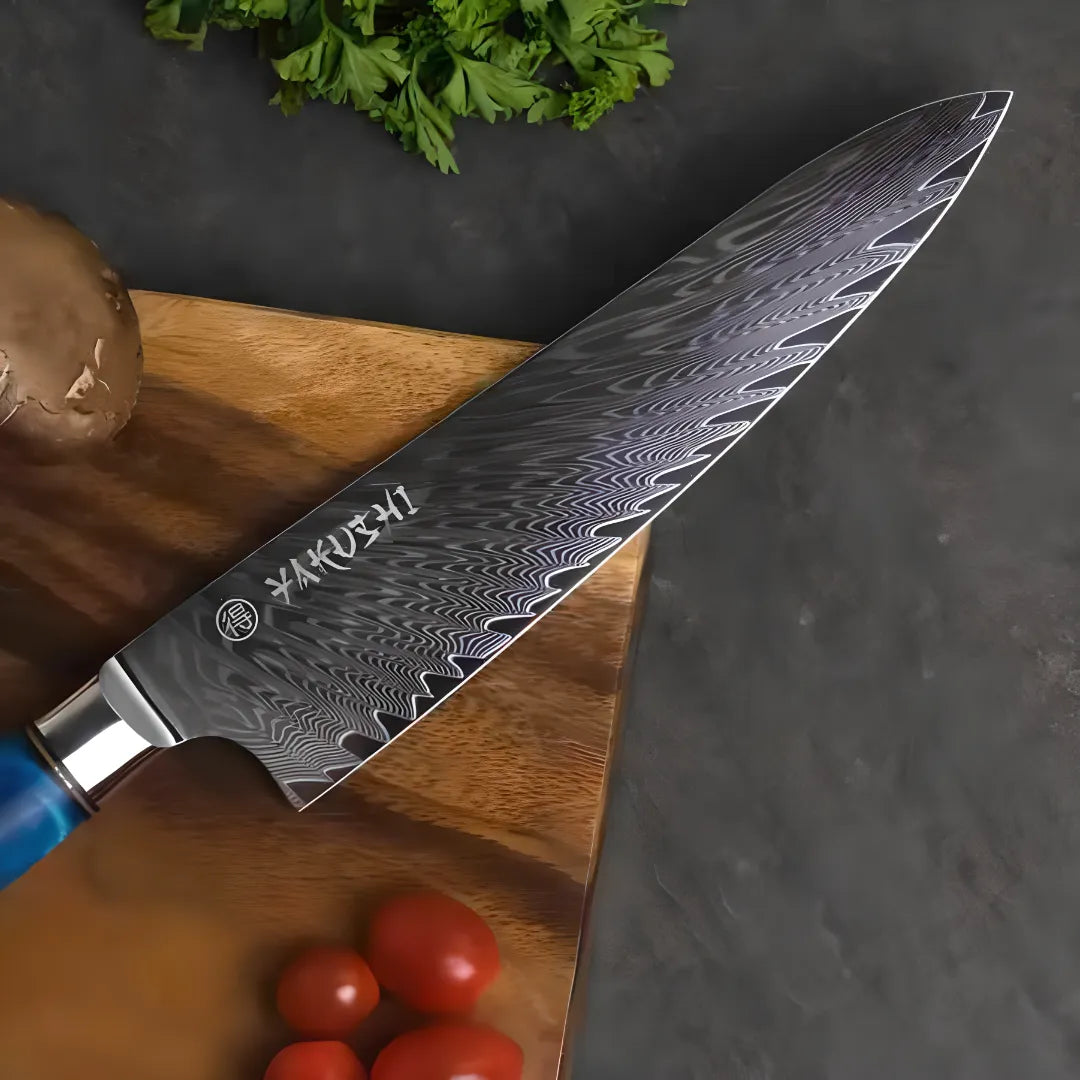
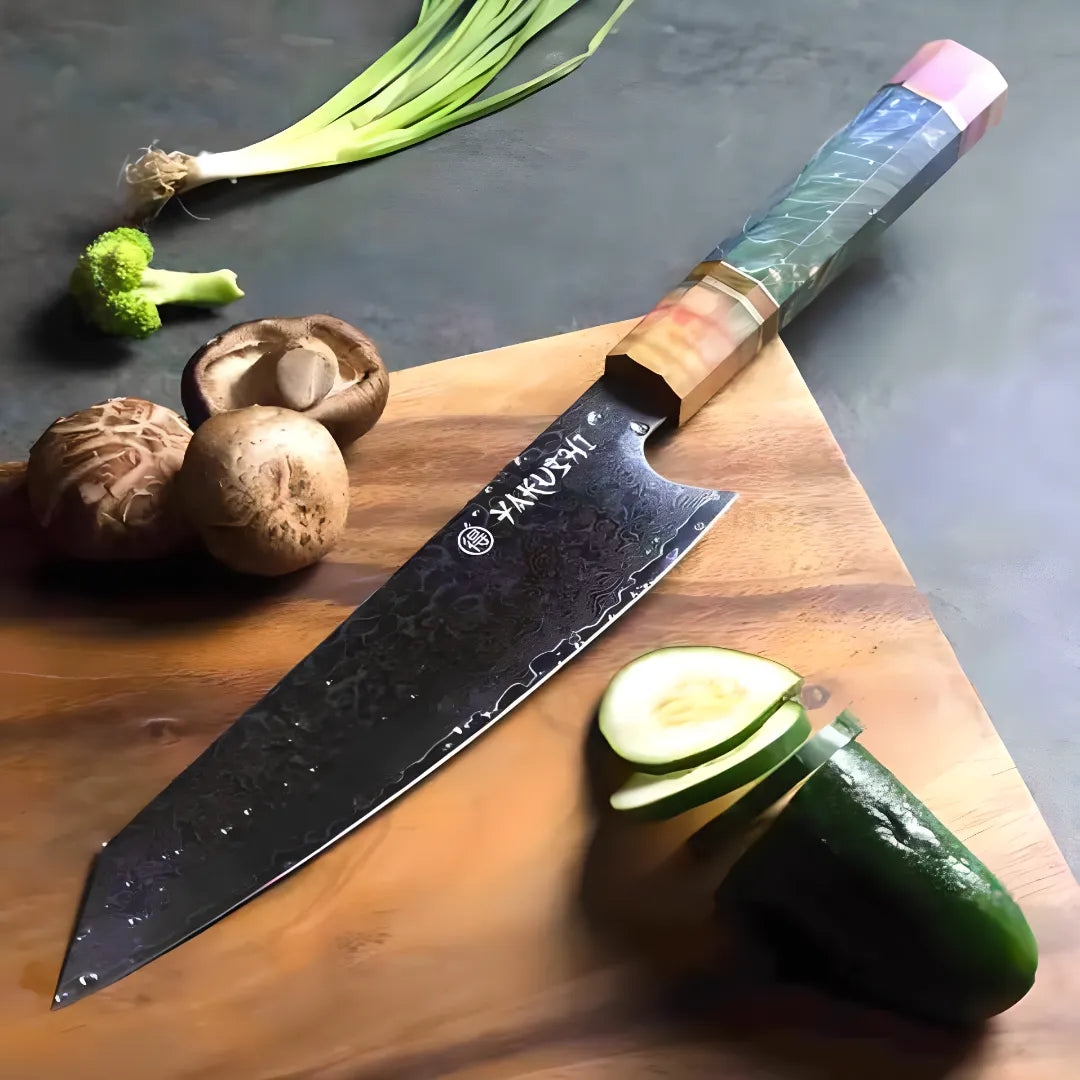
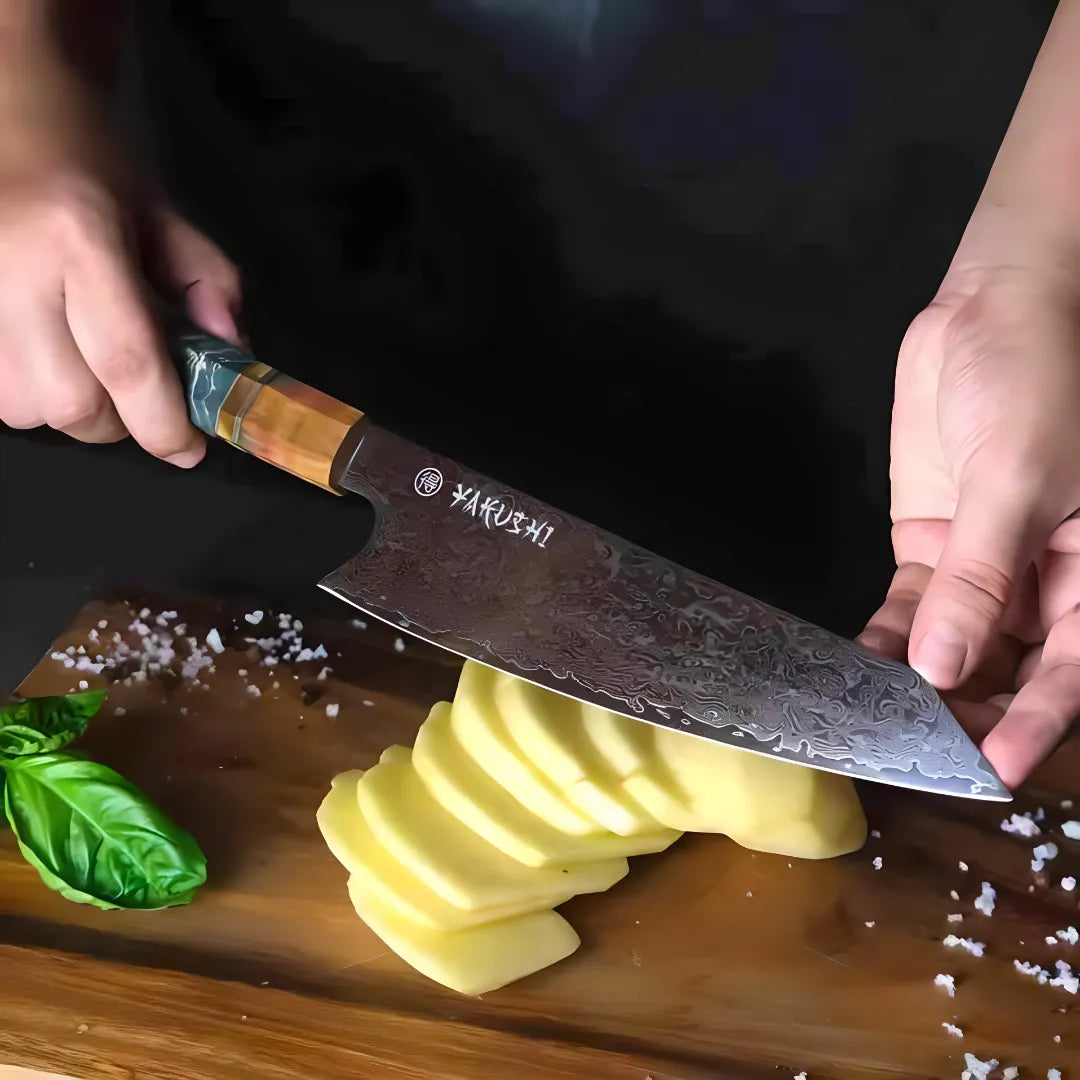
| Damascus Steel Chef Knife | VG-10 stainless cutting core, Damascus-style pattern, double bevel, full tang | Versatile everyday chopping, slicing, dicing, and boneless protein preparation | 8-inch blade, 198g, solidified wood-and-blue-resin handle |
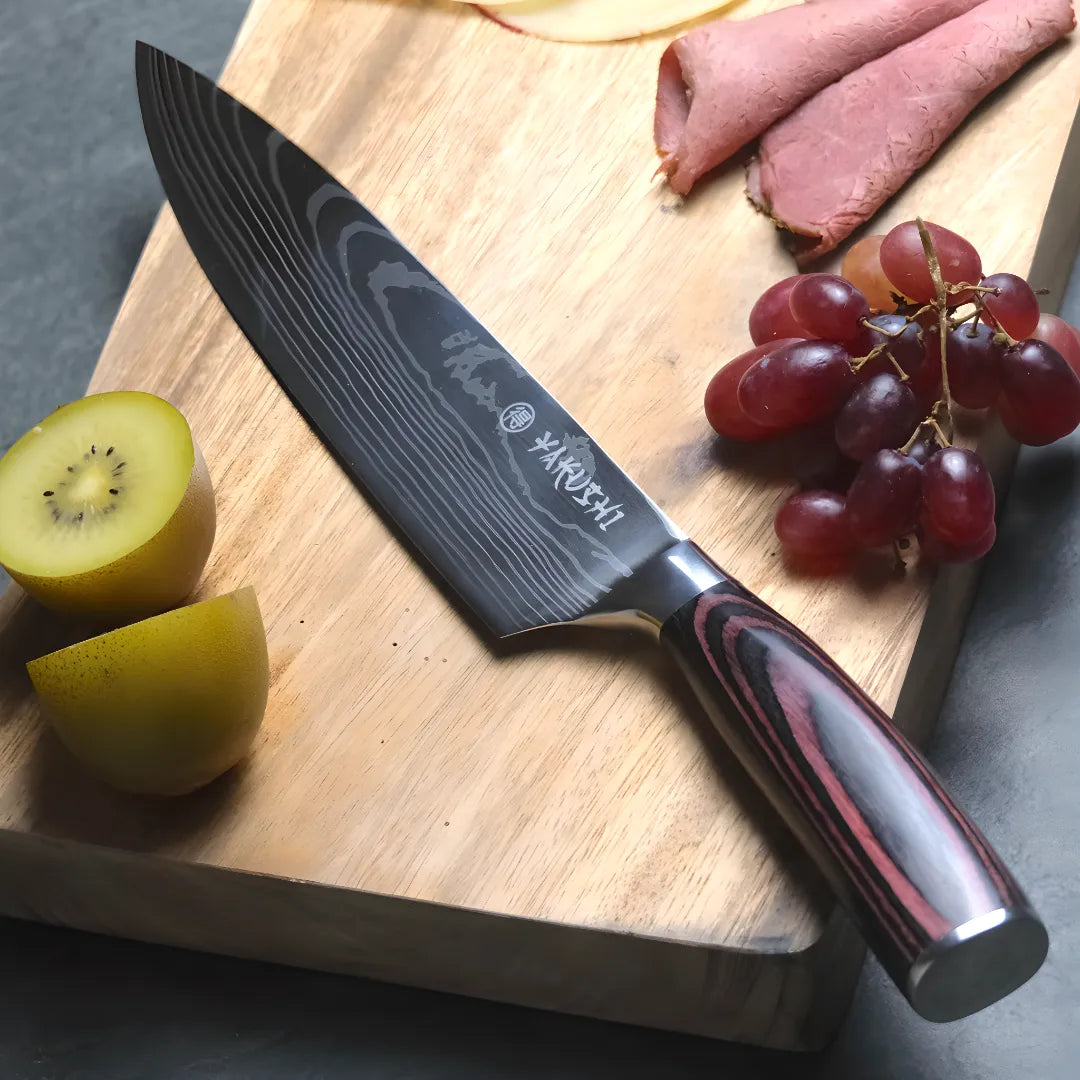
| Classic Chef Knife | High-carbon stainless steel, double bevel, full tang | Familiar all-purpose preparation with a curved chef-knife profile | 8-inch blade, 192g, Pakka wood handle |
| Damascus Kiritsuke Knife | Patterned stainless steel, Damascus-style finish, double bevel, half tang | Push cutting, pull slicing, and precise K-tip work | 8-inch blade, 192g, octagonal coloured-sandalwood handle |
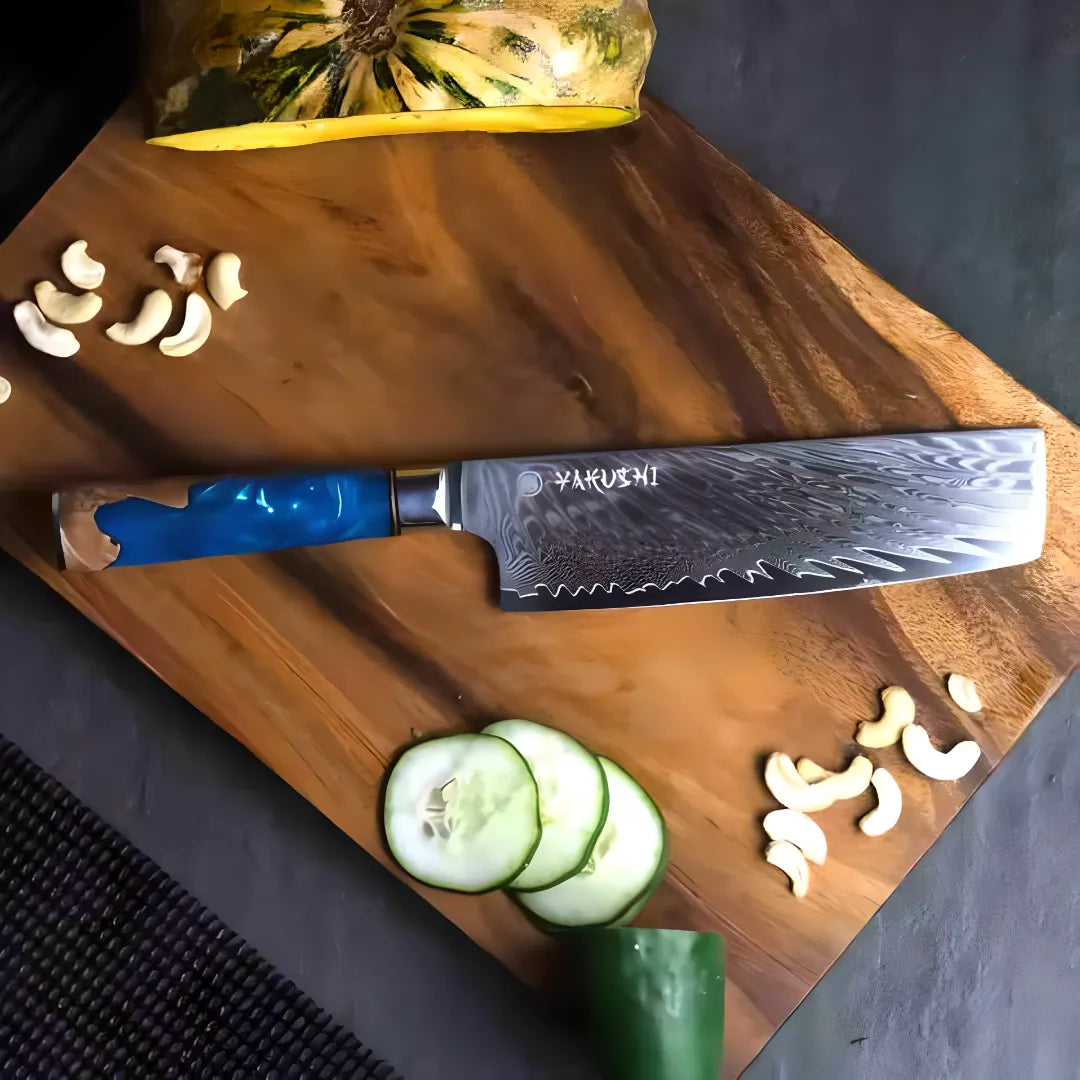
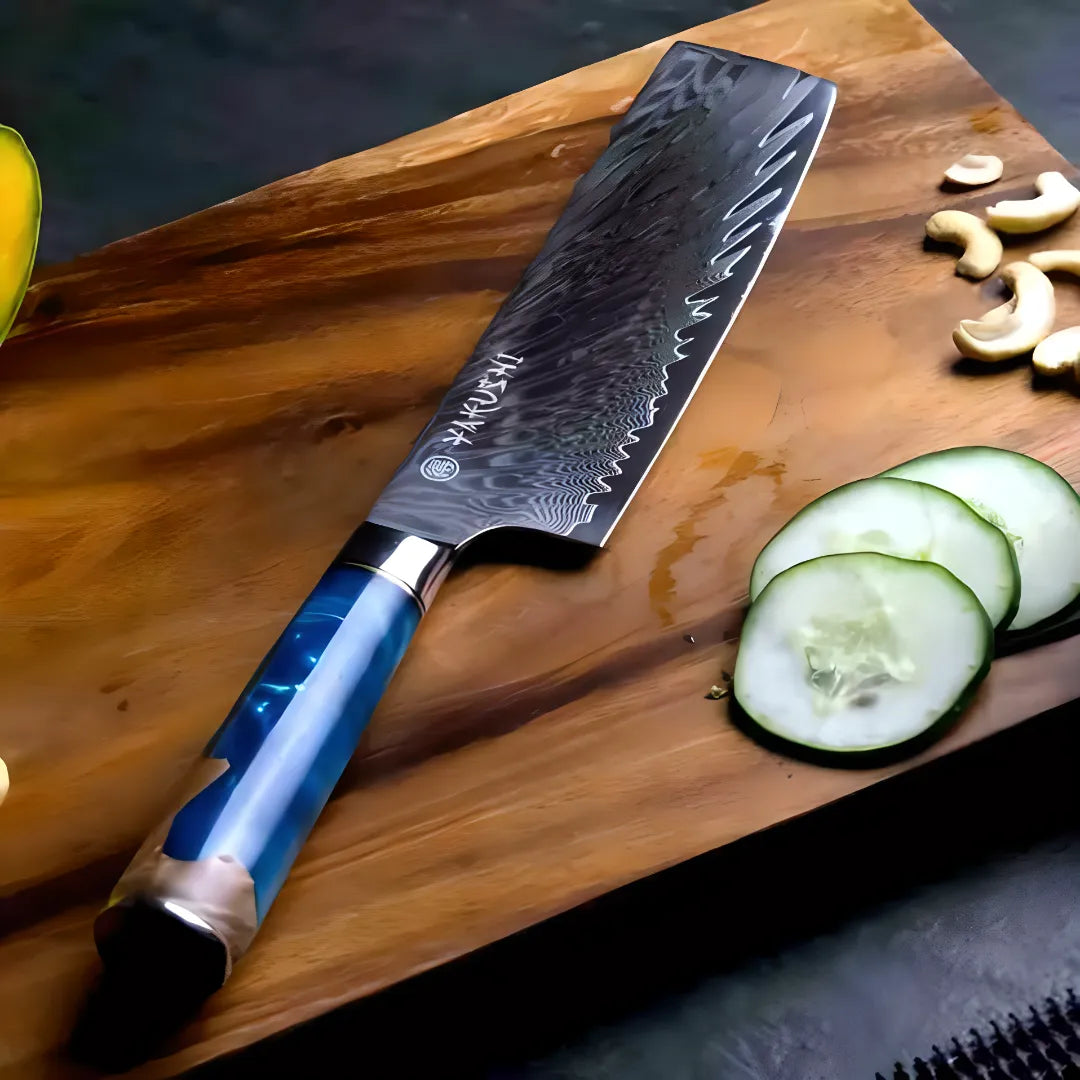
| Damascus Nakiri Knife | VG-10 core, 67-layer Japanese Damascus steel, HRC 60+, double bevel, full tang | Vegetables, herbs, fruit, and controlled up-and-down chopping | 7-inch blade, 240g, solidified wood-and-blue-resin handle |
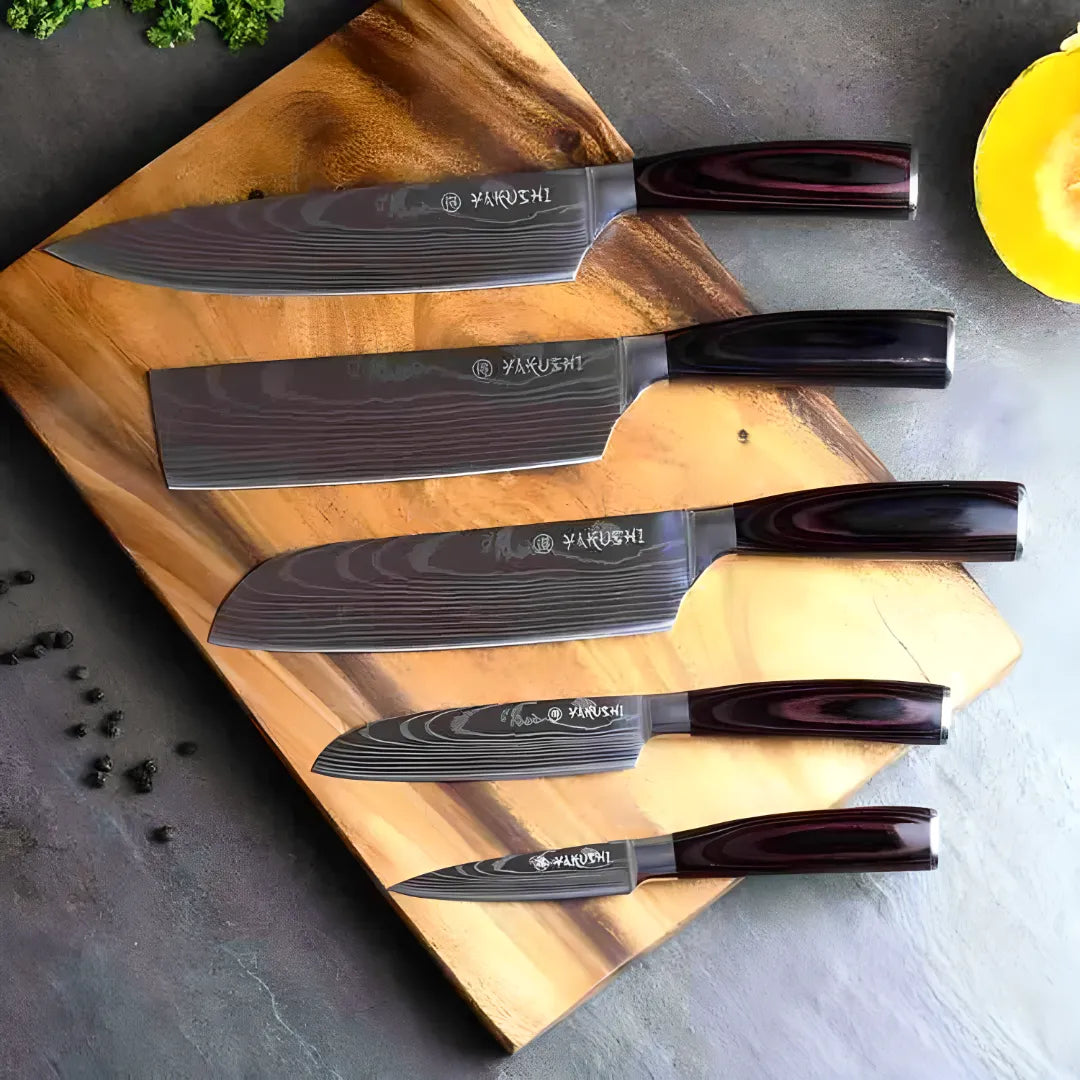
| 5-Piece Master Set | Damascus-clad high-carbon stainless steel, double bevel, full composite tang | Broad everyday coverage from chef knife to Santokus, cleaver, and paring knife | Five coordinated knives with Pakka wood handles |
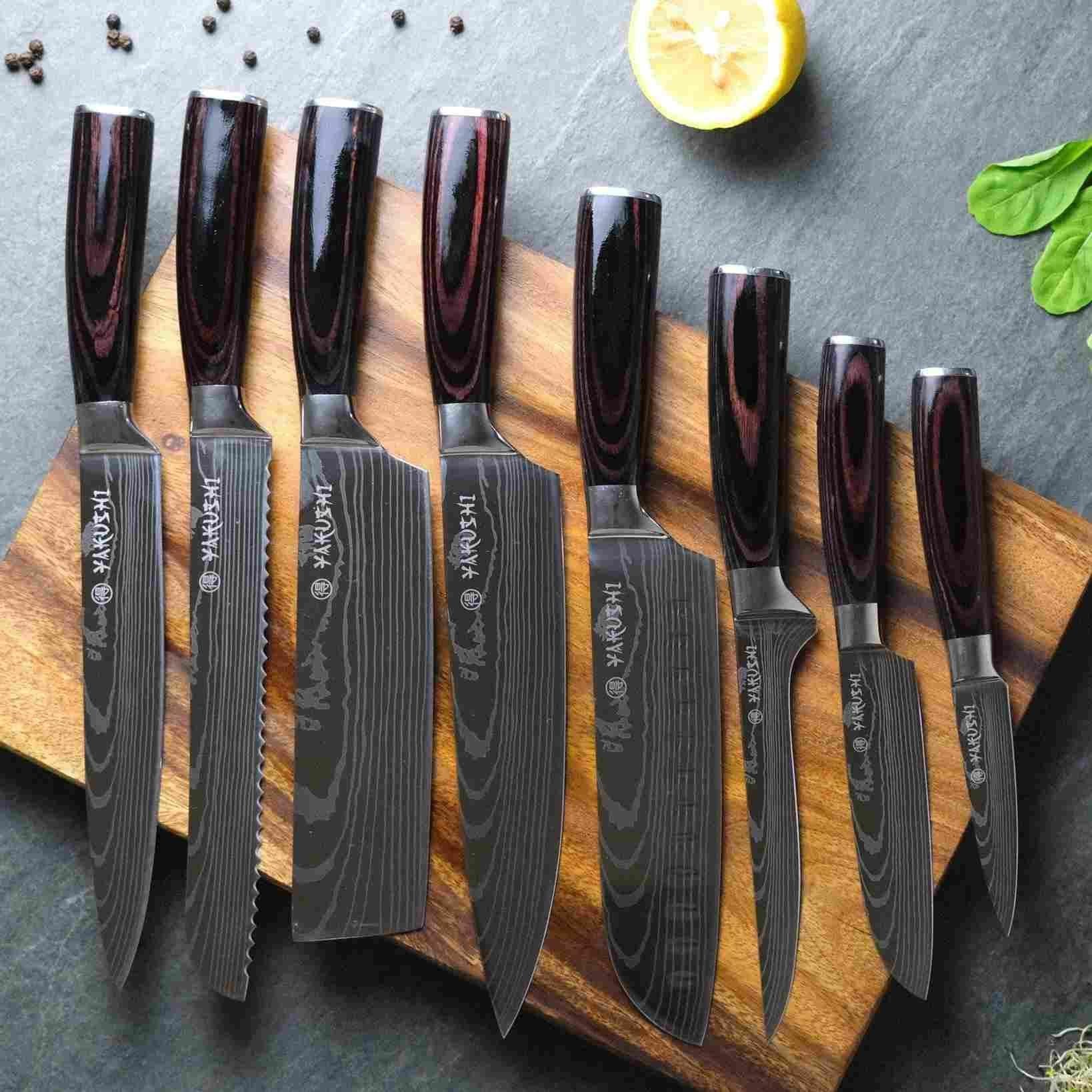
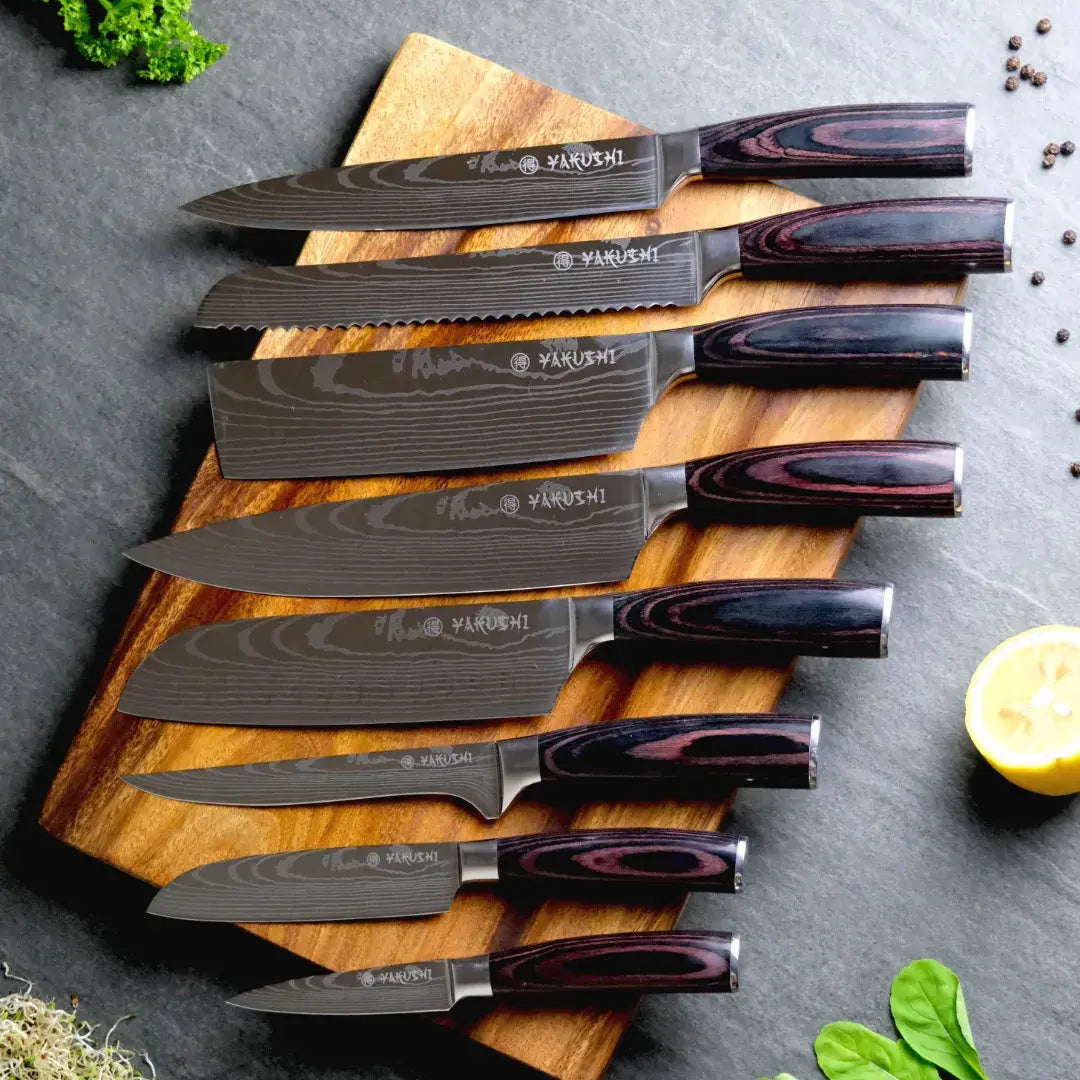
| 8-Piece Kitchen Knife Set | High-carbon stainless steel, Damascus-style finish, double bevel, full composite tang | Complete prep, bread cutting, carving, trimming, and detail work | Eight coordinated knives with Pakka wood handles |
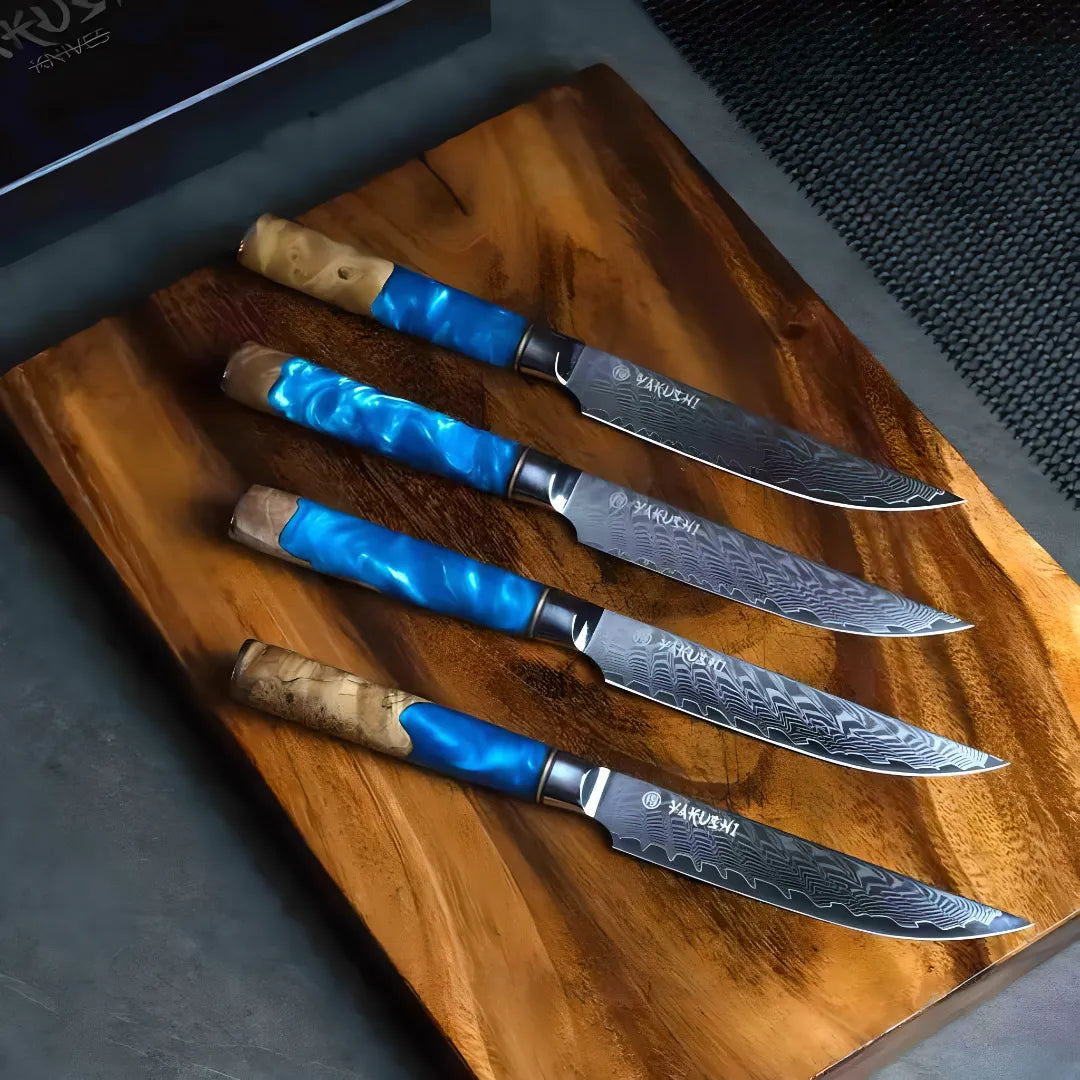
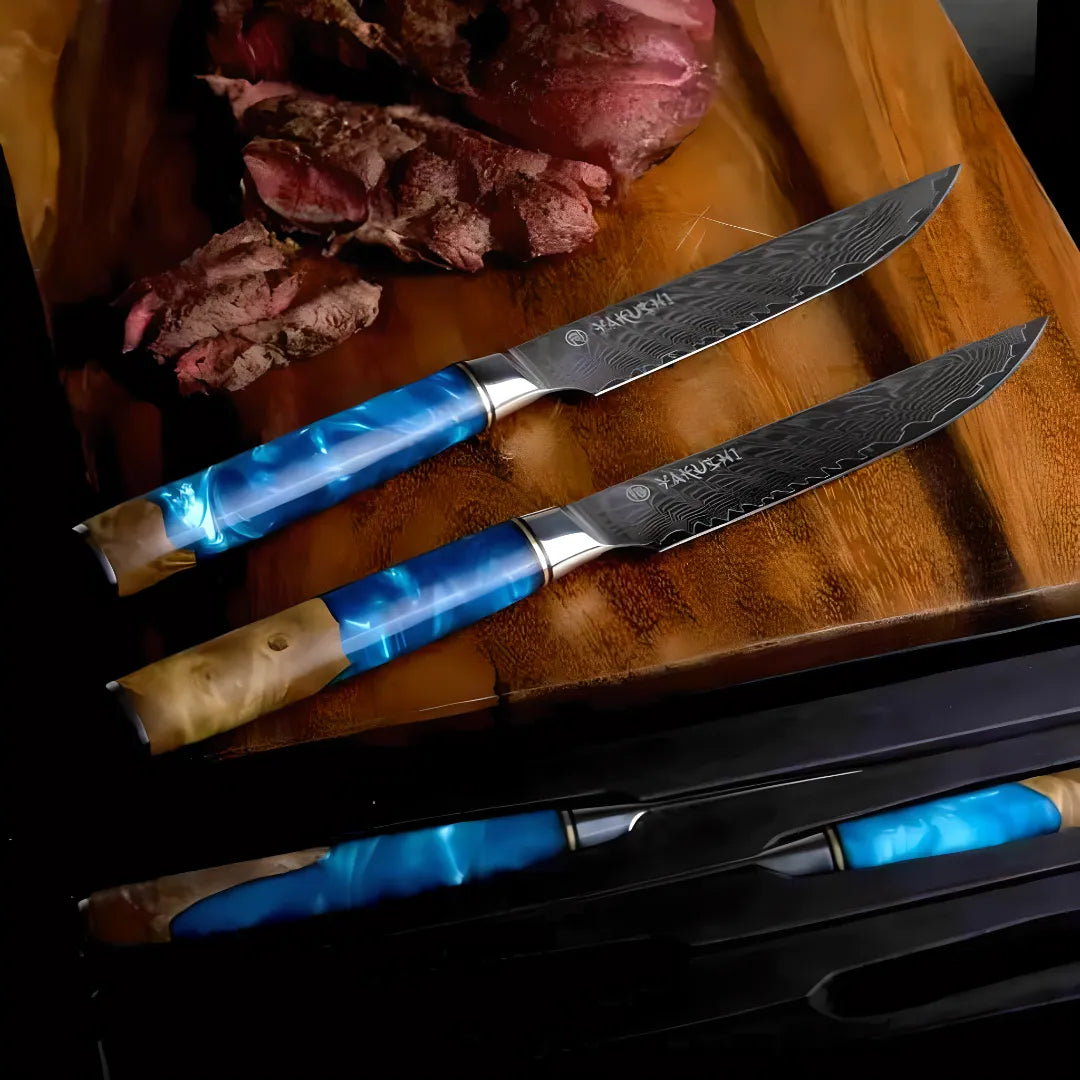
| Damascus Steak Knife Set | VG-10 core, 67-layer Japanese Damascus steel, HRC 60+, straight double-bevel edge | Clean table-side slicing through steaks, chops, and cooked proteins | 5.5-inch blades; sets of 4, 8, or 12; 79g per knife |
Read material language precisely
The Damascus chef knife publishes a VG-10 stainless cutting core. The Nakiri and steak knives also publish VG-10 cores alongside 67-layer Japanese Damascus steel and HRC 60+ hardness.
The Classic Chef Knife and 8-Piece Set identify high-carbon stainless steel. The 5-Piece Master Set specifies a Damascus-clad high-carbon stainless construction.
Layer counts and core steels should be stated only when the product publishes them. A patterned finish alone does not establish a specific number of layers or cutting-core alloy.
The Kiritsuke is accurately listed as patterned stainless steel with a Damascus-style flowing finish. Its listing does not assign a named core alloy, layer count, or Rockwell hardness.
Start with the work you do most
The Classic Chef Knife and Damascus Steel Chef Knife provide curved, versatile profiles for chopping, slicing, dicing, mincing, and preparing suitable boneless proteins.
Compare Japanese chef knivesThe Nakiri focuses on vegetable preparation and board contact. The Kiritsuke adds longer slicing reach and a pointed K-tip for scoring, trimming, and shallow detail work.
Explore vegetable-focused shapesThe 5-Piece Master Set covers core everyday shapes. The 8-Piece Set adds dedicated bread, slicing, and boning knives for more specialized preparation.
Compare Japanese knife setsStraight 5.5-inch blades provide controlled slicing through steaks, chops, and other cooked proteins. Choose sets of four, eight, or twelve to match the table.
View the steak knivesGeometry changes how a knife feels
| Blade shape | Typical motion | Best suited to | Choose it when |
|---|---|---|---|
| Chef knife | Chopping, slicing, dicing, mincing, draw cuts, and gentle rocking | Vegetables, fruit, herbs, and suitable boneless proteins | You want one versatile primary kitchen knife |
| Kiritsuke-style knife | Push cutting, controlled chopping, pull slicing, and shallow tip work | Vegetables, boneless proteins, fish fillets, scoring, and trimming | You value flatter board contact, long reach, and a precise K-tip |
| Nakiri | Up-and-down chopping and forward push cuts | Vegetables, herbs, fruit, and produce-heavy preparation | You want a dedicated rectangular vegetable profile |
| Santoku | Controlled chopping, push cutting, and slicing | Everyday vegetables, fruit, herbs, and boneless foods | You prefer a shorter all-purpose shape within a coordinated set |
| Steak knife | Controlled table-side slicing | Cooked steaks, chops, and other plated proteins | You need matching individual knives for dining |
A better way to compare knives
A named cutting core, high-carbon stainless blade, layered cladding, and patterned finish describe different things. Use the individual product specification rather than transferring one claim to every knife.
Every product currently shown here publishes double-bevel geometry, making the collection suitable for right- and left-handed cooks without specialized single-bevel technique.
Curved chef knives support a wider mix of motions. Flatter Nakiri and Kiritsuke profiles reward push cutting, controlled chopping, and deliberate board contact.
Full tang, half tang, and full composite tang are not interchangeable terms. Published weights and handle materials also vary, so compare the individual knife rather than assuming one collection-wide build.
Simple habits protect every edge
Hand-wash with mild dish soap, dry immediately, and avoid soaking. Prompt care protects the steel, handle, and sharpened edge.
Cut on wood or a suitable synthetic board. Store each knife in a sheath, stable block, or safe magnetic rack where the edge cannot strike other utensils.
Use a suitable whetstone, quality guided system, or trusted professional service. Do not impose one universal angle on products with different geometries.
HRC refers to the Rockwell C hardness scale used for testing steel. NIST maintains Rockwell C reference standards for calibrating and verifying hardness-testing equipment. A published HRC value applies to the specific product that lists it—not automatically to every knife in a collection. Learn more from the National Institute of Standards and Technology.
Compare focused collections and practical guides before choosing the knife that best matches your cutting motion, ingredients, care preferences, and available storage.
Straight answers
The phrase commonly describes knives made with Japanese steel alloys or knives inspired by Japanese blade shapes and cutting geometry. It does not identify one universal alloy, country of manufacture, hardness, bevel, or construction, so always check the individual product specification.
No. The collection includes products described as VG-10 core steel, high-carbon stainless steel, Damascus-clad high-carbon stainless steel, and patterned stainless steel. Material, layer count, hardness, and construction vary by product.
An 8-inch chef knife is the most versatile starting point for many home cooks. Choose the Classic Chef Knife for a high-carbon stainless-steel blade and Pakka wood handle, or the Damascus Steel Chef Knife for a VG-10 cutting core and blue-resin handle.
The 7-inch Nakiri is the most vegetable-focused single knife in the collection. Its tall rectangular blade and straighter edge favor controlled up-and-down chopping and push cutting.
The 8-inch Kiritsuke-style knife suits push cutting, pull slicing, vegetable preparation, boneless proteins, scoring, trimming, and shallow K-tip work. It is less suited to continuous rocking.
Choose one chef knife when you want a versatile daily workhorse and already own suitable supporting tools. Choose the five-piece set for broader everyday coverage or the eight-piece set when you also need dedicated bread, slicing, and boning knives.
Yes. Every product currently shown in this collection publishes double-bevel edge geometry and suitability for right- and left-handed cooks.
No. A visual pattern does not by itself establish the core alloy, number of layers, hardness, or manufacturing method. Rely on the specific product’s published construction details.
No. The current product pages direct users to avoid chopping through bones, frozen food, hard impacts, twisting, and prying. Use every knife only for its listed kitchen tasks.
Hand-wash with mild dish soap, dry immediately, cut on wood or a suitable synthetic board, and store each edge safely. Maintain the existing bevel with an appropriate sharpening method rather than assuming every knife requires the same angle.
Start with the product’s verified steel, shape, edge, and construction—then choose the chef knife, specialist blade, coordinated set, or steak knives that make preparation feel more natural.